There are places in a forest that seem unremarkable until an animal begins using them again and again.
A bend in a dry nullah. A shaded slope below a plateau. A gap between two rocky ridges. A particular tree carrying old scrape marks beneath newer ones. To us, these may be little more than features passed from a safari vehicle. To a tiger that has spent years moving through the same country, they can become part of something far more intimate: a landscape learned through repetition.
Not a map drawn with roads, tourism zones or reserve boundaries, but one built through movement.
In September 2026, researchers studying tigers in Panna Tiger Reserve asked a deceptively simple question. Instead of looking only at where tigers travelled, they examined where the animals returned.
Using continuous GPS data from 12 resident tigers across summer, monsoon and winter, they studied what ecologists call recursive movement: the repeated use of places an animal has visited before. What emerged was not a tidy map of “good tiger habitat,” but something more interesting. Certain places were revisited frequently, others held tigers for longer periods, and those patterns shifted with season, sex, terrain, canopy, water and proximity to people.
Yet even after all those variables were considered, one of the strongest influences remained the tiger itself.
The forest develops memory. Not ours. The tiger’s.
The Forest Beneath the Map
Panna is the kind of landscape where a flat map can be misleading.
The reserve lies across the Vindhyan country of Madhya Pradesh, where table-top plateaus fall away into slopes, escarpments, gorges and valleys. The Ken River cuts through this terrain, creating one of the landscape’s great perennial threads, while the surrounding dry-deciduous forest changes dramatically through the year.
In summer, the country opens. Leaves fall, shade becomes precious and water retreats into fewer dependable places. After the monsoon, the same landscape thickens and softens. Drainages fill, vegetation rises and places that were exposed in May can become deeply concealed only months later.
A tiger moving through this country is not crossing one uniform forest. It is moving through a shifting mosaic of cover, water, prey, terrain and human influence.
That is what makes a GPS point both useful and incomplete. On a screen, one point may look much like another. Inside the forest, one may represent a place crossed only once, while another marks a route used repeatedly for months.
The researchers wanted to understand that difference.
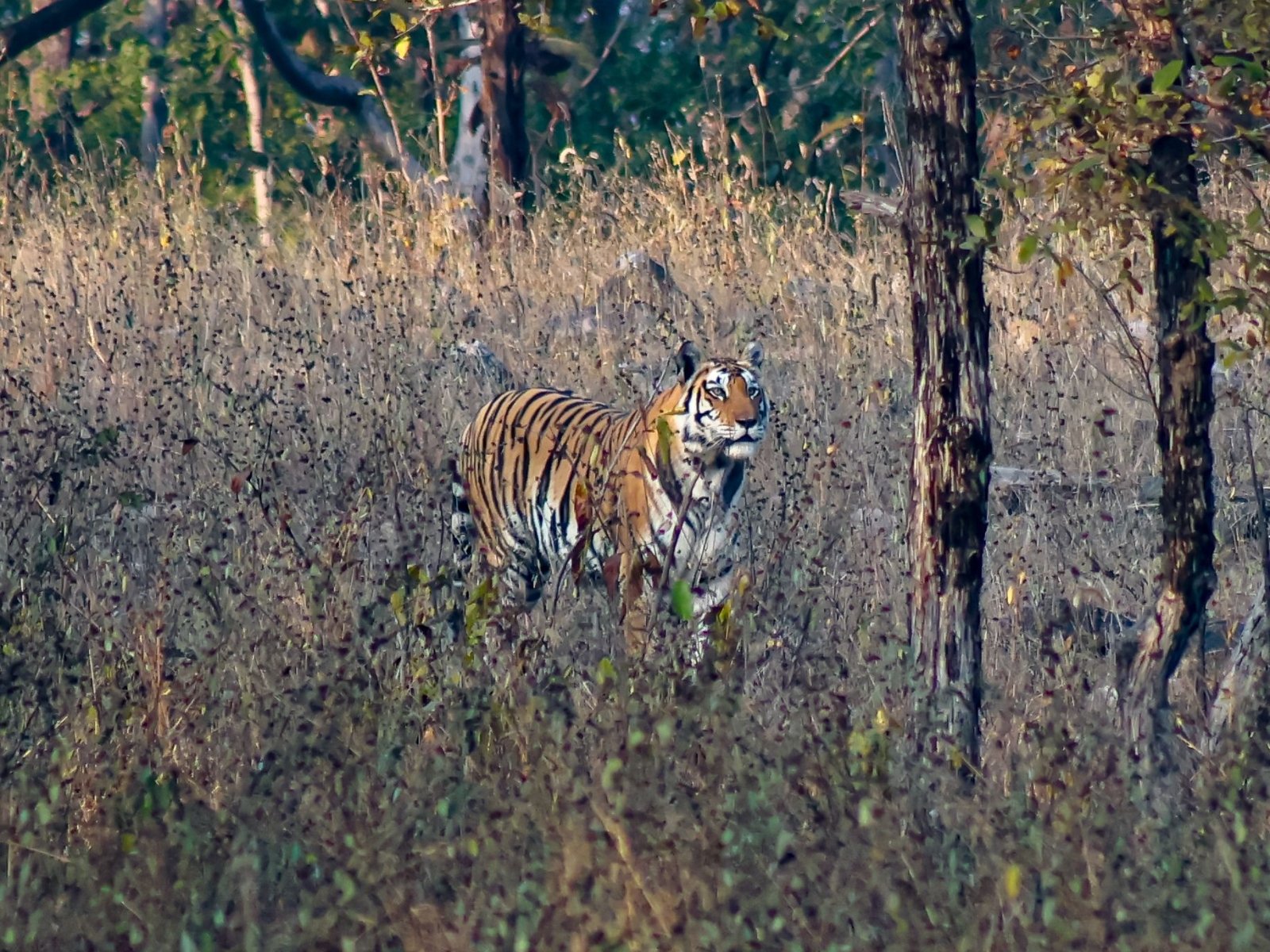
They measured two behaviours separately. Revisitation rate asked how frequently a tiger returned to a location, while residence time asked how long the tiger remained there once it arrived.
The distinction matters because the places a tiger repeatedly passes through are not necessarily the places where it spends the most time.
A Place Can Matter in More Than One Way
Imagine a male tiger moving through his territory before sunrise. He follows a dry drainage for a kilometre, climbs onto a track, scent-marks a tree and continues towards another part of his range. The entire passage may take minutes, yet he may repeat it every few days.
Elsewhere, the same animal may enter dense cover beside water and remain there for hours. Both locations matter, but for completely different reasons.
The first may function as part of a movement route. The second may offer rest, shade, access to prey or some other resource. One produces repeated return; the other produces prolonged residence.
A place that matters because a tiger keeps passing through it is not necessarily the same place that matters because a tiger stays there.
This is one of the most useful ideas to emerge from the Panna study because it prevents the forest from being reduced to a simple list of habitat features. A tiger’s landscape is not merely a collection of “preferred places.” Different places can serve different purposes at different moments.
And once the researchers began examining those recurring places, the forest grew more complicated rather than less.
The Landscape Did Not Behave Like a Checklist
Some environmental patterns were clear.
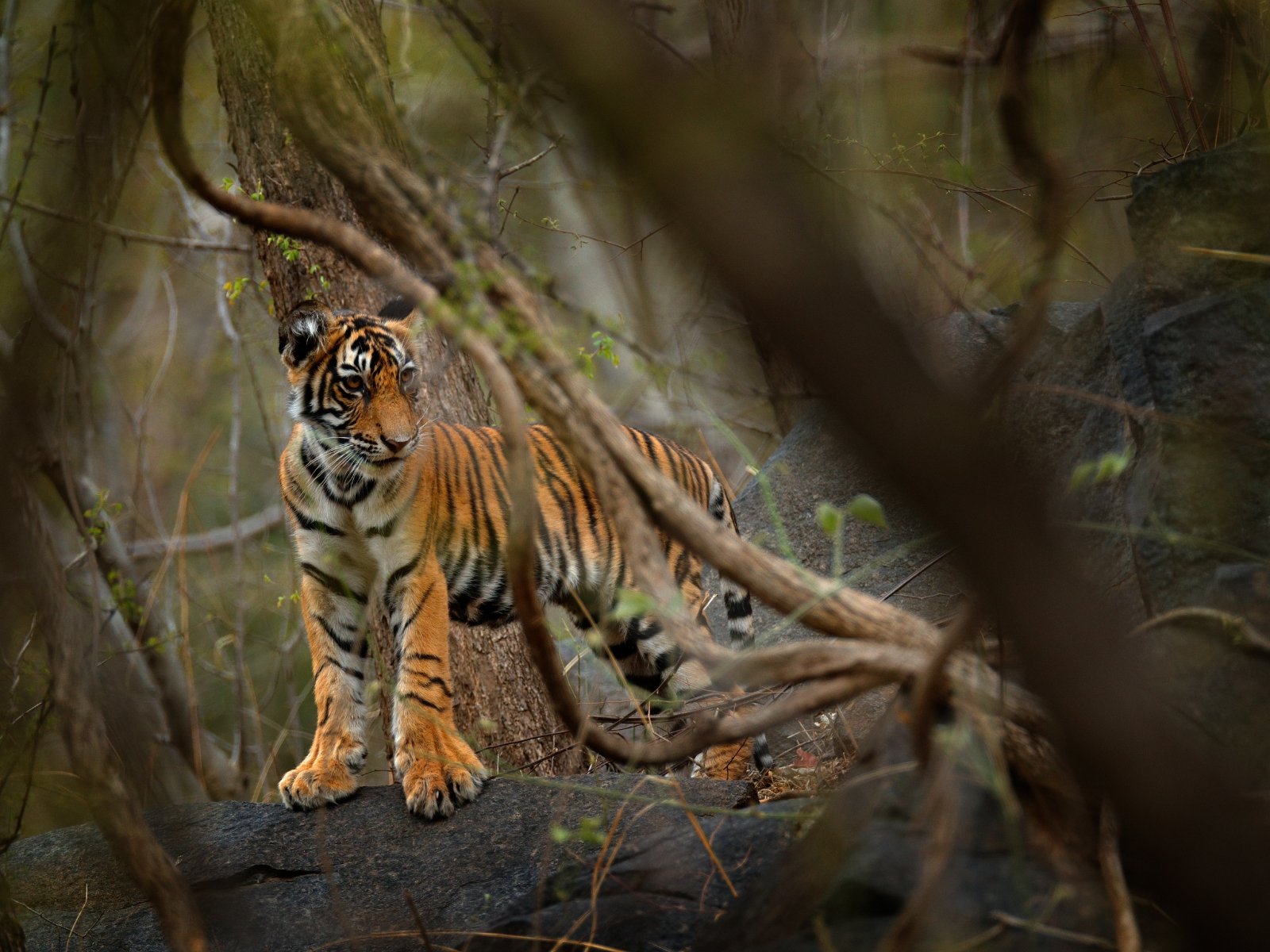
Tree canopy height showed one of the strongest differences between repeatedly used sites and the wider landscape available to the tigers. Water and distance from villages also mattered, while vegetation greenness and topographic position showed weaker relationships.
If the story ended there, it would be easy to produce a formula: taller canopy, the right distance from water, the right terrain, less human influence.
But the forest refused to become that simple.
The relationships often curved instead of moving neatly in one direction. What mattered in summer could matter differently during the monsoon. Males and females did not respond identically. A feature associated with frequent return was not necessarily associated with long stays.
The deeper the researchers looked, the harder it became to speak of a single ideal tiger patch. That feels closer to the forest itself.
A tiger does not experience “canopy height” or “distance to water” as isolated variables. It encounters them together, layered with heat, prey, neighbouring tigers, cover, human activity and whatever happened on the previous night.
There is no universal best patch. There are places whose importance changes with season, behaviour and individual.
When Summer Shrinks the Choices
By late summer, Panna can feel stripped to its structure.
The deciduous canopy thins. Dust gathers on the roads. Heat settles into the rock and open ground, while water becomes increasingly concentrated into fewer dependable places. Chital, sambar, langurs and predators are all responding to the same seasonal compression, though in very different ways.
The tiger’s map changes with them.
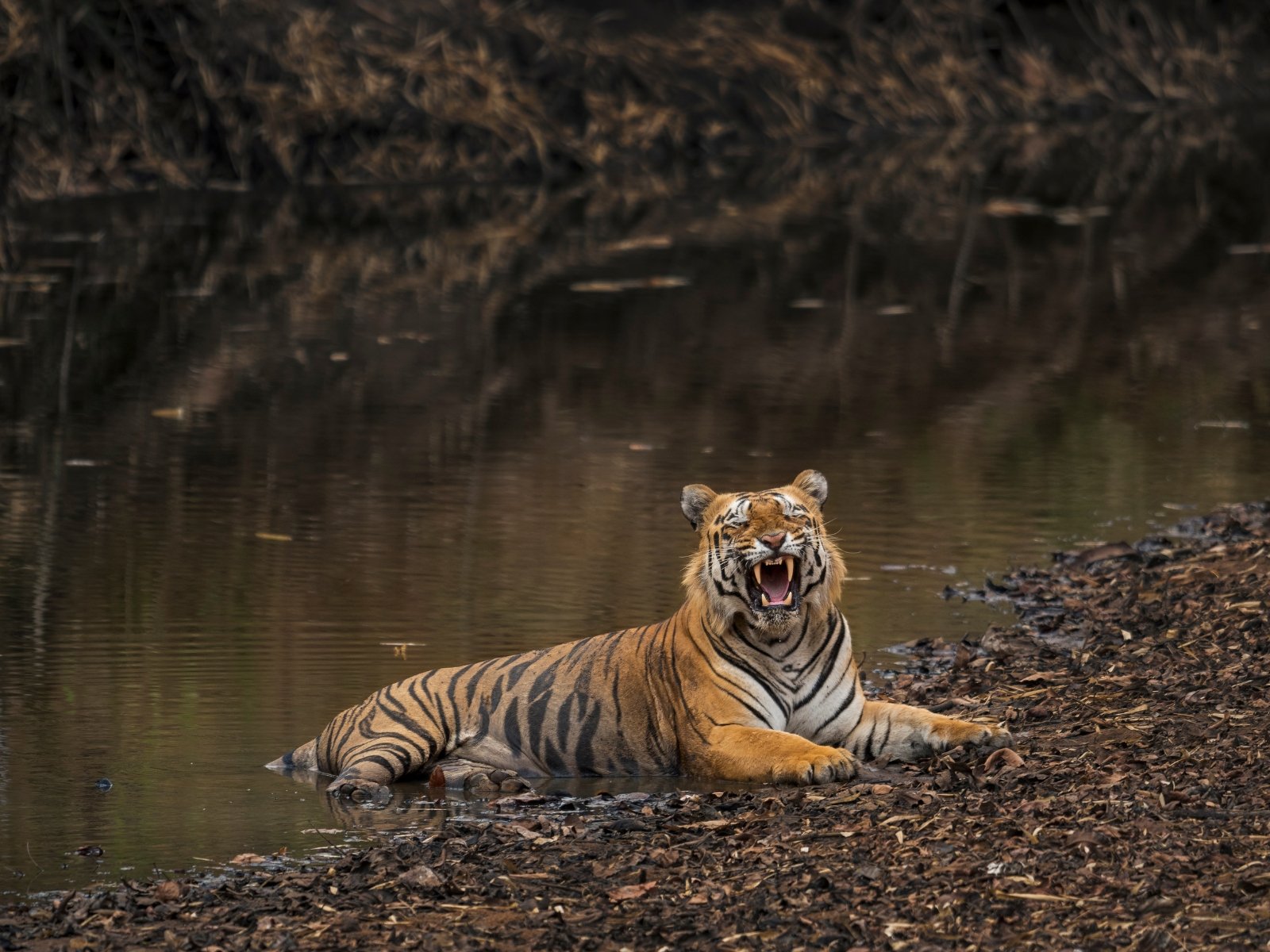
In the Panna data, both revisitation and residence were highest overall during summer and lower during the monsoon. Females also showed higher average values than males across the seasons studied.
That pattern is easy to understand at a broad ecological level. As resources become less evenly distributed, particular parts of the landscape can gain importance. A shaded drainage, a reliable water source or a route connecting useful habitat may be returned to more consistently.
But this is precisely where safari thinking can become too neat.
Summer does not turn a tiger into a creature of fixed appointments. A male may cross a familiar road before dawn and spend the rest of the day kilometres away. A tigress may remain near cubs. Another animal may stay beside a kill long after the temperature begins to fall.
Season creates pressure. It does not remove choice.
The dry months can tighten the map without making the tiger predictable.
A Tigress Does Not Carry the Same Map as a Male
The difference between males and females adds another layer.
Resident tigresses generally operate within smaller home ranges than territorial males. Their movements may become concentrated around prey, water, cover and, at certain stages of life, denning areas and cubs.
A territorial male can inhabit a very different spatial world. His range may overlap those of several females and require long movements between boundaries, scent-marking locations and parts of the landscape where rival males may appear.
Seen this way, it is not difficult to imagine why females in the study showed stronger patterns of repeated use and longer residence.
A tigress may build a relatively dense network of familiar patches inside a smaller territory. A male may repeatedly use certain locations too, but connect them through much longer journeys.
Still, sex did not explain everything.
The most revealing part of the analysis appeared when the researchers stopped asking only whether the animal was male or female and asked something more fundamental.
Which tiger was it?
The Tiger Inside the Data
Environmental variables helped explain the movement patterns, but models that accounted for the identity of the individual tiger explained substantially more.
That finding is easy to bury beneath statistical language. It deserves not to be.
Two tigers may inhabit the same reserve, move through the same dry-deciduous forest and depend on the same broad water system, yet organise their lives differently.
One may favour a particular drainage. Another may use the ridge above it. One may repeatedly return to a road junction. Another may cross the same place rarely. One tiger may linger under taller canopy while another moves straight through.
There are ecological pressures shaping every one of those movements, but there is also an individual animal making them.
There is always an individual animal inside the habitat model.
Anyone who spends enough time with experienced naturalists eventually hears versions of this in the field. A certain tigress tends to cross farther ahead. A male frequently uses one nullah. Another animal rarely walks the main road for long. These observations can easily become folklore if repeated carelessly, which is why they should never be confused with controlled research.
But the Panna study gives us a scientific reason to take individual differences seriously.
A tiger is not simply “a tiger” moving through generic tiger habitat. It is that tiger, moving through a landscape it has learned.
Where the Forest Meets People
Even the relationship with villages refused to produce a simple answer.
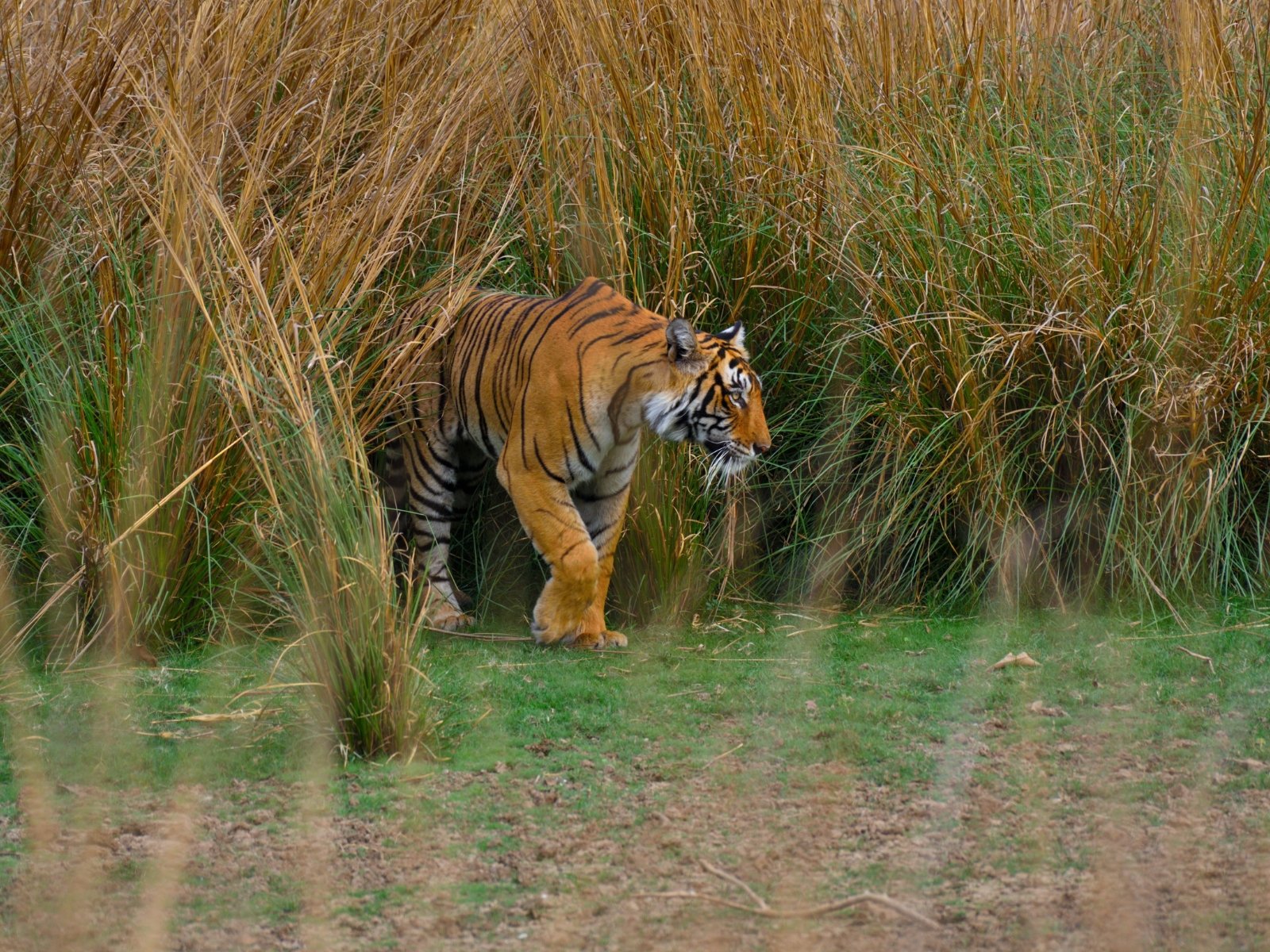
It would be tempting to assume that repeated use should increase steadily as tigers move farther from human settlement. Yet in summer, both revisitation and residence showed broad peaks at intermediate distances from villages rather than simply rising with remoteness.
That does not mean tigers prefer villages. It means that “distance from a village” represents far more than human presence alone.
Village edges can also coincide with roads, agricultural fields, livestock trails, water, forest boundaries and changes in prey distribution. Human activity varies through the day, while tigers can alter their own timing in response.
The border between tiger country and human country is therefore rarely as clean on the ground as it appears on a map.
Panna’s buffer makes this especially visible. Forest, agriculture, settlements and wildlife habitat meet across a wide landscape rather than at one hard boundary. Tigers must learn to navigate that complexity as part of their everyday lives.
A tiger can avoid people while still using ecological features influenced by people. Both things can be true.
What a Naturalist Is Really Reading
On safari, fresh pugmarks immediately create a direction.
The tiger went this way.
The tracks are sharp. Perhaps they appeared after the last vehicle passed. A guide studies their size, the direction of travel and what lies ahead: a waterhole, a junction, a patch of bamboo, a dry stream.
Most of us instinctively ask where the tiger has gone. The idea of recursive movement adds another question: why does it keep coming through here?
One set of pugmarks tells us that a tiger passed. Tracks appearing repeatedly around the same junction begin telling us something about that junction.
The same applies to scrape marks renewed beneath a tree, a scent-marked road or a drainage used again and again. Alarm calls may reveal where the predator is at one moment; repeated signs can gradually reveal something about how that predator uses the landscape over time.
This is where naturalists begin doing more than searching. They are trying to read structure inside movement.
Our guide to alarm calls in Indian jungles explores one part of that language. A sambar call may tell us that a predator is nearby now. Pugmarks tell us where an animal has passed. Scrapes and scent marks reveal communication.
Recursive movement offers another layer: familiarity.
The forest is no longer simply where the tiger might be. It begins to reveal where the tiger repeatedly chooses to move.
Familiar Does Not Mean Predictable
That knowledge comes with a trap.
A crossing becomes known. Guides have seen the tiger there before. Fresh tracks appear around it. Perhaps the animal used it yesterday. The location slowly acquires a reputation until probability begins to sound like certainty.
The tiger crossed here yesterday, so surely it will cross again this morning.
But a recurring place is not an appointment.
The Panna study reveals patterns visible across weeks and months. It does not tell us where an individual tiger will be at 8:17 tomorrow morning.
That distinction lies at the heart of wild-animal watching.
As we explored in Why You Can Spend Four Safaris in Tiger Country and Still Not See a Tiger, safari visitors experience only narrow slices of an animal’s day and only the roads available to us. A tiger may use the same route repeatedly and still pass through it several hours before the gates open, after they close, or ten minutes after our vehicle leaves.
Familiarity creates tendencies. Wildness preserves uncertainty.
What Thousands of GPS Points Still Cannot Tell Us
The power of the Panna study lies partly in what it reveals, and partly in what it refuses to pretend it knows.
The researchers worked with 250-metre analytical neighbourhoods and required a tiger to leave one of those areas for at least 12 hours before its return counted as a new revisit. Those choices allow repeated-use patterns to be measured consistently across enormous volumes of movement data.
But a recurrent-use patch is still an analytical patch. It does not automatically tell us what the tiger was doing.
The animal may have been travelling, resting, feeding, scent-marking, following prey, using shade, accessing water, or doing several of those things during different visits.
This is where the numbers meet the limits of observation.
The pattern can be measured without every reason behind that pattern becoming visible. And perhaps that is appropriate.
A forest does not surrender all of its meaning simply because an animal wears a GPS collar.
Why Repetition Matters for Conservation
For conservation, however, knowing that some places are repeatedly used may be extremely important.
Traditional habitat analysis can tell us where tigers occur. Recursive movement adds another question: which parts of that occupied landscape are repeatedly returned to, and which hold animals for unusually long periods?
A place crossed once and a place used dozens of times may both appear as tiger locations, yet their ecological roles can be very different.
A narrow movement route may connect two important areas of a territory. A summer refuge may become valuable only during the driest months. Another patch may repeatedly hold a female because of some combination of prey, cover and security that is difficult to recognise from vegetation maps alone.
The study suggests that these fine-scale patterns can add something important to conventional habitat analysis.
But its limits matter just as much as its findings.
The work followed 12 resident tigers in one dry-deciduous reserve. Panna is not Corbett. It is not the Terai. It is certainly not the Sundarbans. Relationships between water, cover, people and movement may look very different elsewhere.
The value of the study is therefore not that it gives us a universal formula. It is that it makes universal formulas look less convincing.
Protecting tigers may require protecting enough complexity for different animals to build different lives inside the same landscape.
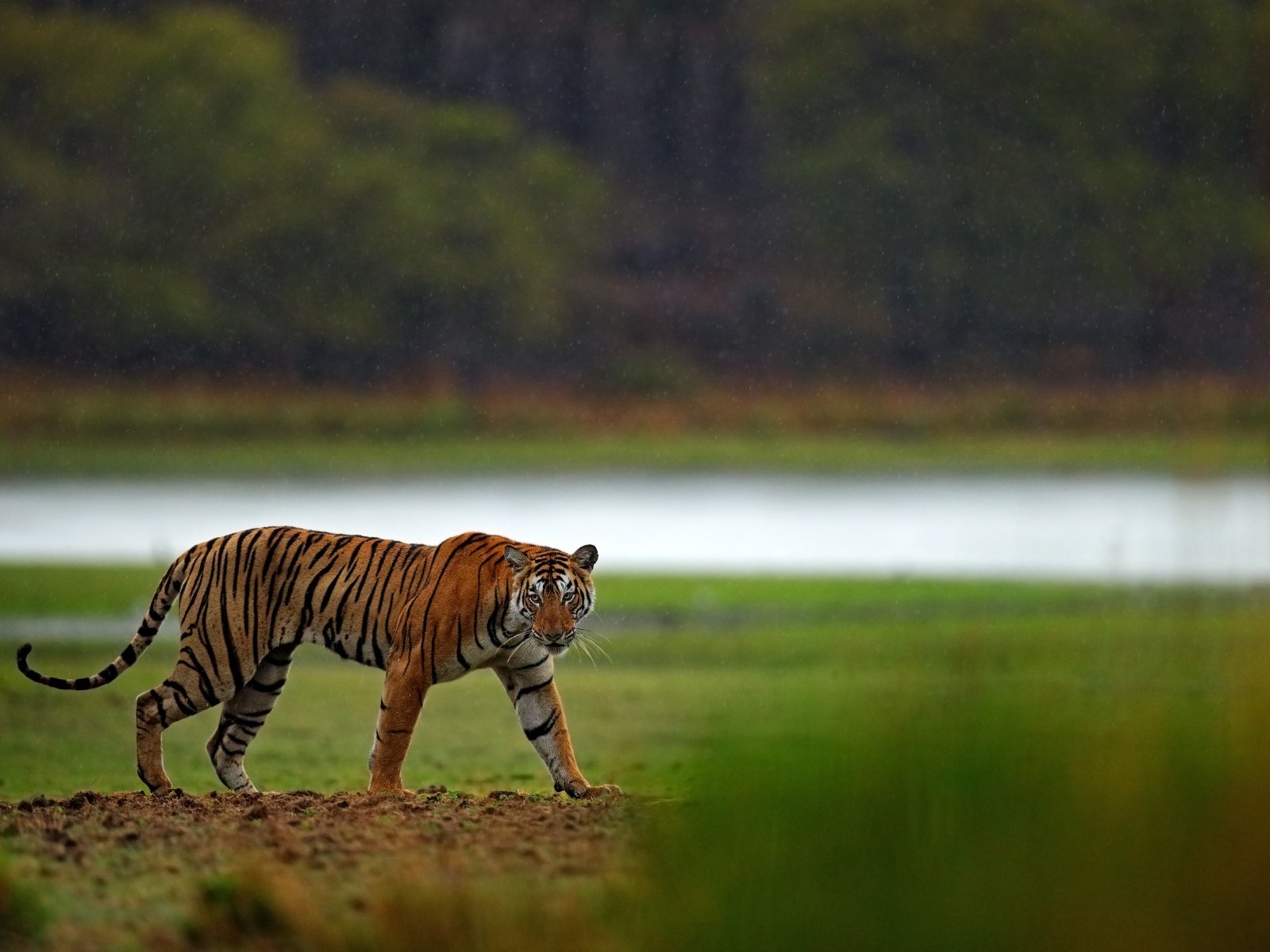
The Forest a Tiger Knows
Long after the safari vehicles leave, those lives continue.
A tigress descends from a plateau after dark and follows a familiar drainage towards water. Somewhere else, a male crosses an old route through his territory before sunrise. Another tiger enters a patch of forest it has visited many times before, remains for a while and then moves on.
Hours later, the GPS collar transmits another location.
On a computer screen, that point joins thousands of others. Eventually it becomes part of a revisitation rate, a residence-time estimate or a curve describing how movement changes with season and habitat.
Inside Panna, none of those terms exist.
There is only the tiger and the landscape.
A slope remembered because it has been crossed many times. A drainage that leads somewhere useful. A patch of shade worth returning to. A route that becomes familiar simply because the animal has walked it before.
Not every tree has equal meaning. Not every stream, gorge or road occupies the same place in a tiger’s life.
Through repetition, the forest becomes uneven with familiarity.
And somewhere inside that familiar landscape lies the reason the tiger returns.
Frequently Asked Questions
What does recursive movement mean in tigers?
Recursive movement refers to an animal returning to locations it has previously used. In the Panna research, scientists separately examined how frequently tigers revisited locations and how long they remained there during those visits.
Did the study prove that tigers have favourite places?
Not in the human sense of a favourite place. It showed that some parts of a tiger’s range were repeatedly used more than others and that those patterns were associated with environmental conditions, season, sex and individual identity.
Did female tigers return to places more often than males?
In this particular Panna dataset, females showed higher average revisitation rates and longer residence times than males. The result describes these animals in this landscape and should not be turned into a universal rule for every tiger population.
Can guides use this research to predict tiger sightings?
It can help explain why certain routes or patches may repeatedly show tiger activity, but it cannot predict when an animal will appear. A repeated movement pattern exists across time; a safari takes place during only a few hours of it.
Why does recursive movement matter for conservation?
Because simply recording that a tiger used a location does not reveal whether it passed through once, repeatedly returned or spent long periods there. Understanding those differences can reveal finer-scale structure within an animal’s home range.