“How many safaris do we need?”
We hear some version of that question all the time.
Two drives? Four? Six?
It sounds like a question about numbers.
It rarely is.
Because somewhere behind it is a much more human question:
How long do we need to give the forest before a tiger appears?
And that is where things become interesting.
We have watched tigers appear within minutes of entering a reserve.
We have also followed fresh pugmarks for hours, listened to alarm calls build through the forest, waited at a waterhole that felt almost certain — and left without seeing the animal at all.
The tiger may have been close.
Very close.
But a forest does not reveal everything simply because we have arrived.
So when somebody asks us whether two safaris are enough, or whether they should book four or six, we do not begin with arithmetic.
We begin with the landscape.
Which reserve?
Which season?
Which zones are open?
What are the animals doing there now?
Because six drives through one forest can be very different from six drives through another.
A place like Tadoba can feel wonderfully generous. We have been visiting it since 2009, and over the years there have been periods when even the buffers have been more productive than the core. Monsoon can be excellent. Summer can be excellent. Sometimes a particular female begins using one stretch repeatedly, and suddenly a road that looked unremarkable a few days earlier becomes the place everyone is listening to.
That is the part statistics struggle to capture.
A tiger population estimate can tell us how many animals a landscape may support.
It cannot tell us what happens when a sambar calls twice from the same patch of bamboo and everyone in the vehicle falls silent.
It cannot tell us what it feels like when fresh pugmarks continue around the next bend.
And it certainly cannot tell us whether the tiger will step out.
That uncertainty is not a flaw in the experience.
It is the experience.
The real question, then, is not simply whether two, four or six safaris are “enough.”
It is what each additional drive allows you to understand before the forest gives you its answer.
So, Is Two Safaris Enough?
Sometimes it is. We have had guests see a tiger on their first drive, and there are trips when the forest seems almost embarrassingly generous. You enter, settle into the rhythm of the road, and before there has been time to build much suspense, a tiger is standing in front of you.
That can happen, and it is one of the reasons we would never tell somebody that two drives are pointless. A single morning can give you a memory that lasts for years.
What two drives do not give you is much margin. One quiet morning means half your opportunity is already gone. Rain can alter movement, a tiger may have made a kill somewhere away from the road, or an animal that had been using one part of the reserve repeatedly may shift before you arrive.
Nothing has gone wrong. The forest has simply continued with its own business.
There is another thing worth understanding. Even when we enter a tiger reserve, we are seeing only part of the landscape available to a tiger. India’s tourism guidelines deliberately restrict regulated tourism to a limited proportion of critical tiger habitat rather than opening the entire forest to visitor traffic. NTCA’s tourism guidelines provide the framework for that regulated access.
Our vehicle follows permitted roads. The tiger has everything between them.
So if two safaris are all you can fit, do them. But if seeing a tiger is one of the principal reasons for travelling, we would usually want to give the forest more time than that.
What Changes When You Book Four?
By the third or fourth drive, something subtle begins to happen: the forest stops feeling anonymous. A junction now has history because a tigress crossed there yesterday. A waterhole means more because you remember the alarm calls from the previous evening.
Pugmarks also begin to mean more. On the first morning they may simply be exciting marks in dust; by the fourth drive, you may remember which direction they were heading, which animal has been using that part of the forest, and what happened there the day before.
Information starts carrying from one safari into the next, and you change with it. On your first drive every alarm call feels equally important. A few drives later, you begin to hear the difference between one uncertain call and a sambar that has called repeatedly from the same patch of forest.
You begin to understand why the naturalist has stopped, why the engine is off, and why everybody has suddenly gone quiet.
You start participating in the search.
A call comes from somewhere beyond the trees. A minute passes, then another comes from the same direction, slightly closer this time. Nobody can see anything, but the entire mood of the vehicle has changed.
That twenty-minute stretch before an animal appears — or does not — can become one of the most absorbing parts of the drive. It cannot be manufactured. The forest has to be given time to create it.
Four Safaris Are Not Four Copies of the Same Drive
This is one of the biggest misunderstandings about booking additional safaris. Four drives are not four attempts at exactly the same thing, because the forest you enter tomorrow is not quite the forest you entered today.
Rain may fall overnight. A tiger may make a kill. A territorial male may move through the edge of another animal’s range, a tigress may shift her cubs, prey may gather somewhere different, or cloud may keep a normally hot afternoon unexpectedly cool.
The variables rearrange themselves constantly.
Recent research from Panna makes this particularly interesting. A 2026 study of twelve resident tigers examined repeated use of places across summer, monsoon and winter and found that revisitation and residence patterns varied with season, sex, habitat features and individual identity.
That feels very familiar from the field. We want a rule, while the tiger usually gives us tendencies. One animal may repeatedly use a stream crossing, another may favour a particular road, and another may behave differently enough to make all the neat rules feel temporary.
So your fourth safari is not simply attempt number four. It is another version of the landscape.
Why the Reserve Changes the Answer
This is where a simple recommendation like “book four safaris” begins to fall apart. Four drives in Tadoba are not the same proposition as four drives in Kanha, Bandhavgarh, Pench or Corbett, because the character of the landscape and the way tigers use the tourism area differ.
Tadoba is a useful example because we have been visiting it since 2009. Over those years it has repeatedly shown us why some tiger landscapes can feel unusually generous with opportunity.
Part of that can be measured. In the 2021 Phase IV monitoring of Tadoba-Andhari’s core and buffer, 85 adult individual tigers were photographed and the population was estimated at 86, at roughly 6.31 tigers per 100 square kilometres in the sampled landscape.
That is useful context, but it is not what a Tadoba safari feels like.
In the drier months, parts of the forest can become wonderfully readable. Teak drops its leaves, dust records movement, sight lines open, and water starts to influence where animals spend time. A set of pugmarks can continue along a road for hundreds of metres before disappearing into cover.
A sambar calls from somewhere ahead. Perhaps another answers farther away. The vehicle slows, and suddenly everybody is looking into the same stretch of bamboo.
Nothing has happened yet, but the drive has changed.
And Tadoba is not merely a summer story. Some of our most exciting tiger watching there has come during the monsoon, particularly in the buffers. There are periods when a buffer can be every bit as productive as the core, and sometimes more so.
That is one of the reasons we dislike treating the core as the “real” safari and the buffer as a consolation prize. The tiger knows nothing about that hierarchy; it follows prey, cover, water, territory and other tigers.
So when we are planning a trip, the useful question is rarely just “Which zone is famous?” We want to know what is happening now. Which tigress has been using which side? Where have the alarm calls been? Has a male begun moving through? Are cubs being seen regularly? Has a particular buffer suddenly become more active than the core?
Those conversations can matter more than the label on the permit.
What Six Safaris Actually Give You
Six drives do not simply mean two additional chances. By then, the landscape has usually begun to acquire familiarity.
You recognise roads and remember where an animal crossed. You know which water body lies beyond the next turn, and you notice when the naturalist slows down before a particular stretch of bamboo because you already know that something has been happening there.
Perhaps you have heard about the same tigress for two days without seeing her. Fresh tracks keep appearing on one side of the zone, and another vehicle caught a brief glimpse the previous evening. Then, on your fifth morning, a sambar calls and the vehicle stops.
This time, you already understand why.
That is where safari begins to become less about ticking off a tiger and more about following a story. You may be following one animal through fragments of its life: a track here, an alarm call there, a crossing from yesterday, a glimpse reported by another guide.
And then, perhaps, the tiger itself.
When that happens, the sighting carries everything that came before it. The empty road, the wrong turn, the pugmarks and the waiting have all become part of the encounter.
The tiger has not become more magnificent because you waited longer. The landscape around it has simply acquired meaning.
Does That Mean Six Is Always Better Than Four?
No. This is where planning matters more than arithmetic.
We would rather plan four intelligent drives in a productive landscape than six chosen blindly. Six badly arranged safaris are still badly arranged safaris: you can lose time transferring unnecessarily between reserves, book zones only because they are available, or chase a reputation based on what happened last season while the animals are doing something entirely different now.
More is not automatically better.
The useful question is whether those additional drives are giving the forest more time to reveal itself. If a tigress has been using one area repeatedly, fresh signs are appearing and alarm calls have been heard there, changing zones simply for variety may mean abandoning the most useful information the forest has given you.
Of course, the animal may still move. Yesterday’s promising road can be silent today, and that uncertainty never disappears.
Good planning does not remove uncertainty. It simply makes better use of what the landscape is telling us.
Should You Repeat the Same Zone?
Sometimes, yes. There is an understandable temptation to keep changing zones because variety feels safer, but a new zone is not automatically a better chance.
Suppose a tigress has been using one part of the reserve repeatedly. Perhaps fresh tracks are appearing, alarm calls came from there the previous evening, or guides know that she has cubs somewhere in that landscape.
In that situation, returning can make perfect sense. The forest has already given you information, and sometimes it is better to listen than to start again somewhere else.
At other times, changing zones is exactly what we would do. Animals move, activity shifts and yesterday’s productive patch can become completely quiet.
There is no universal formula, which is precisely why recent information and people who know the landscape matter.
Morning or Afternoon?
We are asked this nearly as often as we are asked how many drives to book, and we do not really think of one as universally better than the other. They are different windows into the animal’s day.
A tiger may have been moving through the night and still be active when the morning gates open. Another may already be resting beside a kill. An animal that sleeps through the warmest part of the day may begin moving later in the afternoon.
Then weather changes the picture. So do cubs, another tiger entering the territory, prey movement and a carcass hidden fifty metres from the road.
The 2026 Panna study is useful precisely because it resists the temptation to reduce tiger space use to one simple rule. Patterns varied across seasons, sexes and individuals, which is exactly the complexity we encounter while watching them.
So where the itinerary allows it, we like a mix of morning and afternoon drives. Not because morning plus afternoon creates certainty, but because each allows you to enter the story at a different moment.
What We Usually Recommend
If tiger safari is simply one part of a larger journey, two drives can absolutely be worthwhile. We would never tell somebody not to go merely because they cannot fit four; the forest may surprise you immediately.
If seeing a tiger is one of the main reasons for travelling, four usually gives us much more to work with. There is time for conditions to change, for information from one drive to matter on the next, and for the landscape to stop feeling completely unfamiliar.
And if somebody genuinely loves wildlife and has the time, six can be wonderful. Not because the sixth drive crosses some secret statistical threshold, but because by then the reserve has started becoming a place rather than a name on an itinerary.
You know a little more, notice a little more, and begin to understand how much you still do not know.
So: Two, Four or Six?
If you force us to reduce all of this to three numbers, this is how we would think about them.
Two drives can give you a tiger. They can even give you an exceptional tiger experience, but there is very little margin if the forest is quiet.
Four drives give you context. You begin carrying information from one drive to the next, seeing different hours and conditions, and understanding why particular places matter.
Six drives give a story time to develop. Individual animals, routes, recent movement and the character of the landscape begin linking together.
Those are not probability bands. Four safaris do not become “good odds” simply because the number is four, six do not guarantee anything, and two should never be dismissed as pointless.
Wildlife refuses that kind of arithmetic.
The Number Is Never the Whole Answer
People understandably want certainty. They are travelling long distances, spending money and, in many cases, have dreamed about seeing a wild tiger for years.
So they ask us for the number: two, four or six?
We think about that number carefully when we plan a trip, but after enough years in tiger country you also learn where numbers stop helping. A population estimate cannot tell you which tiger will use the road tomorrow. A famous zone cannot summon one, and six permits cannot force an animal out of bamboo.
And yet planning matters enormously.
Good planning puts you in the right landscape, with enough time and with people who know how to read what is happening around them. Then something else takes over.
Perhaps the tiger appears twenty minutes into the first drive. Perhaps it remains a collection of tracks and alarm calls for three days. Or perhaps, on the fifth safari, the forest suddenly goes quiet and a sambar begins calling from somewhere ahead.
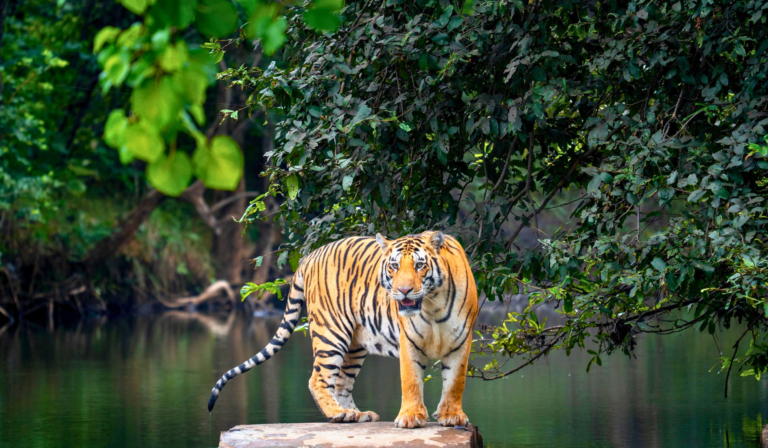
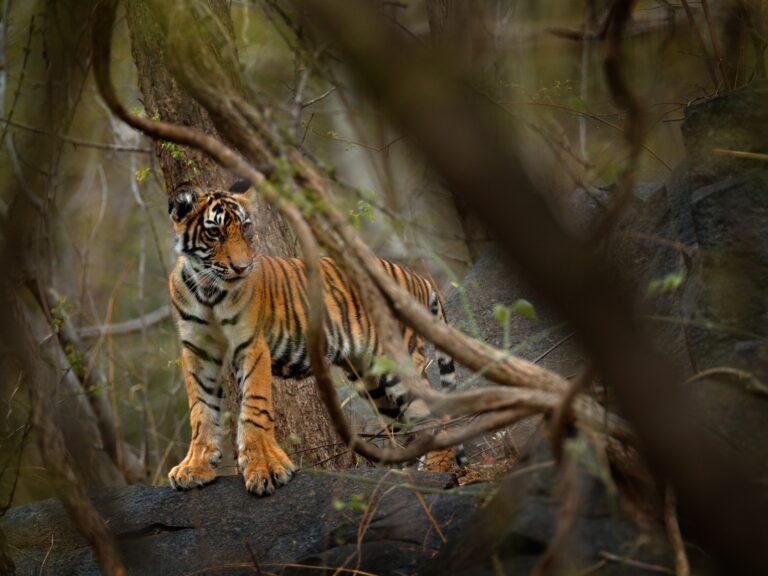
The vehicle stops. Minutes pass. Then something moves between the trees — at first only colour, orange behind bamboo, and then the shoulder and the heavy head.
The tiger steps out.
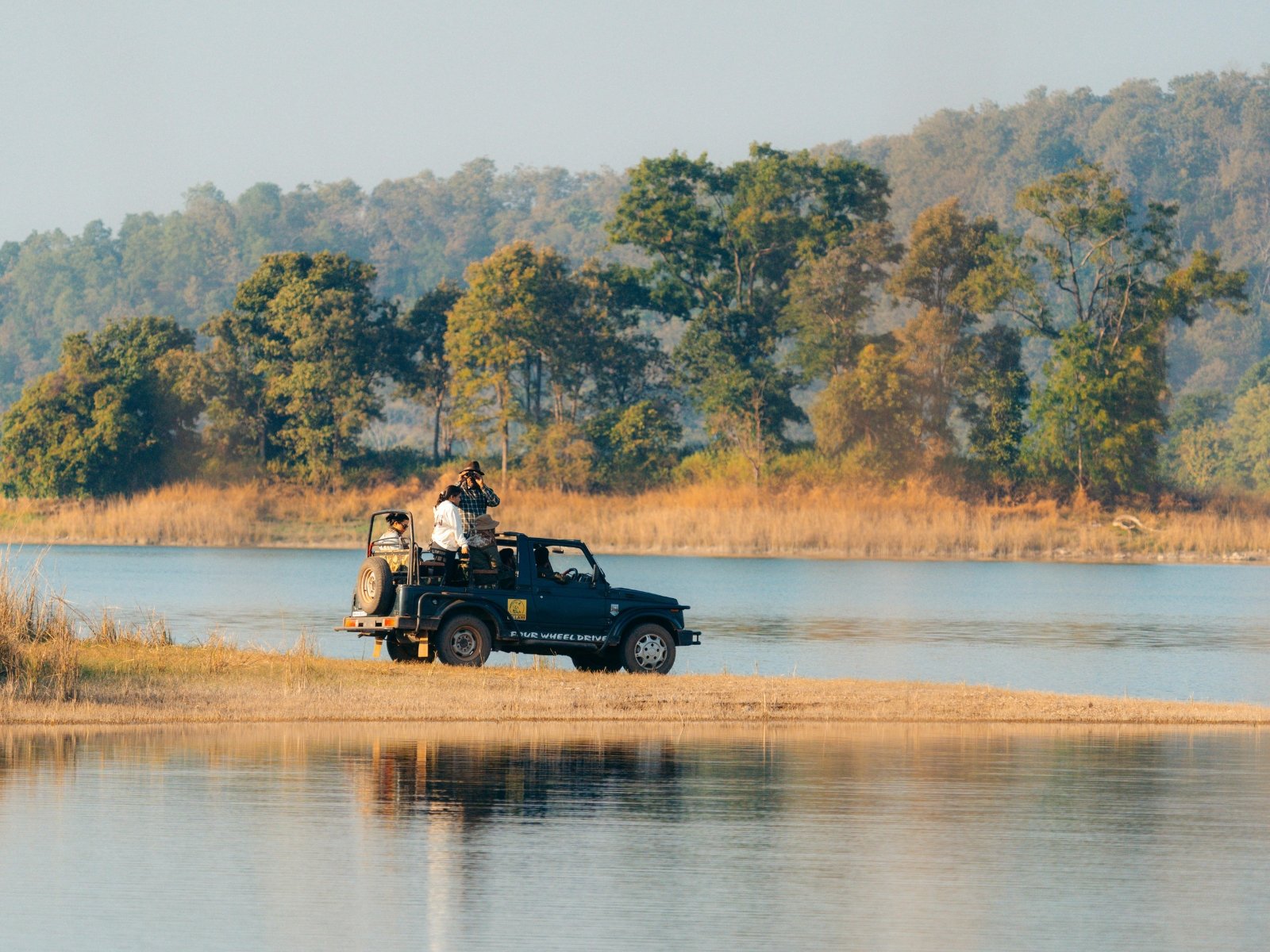
For the animal, this is simply another crossing inside a landscape it knows intimately. For everybody in the jeep, the old question about whether two, four or six safaris were “enough” suddenly feels very far away.
Because this was never really about reaching a number.
It was about giving yourself enough time to be there when two journeys finally crossed.