“Which park should we choose for our first safari?”
We hear that question all the time. It sounds simple, but it usually takes us a while to answer because the word best hides several different questions inside it.
Is the tiger the dream? Do you want elephants just as much? Are you travelling with children? Do you want open country for photography, a quieter forest, or a reserve where there is always something happening even if the tiger stays out of sight?
And then there is the question that can overturn every recommendation we make: what safari permits are actually available for your dates?
That is not the glamorous part of wildlife travel, but it is one of the most important. A famous reserve with one awkward permit can make far less sense than a less famous forest where we can build a proper sequence of morning and afternoon drives.
So we do not keep a permanent league table of Indian wildlife reserves.
We look at the traveller, the season, the landscape, what the animals have been doing recently, and the safaris we can actually secure.
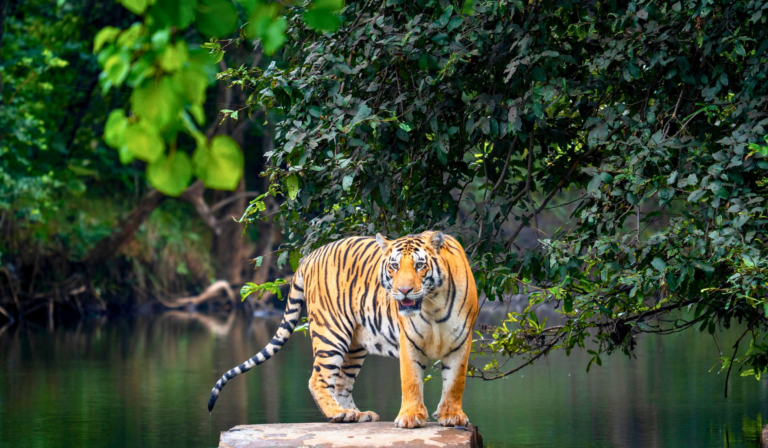
If the Tiger Is the Main Dream, Tadoba Is Still the First Place We Think About
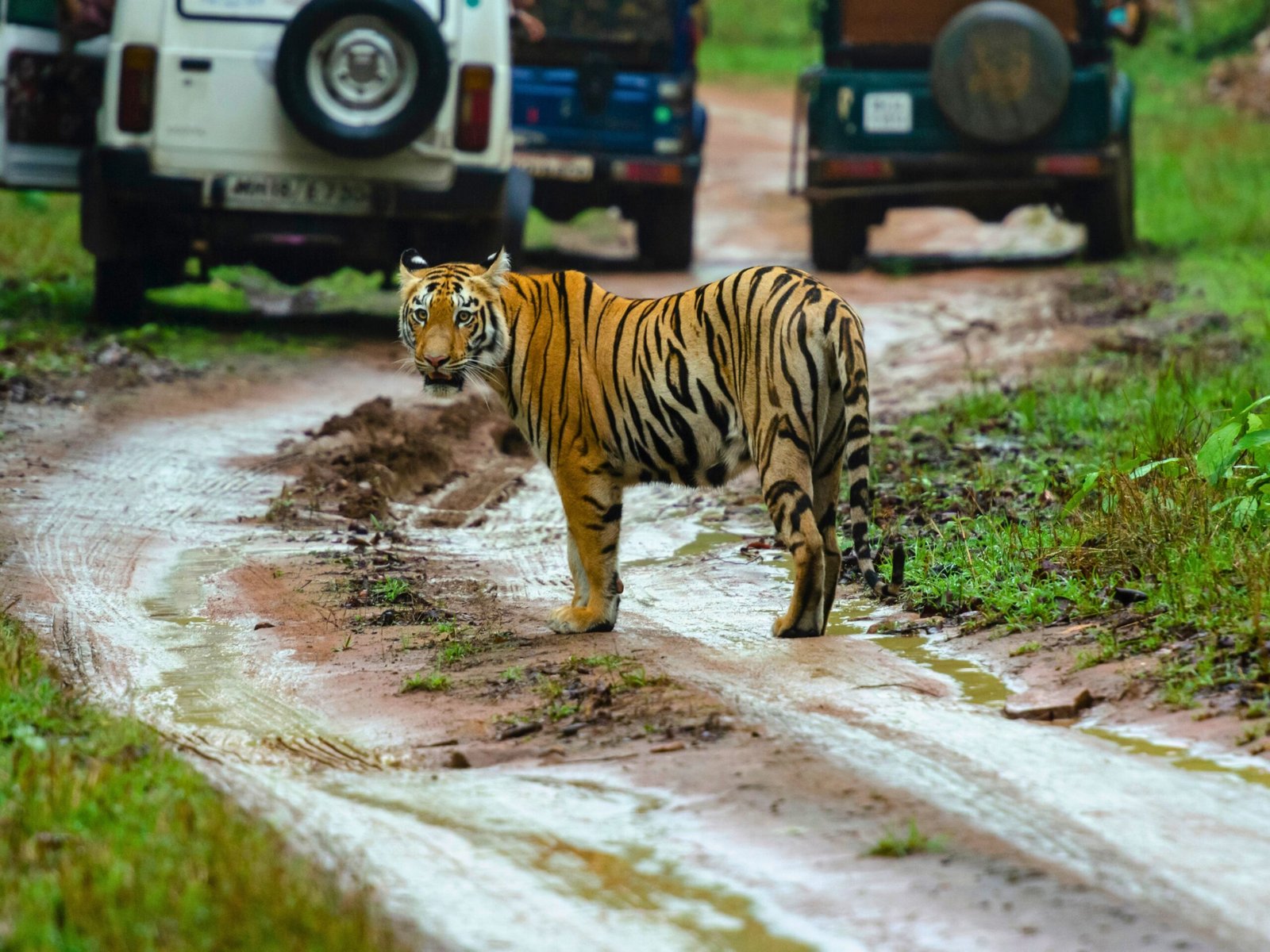
We have been visiting Tadoba since 2009, and that long familiarity matters more to us than any generic list describing it as a “top tiger park”.
Tadoba has a quality that first-time visitors often respond to very quickly: the forest can become readable. In the drier months, teak opens up, tracks hold beautifully in the dust and water begins to shape movement differently. You can start to understand why the guide slows down on one road and not another.
But Tadoba is not just a summer story. Some of our most exciting tiger watching there has come in the monsoon, particularly in the buffers, and there are periods when we would rather have an active buffer permit than a quiet core one.
That is one of the reasons Tadoba works so well for a first safari. The current system offers six core and sixteen buffer gates, and regular gypsy safaris can be booked up to 120 days in advance. The reserve’s current safari system gives us more ways to build a sensible programme than simply chasing one famous gate.
The tiger population also gives the landscape real weight. Current Tadoba material reports more than 90 tigers in the reserve, while detailed monitoring in recent years has consistently shown a strong tiger population across the core-and-buffer landscape. That number is useful context, but it is not the reason we recommend Tadoba.
We recommend it because we know how the forest behaves.
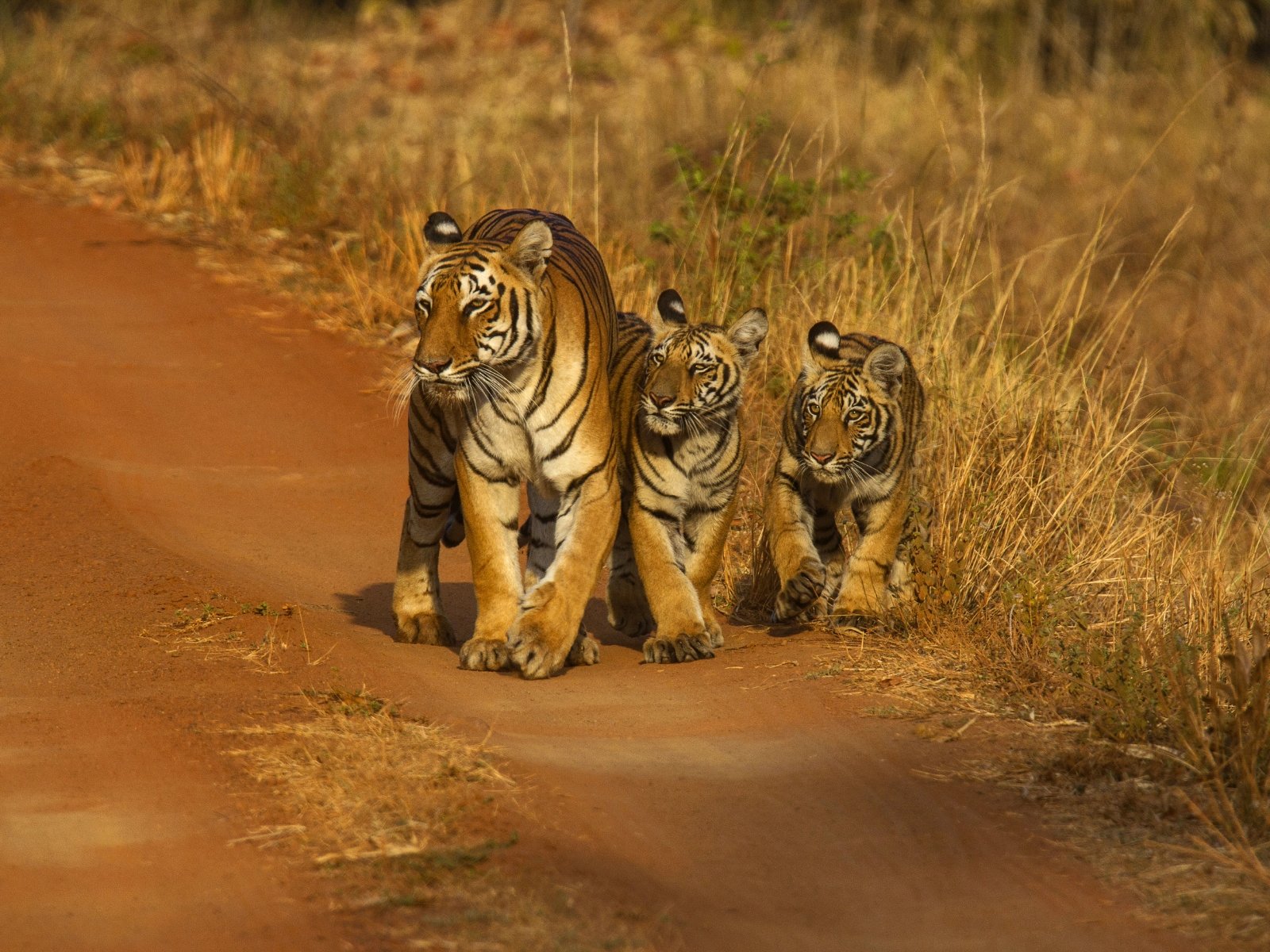
A road that was quiet yesterday may suddenly have fresh tracks. A tigress may start using a buffer repeatedly. A male may shift into another part of the landscape, and suddenly the conversations at the gate change.
Nothing has to happen immediately for the forest to feel promising.
That is a very good way to begin a safari life.
Panna Is Why We Do Not Trust Old Reputations
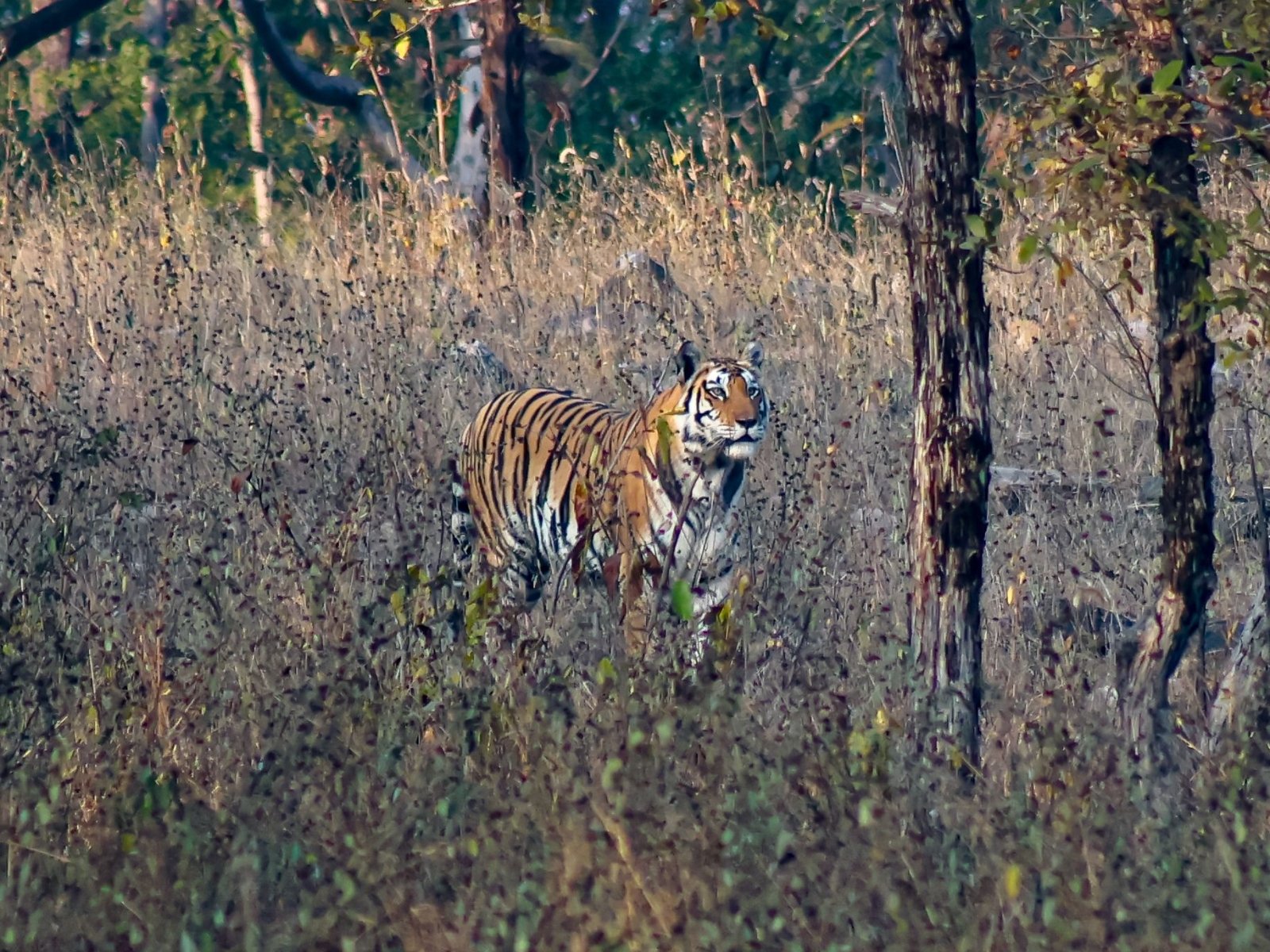
Panna had an excellent summer season in 2026.
That matters more to us than an old ranking written years ago. Wildlife landscapes change too quickly for fixed reputations to remain useful forever.
Tigers shift territories. Cubs become adults. A new male can alter movement across a large part of a tourism zone, while another area that was fashionable for several seasons can suddenly become quiet.
Panna is a good example of why we prefer current field reality over inherited wisdom.
The reserve’s tourism system is relatively straightforward, with Madla and Hinauta as the main tourism zones and defined daily carrying capacities. The current MP Forest tourism profile lists the zone structure and vehicle limits.
If we can secure a sensible run of drives there during a productive period, we would take Panna very seriously for a first safari. We would not reject it simply because another reserve has the more famous name.
Panna also has a character of its own. The Ken River, dry forest, cliffs and more open stretches make it visually very different from Tadoba or Kanha.
A first safari should not feel interchangeable with every other safari.
Panna does not.
Bandhavgarh Can Be Brilliant, but the Month Matters
Bandhavgarh has an extraordinary tiger history, and at the right time it can produce superb wildlife watching.
But the name can sometimes create the wrong expectation.
Dense foliage changes everything.
There are periods when the forest becomes genuinely difficult to read and animals can be much harder to pick out than a first-time visitor expects from a reserve with Bandhavgarh’s reputation.
That is not a criticism of the park. It is simply what a forest does when visibility closes.
Bandhavgarh currently has three core zones — Tala, Magadhi and Khitauli — with Dhamokhar, Johila and Panpatha as adjoining buffer tourism areas. The MP Forest Department publishes the current zone and carrying-capacity structure.
So when someone tells us, “We have heard Bandhavgarh is the best,” our next questions are about the dates and the available zones.
If the month, permits and recent activity line up, absolutely.
If they do not, we would rather recommend another forest than sell a reputation.
If You Want the Forest to Matter as Much as the Tiger, Look at Kanha
Some first-time visitors are very clear that they want a tiger. Others want their first experience of an Indian forest to stay with them even if the tiger never appears.
Kanha is one of the places we think about immediately for the second person.
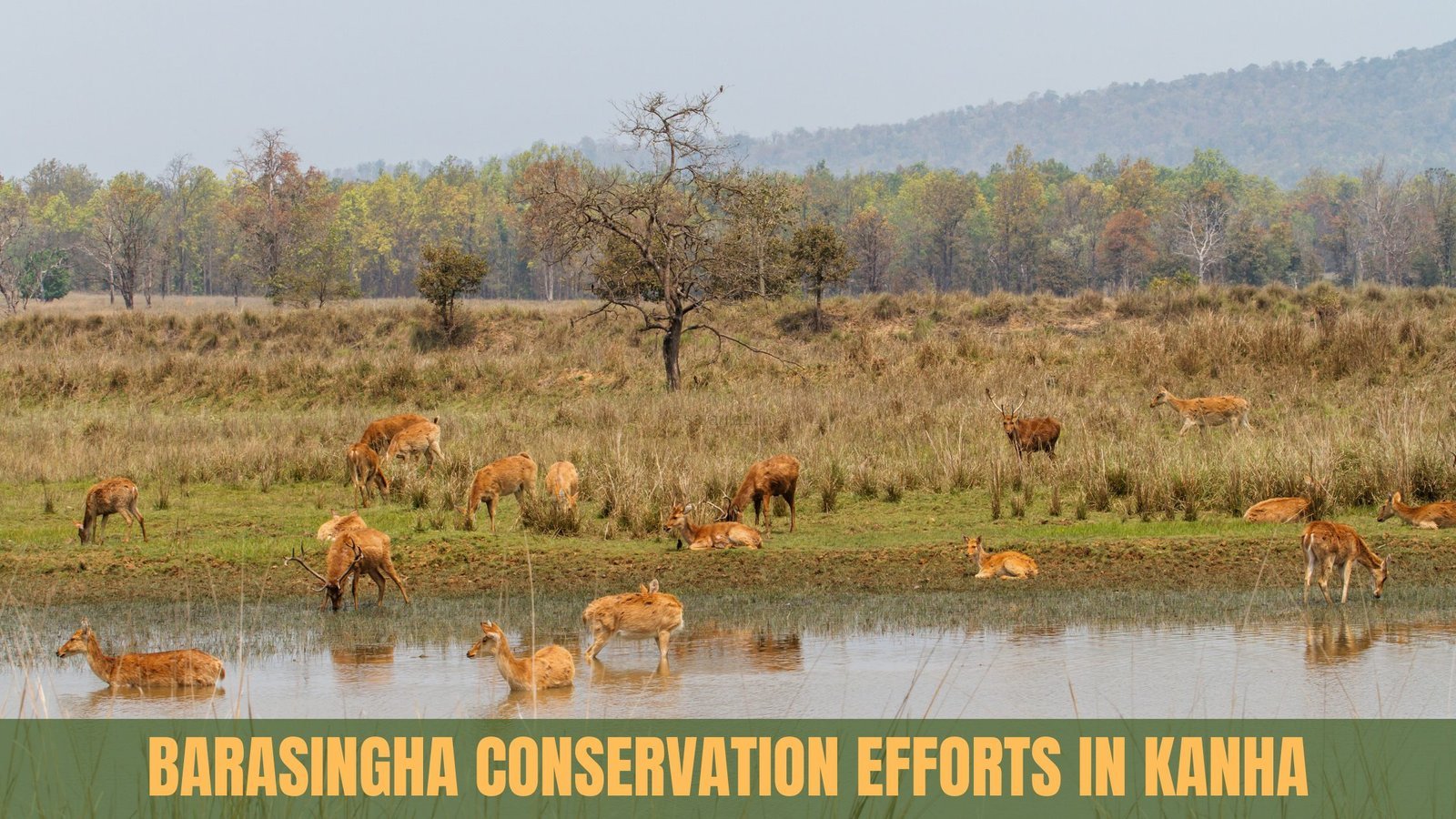
The scale changes the mood of the safari. Sal forest gives way to meadows, gaur move through the landscape, hard-ground barasingha give Kanha an identity of its own, and there is enough happening around you for a quiet tiger morning to remain a very good morning.
That matters more than people realise.
A first safari can become exhausting if the entire experience is judged by one animal. In Kanha, the forest is strong enough to carry the day.
The reserve currently has four core tourism zones — Kanha, Kisli, Mukki and Sarhi — plus adjoining buffer areas and Phen Sanctuary. Current vehicle capacities are zone-specific, which is why we always think about the lodge and the permit together.
A Mukki permit and a lodge near the wrong gate can turn a lovely safari into a logistics problem.
The reserve may be excellent.
The itinerary still has to be intelligent.
Pench Is One of the Easiest Forests to Recommend to Families
Pench often works beautifully for first-time travellers because there is usually something to watch while you are still learning how to look.
Chital move through the grass, langurs scan from the trees and gaur can appear quietly at the forest edge. Add dholes, rich birdlife and the constant possibility of tiger, and the safari rarely feels as though nothing is happening.
That makes a difference with children, or with adults who are discovering wildlife travel for the first time.
The Maharashtra side currently operates through eight tourism gates, and specific buffer areas such as Nagalwadi and Paoni U.C. continue to offer monsoon safaris when the core is closed. The reserve publishes the current safari and monsoon arrangements.
Access from Nagpur is another practical advantage.
We do not think convenience makes a safari less wild. Sometimes it simply means the family arrives at the gate excited rather than exhausted.
Pilibhit Gives You a Completely Different First Forest
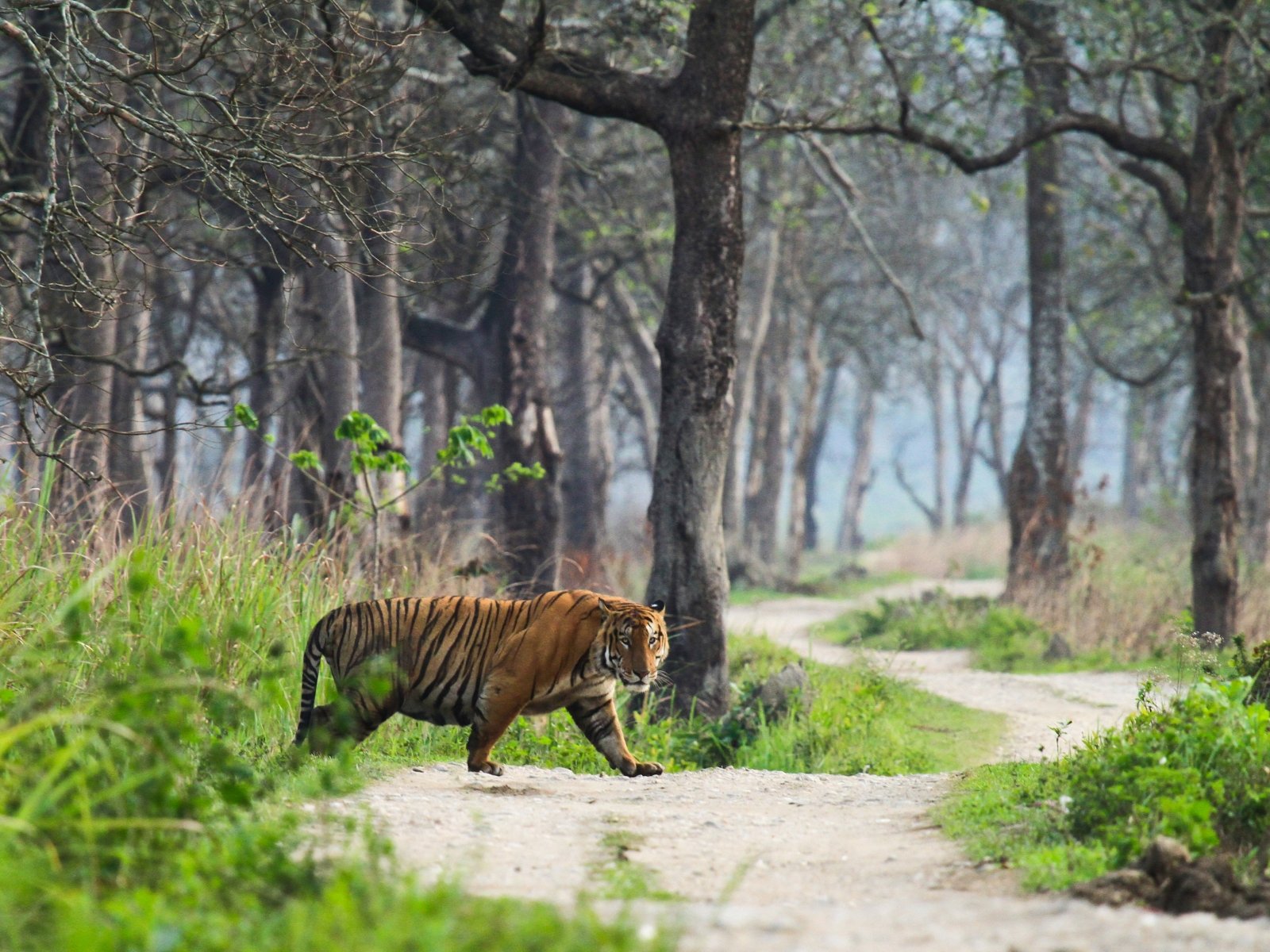
Pilibhit deserves far more attention than it receives.
If most of your idea of tiger country has been built around central India, the Terai feels different immediately. Sal forest, tall alluvial grass, swampy ground and river-fed habitats create a landscape that can feel denser, greener and more secretive.
The reserve covers about 730 square kilometres and forms part of the Terai Arc Landscape. NTCA describes the landscape as sal forest, tall grassland and swamp habitat shaped by rivers including the Sharda system.
For the right first-time traveller, that difference is the appeal.
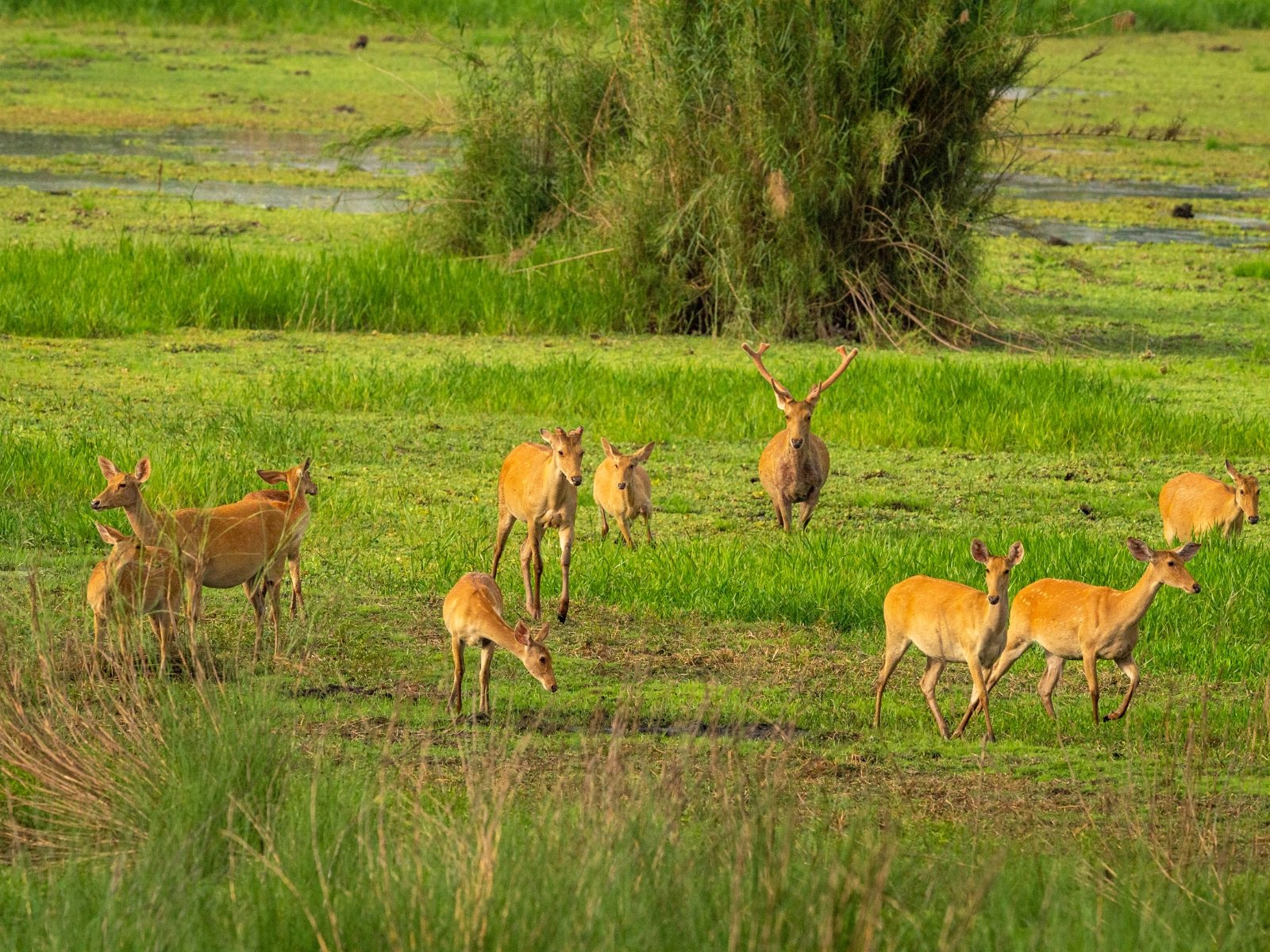
You are not choosing Pilibhit because it appears on every “top five tiger parks” list.
You are choosing it because you want the Terai.
And when safari availability is poor in the better-known central Indian reserves, Pilibhit becomes even more interesting.
A lesser-known name does not mean a lesser forest.
Corbett Is for Someone Who Wants Wilderness Before Convenience
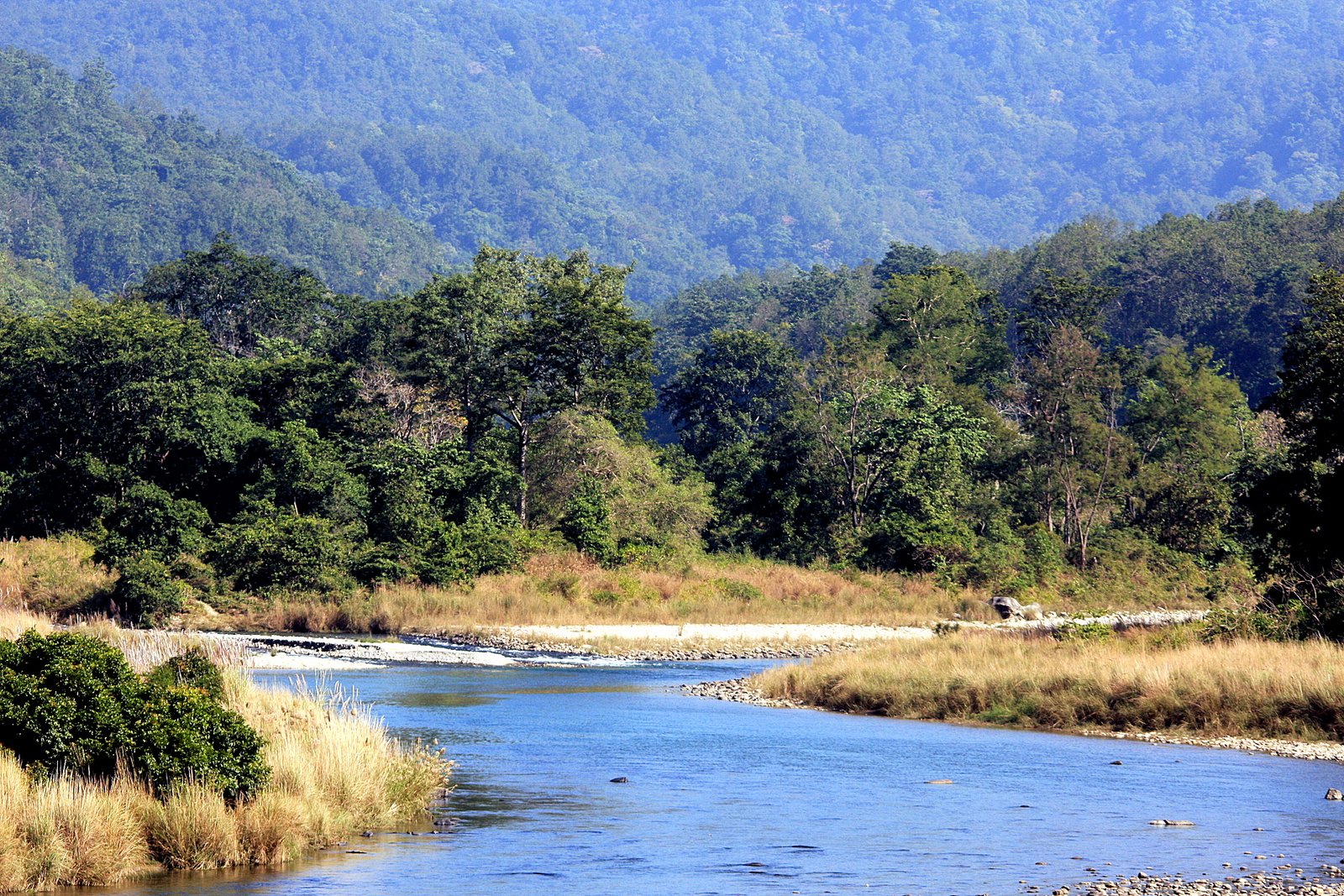
Corbett is not the reserve we automatically suggest to somebody who says, “Give me the simplest route to my first tiger.”
It is the reserve we start thinking about when somebody says, “I want wilderness.”
The landscape is larger than the tiger. River systems, grasslands, forested hills, elephants and exceptional birdlife make the safari feel like part of something much bigger than a predator search.
That can be unforgettable.
It can also be more complicated.
Corbett’s booking system varies by zone, and in September 2026 the reserve was in the middle of a portal transition. Bijrani advance day-safari bookings were opening 45 days ahead, while Dhela, Jhirna and Garjiya were moving onto the upgraded system and some other zones continued under shorter booking windows. The current reserve notices spell out those differences.
Dhikala is another conversation entirely, particularly when night stays are involved.
That is why “Corbett” is not enough information for us.
Which zone?
Which dates?
Day safari or a stay inside?
What permits can actually be built into the trip?
For somebody who values wilderness, elephants and the feeling of a huge living landscape, those complications can be worth it.
For somebody whose only dream is the most straightforward first tiger safari, we may choose differently.
Sanjay-Dubri Is the Kind of Reserve Most Lists Miss
Sometimes we suggest a reserve and there is a short silence on the phone.
“Sanjay-Dubri?”
Yes.
Because fame and wildlife quality are not the same measurement.
Sanjay-Dubri has five tourism zones — Koilari, Dubari, Gidhha, Bastua and Machmahua — and a landscape of open sal forest, denser sal-bamboo habitat and a broad mammal community that includes tiger, dhole, sloth bear and leopard. The current MP Forest profile lists the tourism zones and habitat mix.
For a first-time visitor who does not need the famous name, that can be enormously appealing.
You enter without a mental catalogue of celebrity tigers and famous waterholes. The forest has to introduce itself.
That is a very different kind of first safari.
And sometimes a very good one.
Do Not Ignore Bor, Umred-Karhandla and Navegaon-Nagzira
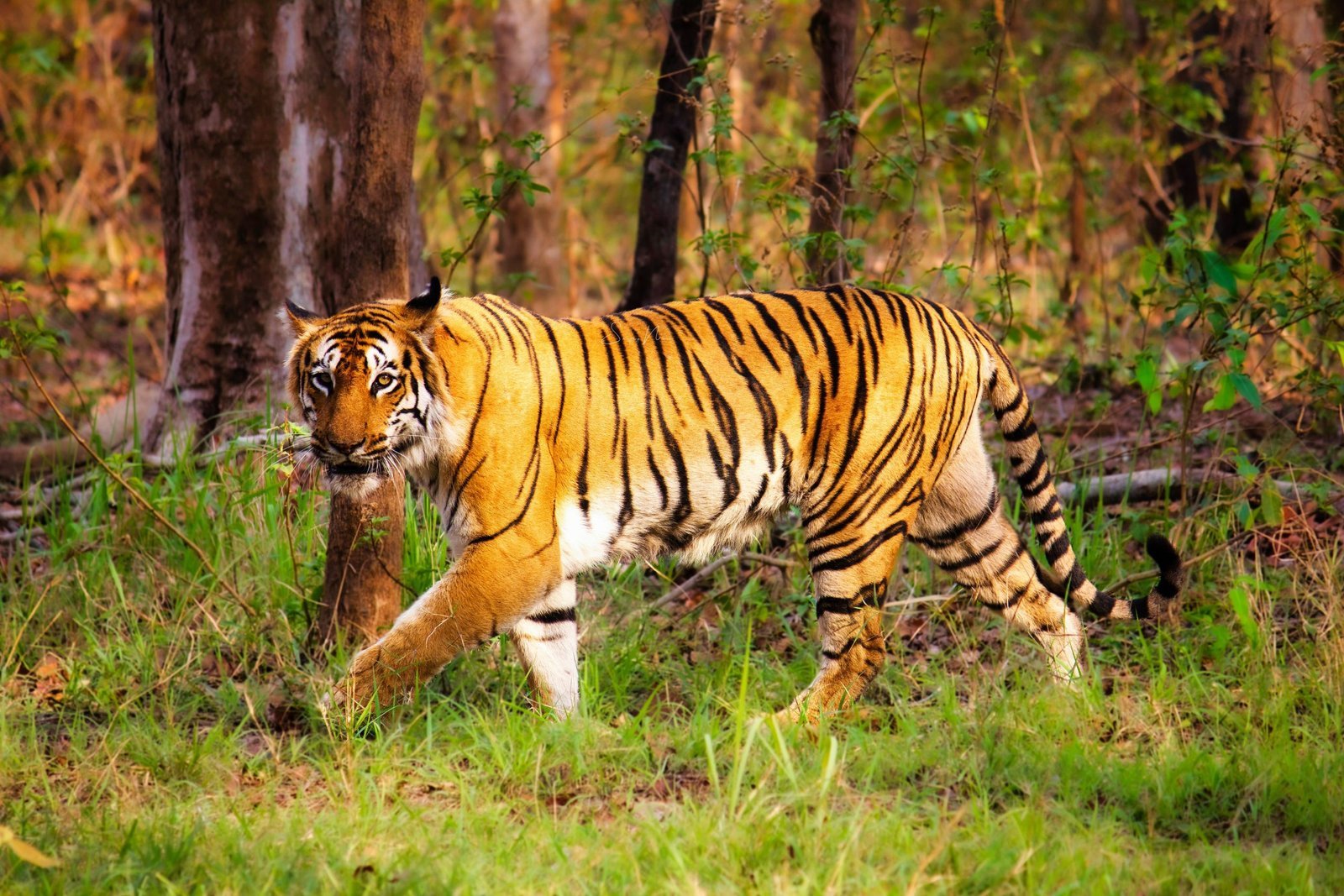
The moment we move beyond the usual shortlist, Maharashtra becomes especially interesting.
Bor is compact and sits inside a much larger central Indian tiger landscape. Umred-Karhandla is not a tiger reserve, and we should be precise about that, but it is an important wildlife sanctuary and tiger landscape. Navegaon-Nagzira gives us another serious safari option that receives far less attention than Tadoba.
These are exactly the places that disappear from generic articles because they do not have the same search volume.
That is not how we plan safaris.
When current movement is good, when permits are available and when the logistics work, a quieter Maharashtra landscape can make far more sense than squeezing a guest into a famous reserve simply because everybody recognises the name.
Navegaon-Nagzira’s official Maharashtra booking system currently lists spot-booking availability at several tourism gates, including Bakki, Pitambartola and Umarzari. The state safari portal carries current availability information.
Again, the point is not that these parks are secretly “better”.
The point is that they belong in the conversation.
Ranthambore Is About More Than the Tiger
Ranthambore is one of those places where the landscape becomes part of almost every sighting.
The fort, lakes, rocky ridges, dry forest and old ruins create a visual identity that no central Indian forest can quite reproduce. Rajasthan Tourism notes the reserve’s mix of hills, crags, meadows, lakes and rivulets, and also recommends booking in advance because of the park’s popularity.
That popularity is precisely why availability matters here.
A first-time visitor may dream of Ranthambore because of photographs they have seen for years, but the experience depends heavily on what permits are actually available for their dates.
If the right zones and timings are available, it can be an extraordinary first safari.
If not, we would rather be honest than force the name.
Nagarhole Belongs in the Conversation When Elephants Matter Too
Not every first safari needs to be built around central India.
For someone who wants elephants, gaur, leopard, dhole and tiger inside a greener southern landscape, Nagarhole deserves serious attention.
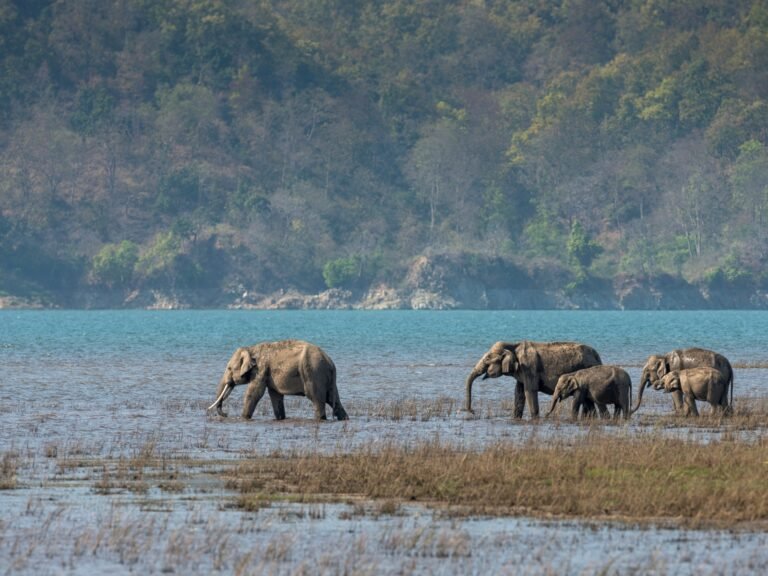
The rhythm is different from Tadoba or Panna. Dense vegetation, riverine habitat and the wider Nilgiri landscape create a safari where elephants can become the main event without anybody feeling that the day has somehow failed.
That changes who we recommend it to.
A person whose first question is “Where will I see a tiger?” may still lean toward Tadoba.
A person who says, “I want the whole forest,” may be much happier in a place like Nagarhole.
Safari Availability Is Not a Footnote
This is where real trip planning differs most from a generic article.
Someone chooses the reserve first, books a lodge, books flights and then checks the safari permits.
By then, the useful zones are full.
Or only one drive remains.
Or the morning permit is from one gate and the lodge is nowhere near it.
Or the dates fall on a weekly closure.
Now we are trying to repair the itinerary instead of planning it.
We prefer to work in the opposite direction.
First, we look at the dates and the wildlife priorities. Then we check what safari inventory actually exists and build the stay around a sequence of drives that makes sense.
Availability does not simply mean “is there a permit?”
We want to know whether we can get enough drives, whether the morning and afternoon combination works, which gates are available, whether the lodge is sensible for those gates, whether a productive buffer is an option and whether shifting the trip by one day improves the entire plan.
This can completely change which reserve we recommend.
Tadoba’s large spread of core and buffer gates gives us flexibility. Kanha and Bandhavgarh work with zone-specific vehicle capacities. Corbett has zone-specific booking windows and seasonal differences.
Those are not administrative details.
They shape the safari.
The Famous Park Is Not Always the Best Park for Your Dates
Wildlife destinations acquire reputations much faster than they lose them.
One reserve has several extraordinary seasons and becomes “the place for tigers”. Another goes through a quieter period and disappears from the conversation. Years later, people are still planning around the old story.
The animals have moved on.
Panna’s summer of 2026 is a good example. It had an excellent season, and for the right dates we would take that current reality seriously rather than dismissing it because another reserve has the bigger name.
Bandhavgarh illustrates the other side of the same problem. Its reputation is deserved, but dense foliage at the wrong time can make wildlife far more difficult to pick out than somebody choosing purely by name expects.
So the question we keep coming back to is not, “Which park is famous?”
It is, “What is this forest doing when you are actually travelling?”
So Which Reserve Would We Choose?
If the tiger is the overriding dream, Tadoba remains the first place we tend to think about.
If somebody wants the forest itself to become part of the memory, Kanha can be superb. For families, Pench often makes a great deal of sense, while Panna can move very high on our list when current activity and permits line up.
If someone wants the Terai, Pilibhit offers something central India cannot. If wilderness, elephants and scale matter more than the simplest tiger proposition, Corbett changes the conversation completely.
And if somebody does not need the famous name, Sanjay-Dubri, Bor, Umred-Karhandla and Navegaon-Nagzira all deserve to be discussed rather than dismissed.
Ranthambore and Nagarhole bring entirely different kinds of first safari again.
There is no single winner because there is no single kind of first-time traveller.
The Question We Ask Instead
When someone asks us for the best first safari in India, we usually ask several questions back. How important is the tiger? Are there children travelling? Does photography matter? Would elephants excite you just as much? Do you want a quieter forest, or are you comfortable with a busier reserve?
Then we ask for the dates.
That last answer can change everything.
Because the best reserve on paper is not necessarily the best reserve you can experience properly.
Years later, most people will not remember whether the park they chose was number three or number seven on somebody’s list. They will remember the first alarm call they learnt to recognise, the first elephant that appeared almost silently despite its size, or the first tiger track pressed into dust.
They will remember the road that disappeared around a bend and made them wonder what was beyond it.
That is what we are really choosing when we recommend somebody’s first reserve.
Not the winner of a ranking.
The forest most likely to make them want another one.