There is a particular kind of anticipation that comes with entering a tiger reserve. The gates open, the gypsy rolls onto the forest track, and suddenly every sound seems a little more important. A langur calling from the canopy, a sambar standing unusually still or fresh pugmarks in the dust can be enough to make everyone sit up and pay attention.
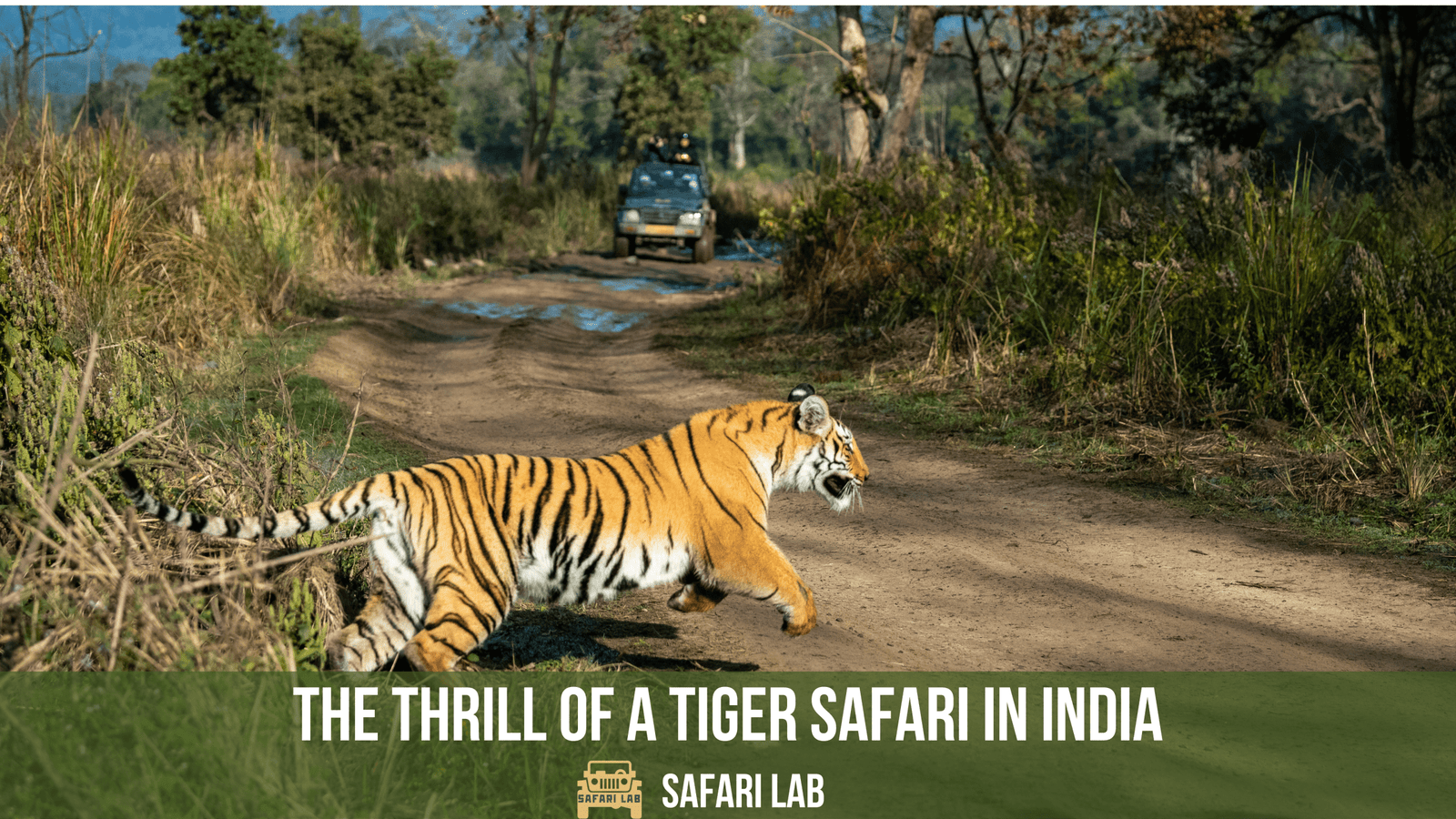
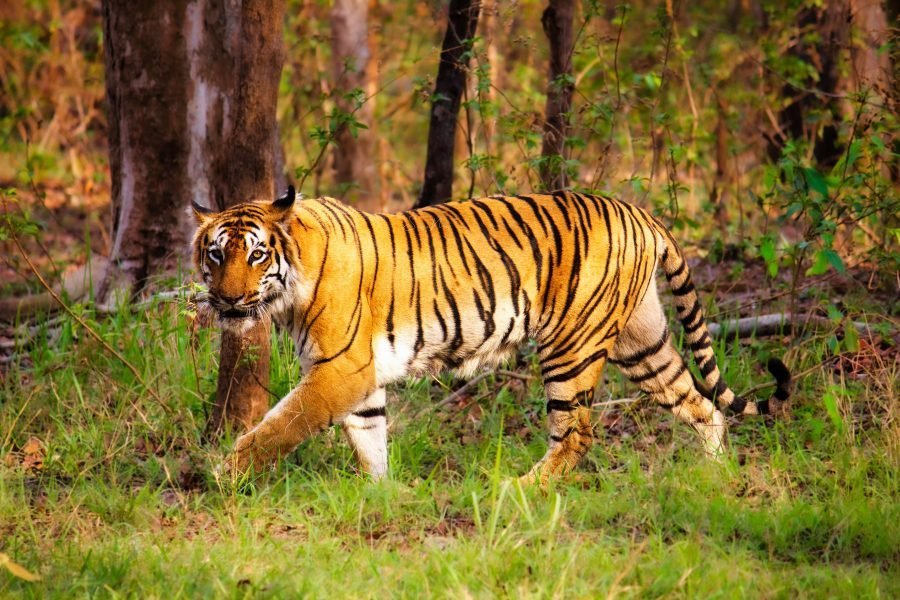
Of course, most people are hoping to see a tiger. There is nothing quite like watching one emerge from the forest, completely unconcerned by the excitement it has created in the vehicles nearby. But a tiger safari is rarely as simple as driving into a national park and finding one of these magnificent cats waiting beside the road.
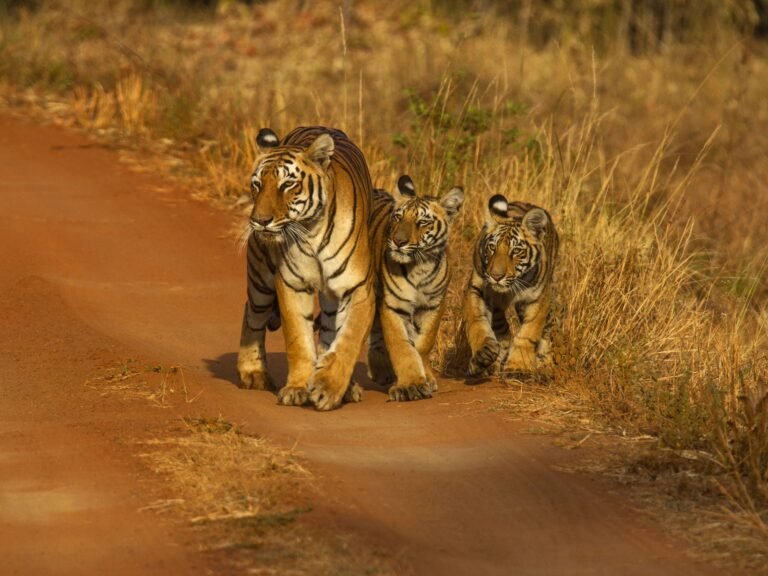
Tigers are solitary, territorial animals that move across enormous stretches of forest. They may spend hours resting in cover, patrol a boundary during the night or disappear into vegetation just a few metres from the track. Much of the pleasure of a safari lies in following the small signs that tell us an animal may be nearby.
India offers some of the finest tiger-watching opportunities in the world, spread across forests as different as Tadoba’s teak woodland, Kanha’s meadows, Corbett’s river valleys and the mangroves of the Sundarbans. Choosing the right place, however, is only the beginning. The season, the safari gates, the number of drives and even the location of your lodge can make an enormous difference to the experience.
Why India is extraordinary tiger country
India is home to approximately 70% of the world’s wild tigers. The country’s 2022 tiger estimation put the population at around 3,682 animals, an extraordinary recovery from the 1,411 estimated in 2006.
That recovery matters because tiger conservation is about much more than protecting one spectacular predator. A breeding tiger population needs large, connected forests, healthy populations of prey animals, reliable water and enough space for young tigers to establish their own territories.
Project Tiger, launched in 1973, helped establish the framework for protecting many of these landscapes. Over the decades, tiger reserves have become important refuges not only for tigers but also for leopards, sloth bears, dholes, deer, gaur, birds and countless smaller species.
A safari gives visitors a glimpse of that larger world. The tiger may be the reason for travelling, but the health of the forest is what makes the tiger possible.
What actually happens on a tiger safari?
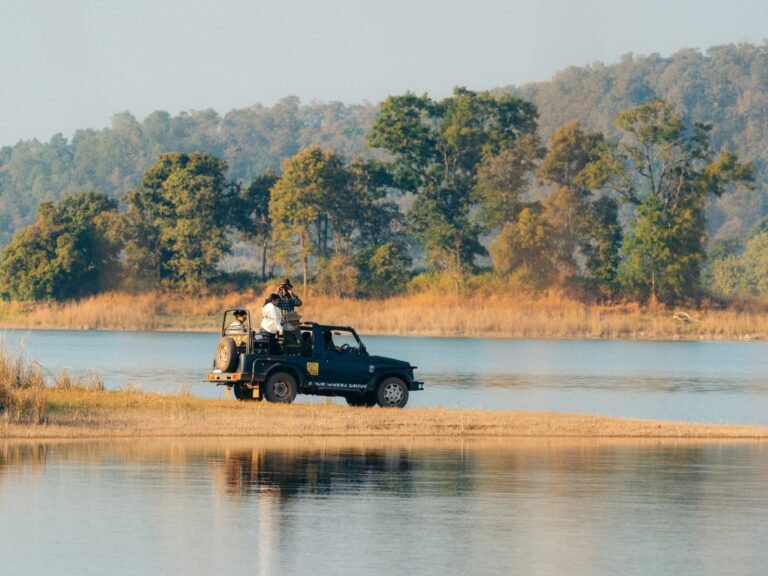
Most conventional tiger safaris in central India take place in open gypsies accompanied by a driver and an authorised forest guide. Vehicles enter through designated tourism gates and follow permitted routes during fixed morning or afternoon sessions.
Morning safaris usually begin around sunrise, while afternoon drives continue towards sunset. Timings vary with the season and the reserve.
The first part of a drive often involves looking for signs of activity. A good guide will notice fresh pugmarks, recognise an alarm call and understand why deer are behaving unusually. Sometimes these clues lead to a tiger. Sometimes they reveal that the animal passed through hours earlier.
A tigress with cubs may be using one part of the forest repeatedly, while a male tiger may travel across several territories over the course of a few nights. Recent movement can therefore influence which gate we choose, although there is no guarantee that yesterday’s sighting will be repeated today.
And then there are the unexpected moments. A sloth bear crossing the road, a pack of dholes moving through the grass or a leopard resting high in a tree can transform a seemingly quiet drive.
The best safaris are those where everyone remains interested in the forest, even when the tiger is nowhere to be seen.
Where should you go for a tiger safari in India?
India has a remarkable variety of tiger landscapes. These are some of the places we regularly consider when planning wildlife journeys.
Tadoba Tiger Reserve, Maharashtra
Tadoba is one of our favourite tiger landscapes, and one we have known for many years. During the dry season, its teak forests become more open, water sources grow increasingly important, and tiger movement can be particularly interesting to follow.
But Tadoba is not exclusively a summer destination. Its buffer forests have produced wonderful sightings during the monsoon, and there are occasions when we’d rather have permits for a productive buffer area than insist on a famous core gate.
The reserve’s six core and sixteen buffer gates offer useful choices, but they also make accommodation planning important. Staying near the wrong gate can mean a lengthy road journey before the safari has even begun.
For travellers interested primarily in tigers, Tadoba is often high on our list.
Bandhavgarh Tiger Reserve, Madhya Pradesh
Bandhavgarh has a long history of celebrated tigers and some beautiful woodland, hills and valleys. Tala, Magadhi and Khitauli are its main core tourism zones, each offering a different part of the reserve.
The park can be exceptional for tiger watching, particularly when conditions are favourable. Dense foliage during some months, however, can make finding animals more difficult than its reputation might suggest.
We would choose Bandhavgarh with the season, recent tiger movement and available zones in mind, rather than treating its famous name as a guarantee.
Kanha Tiger Reserve, Madhya Pradesh
Kanha is one of those forests that can make even a quiet tiger safari feel rewarding. Broad meadows, sal woodland, gaur and the remarkable hard-ground barasingha give it a character of its own.
For someone who wants to appreciate the entire landscape, Kanha can be an excellent introduction to wildlife travel. Its tourism zones include Kanha, Kisli, Mukki and Sarhi, making the choice of lodge and entry gate particularly important.
Kanha’s appeal is not limited to tigers. Watching barasingha grazing in a meadow or a herd of gaur emerging from the forest can be every bit as memorable.
Ranthambore Tiger Reserve, Rajasthan
A tiger walking beside an old ruin or resting near one of Ranthambore’s lakes makes for a very different photograph from a tiger in central India’s teak forests.
Ranthambore’s fort, rocky ridges, dry woodland and lakes have made it one of India’s most recognisable wildlife destinations. Its popularity also means that safari permits need careful planning.
Different tourism zones offer different landscapes, and an available permit doesn’t necessarily place you in the part of the reserve you had imagined visiting.
Jim Corbett Tiger Reserve, Uttarakhand
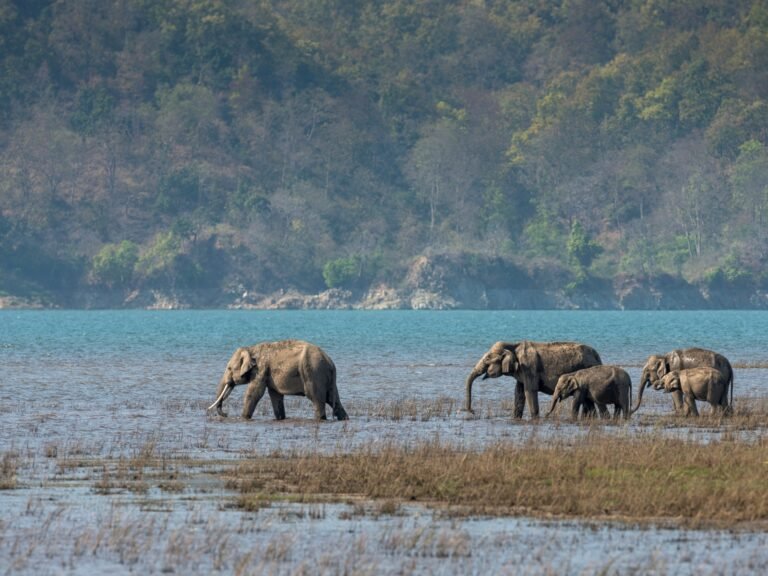
Corbett is about the wider wilderness as much as it is about tigers. Its river valleys, grasslands, forested hills, elephants and extraordinary birdlife make it one of India’s most rewarding wildlife landscapes.
The experience varies greatly between tourism zones. Dhikala, especially, is quite different from a conventional day safari based outside the reserve.
Corbett deserves careful planning because booking arrangements, access and overnight-stay possibilities differ between zones. For someone who loves elephants and expansive forest landscapes, those details are well worth considering.
Other forests worth exploring
Pench, Panna, Pilibhit, Navegaon-Nagzira and several smaller wildlife landscapes can also offer memorable tiger safaris.
Pench is especially appealing for families and first-time travellers because of its relatively convenient access from Nagpur and the variety of wildlife that can keep a drive interesting. Panna offers a striking landscape around the Ken River, while Pilibhit introduces visitors to the tall grass and sal forests of the Terai.
Navegaon-Nagzira is another forest close to our hearts. Its wildlife has provided some remarkable photographic opportunities over the years.
For a more detailed comparison of the reserves, read our guide to choosing the best wildlife reserve for your first safari in India.
When is the best time for a tiger safari?
There is no single month that works equally well across India’s tiger reserves.
In much of central India, the hotter months can make tigers easier to locate because vegetation becomes thinner and water sources draw wildlife into more predictable areas. March, April and May are popular with serious tiger photographers, although temperatures can be uncomfortable, particularly during afternoon drives.
Winter offers cooler weather and beautiful forest conditions. It is often more comfortable for families and travellers who want to spend several days outdoors, even if thicker vegetation sometimes makes sightings more challenging.
The monsoon is more complicated. Many core tourism zones close during the rains, while selected buffer areas may remain accessible. Some tiger landscapes have different operating seasons altogether.
The right month depends on where you want to go, what you hope to see and how comfortable you are with heat, rain or cold mornings.
How many tiger safaris should you book?
If seeing a wild tiger is important to you, we would rarely recommend travelling a long distance for just one drive.
A single safari can be extraordinary, but it can also be completely quiet. Tigers do not follow a timetable, and even a forest with excellent recent sightings can produce an uneventful morning.
Several drives give you the opportunity to explore different routes, understand the forest and respond to changing wildlife movement. They also take some of the pressure off each individual safari.
For a two-night trip, three or four drives may be possible depending on arrival and departure times. A longer stay gives you more flexibility and can be particularly worthwhile for photographers.
We discuss the choices in more detail in How Many Tiger Safaris Should You Book in India?
Why safari permits and gates matter so much
One of the most common mistakes in planning an Indian wildlife holiday is booking the hotel first and checking safari permits afterwards.
By then, the most convenient gates may have sold out. A lodge that looks perfect online might be an hour or more from the gate for which you have a permit, making an early morning departure unnecessarily tiring.
We usually work in the opposite direction. First, we consider the dates and the reserve. Then we look at which safari zones have availability and whether we can arrange a sensible combination of drives. Only then do we finalise the accommodation.
This becomes especially important in reserves with several widely separated tourism gates, or when guests want private vehicles and specific safari timings.
A thoughtfully planned safari doesn’t necessarily need the most expensive lodge. It needs the right lodge for the permits and the kind of trip you’re taking.
What does a luxury tiger safari actually offer?
Luxury accommodation can make a wildlife holiday much more comfortable, but it doesn’t give anyone special privileges over the tiger.
A good wildlife lodge may offer spacious rooms, excellent food, attentive service, attractive natural surroundings and knowledgeable staff. Some properties have experienced resident naturalists who can add considerably to the overall experience.
That can be especially valuable during a longer trip, when the hours between safaris are part of the holiday too.
But there is an important distinction between a luxurious stay and a better safari. A beautiful resort cannot make an animal appear, and an expensive room doesn’t automatically provide a better guide or a more productive tourism zone.
We would rather choose accommodation that suits the traveller and the safari arrangements than select a property purely because it describes itself as luxurious.
Beyond the tiger: what else might you see?
India’s tiger reserves are home to a tremendous variety of wildlife, and some of the most memorable sightings have nothing to do with tigers.
A sloth bear digging for termites, a leopard slipping silently through the trees or a dhole pack following a forest track can be fascinating to watch. Gaur, sambar, chital, wild boar, langurs and countless bird species add interest throughout a drive.
The landscapes also change dramatically between reserves. Kanha’s meadows are nothing like the mangroves of the Sundarbans, and the grasslands of Corbett feel very different from Tadoba’s teak woodland.
Photography becomes more interesting when you stop looking exclusively for close portraits of tigers. Behaviour, habitat, light and the relationships between animals can tell a far richer story.
Can a tiger sighting be guaranteed?
No, and we would be wary of anyone who claims otherwise.
A tiger may be present in a tourism zone without becoming visible to a single vehicle. It may cross a track just before the gates open, remain hidden in thick vegetation or spend the entire morning resting somewhere inaccessible.
Recent sightings, experienced guides and multiple drives can improve the opportunity to encounter one, but they cannot eliminate the uncertainty.
That uncertainty is part of wildlife watching. We can plan carefully, choose sensible routes and spend time in productive habitats, but the final decision always belongs to the animal.
Does a tiger safari help conservation?
Well-managed wildlife tourism can contribute to conservation by supporting protected-area management, generating employment and giving local communities an economic stake in healthy forests.
Guides, drivers, lodge staff and many other people earn their livelihoods from visitors who come to experience wildlife.
That doesn’t mean every form of tourism is automatically beneficial. Disturbing animals, crowding sightings, littering and ignoring forest rules can damage the very experience people have travelled to enjoy.
Responsible safari travel begins with treating the forest as the animals’ home rather than as a venue arranged for our entertainment.
Planning your tiger safari with Safari Lab
Every traveller arrives with a slightly different idea of the perfect safari. Some are hoping for their first tiger. Others want to photograph behaviour, introduce their children to wildlife or spend several days exploring a forest they’ve visited before.
We begin with those priorities, along with the dates and available time. From there, we work through the reserve, safari permits, gates, accommodation and transfers to put together a journey that makes practical sense.
Sometimes that means recommending a well-known tiger reserve. Sometimes a quieter forest is the better choice.
And sometimes, after a morning spent listening to alarm calls without seeing a tiger, the most memorable sighting comes when everyone has stopped expecting one.
That is the wonderful uncertainty of a tiger safari in India. You enter the forest hoping for something extraordinary, but you never quite know what it will choose to show you.
Frequently asked questions
Which national park is best for seeing tigers in India?
Tadoba, Bandhavgarh, Ranthambore and several other reserves can offer excellent tiger-watching opportunities. The most suitable choice depends on the travel month, available safari permits and recent wildlife activity.
How many days should I spend on a tiger safari?
A two- or three-night visit is a practical starting point for many travellers. More time allows for additional drives and is particularly useful for wildlife photographers.
Is a tiger sighting guaranteed?
No. Tigers are wild animals, and sightings depend on their movement, vegetation, weather and many other factors.
Are tiger safaris suitable for children?
Yes, although age restrictions, vehicle arrangements and reporting times vary by reserve. Choosing a conveniently located lodge and a sensible number of drives can make the experience much easier for families.
Can I book a private safari vehicle?
Private gypsies are available in many Indian tiger reserves, subject to permits and local rules. Other parks operate different vehicle arrangements, including shared safaris.
Is a luxury lodge necessary for a good tiger safari?
Not at all. Location, appropriate permits and good guiding matter far more than the price of the accommodation.
Can I visit a tiger reserve during the monsoon?
Some buffer tourism areas remain open during the monsoon, although many core zones close. Operating dates and permitted routes vary by reserve.