Along the southern edge of Vidarbha, close to Maharashtra’s border with Telangana, low hills and teak-covered slopes stretch across the Pandharkawada countryside. At dawn, the forest is only beginning to wake.
The first light catches the upper branches of the teak trees. Below them, the forest is still in shadow. A peafowl calls somewhere beyond the track, langurs begin to stir in the canopy, and last night’s fallen leaves lie undisturbed on the red earth.
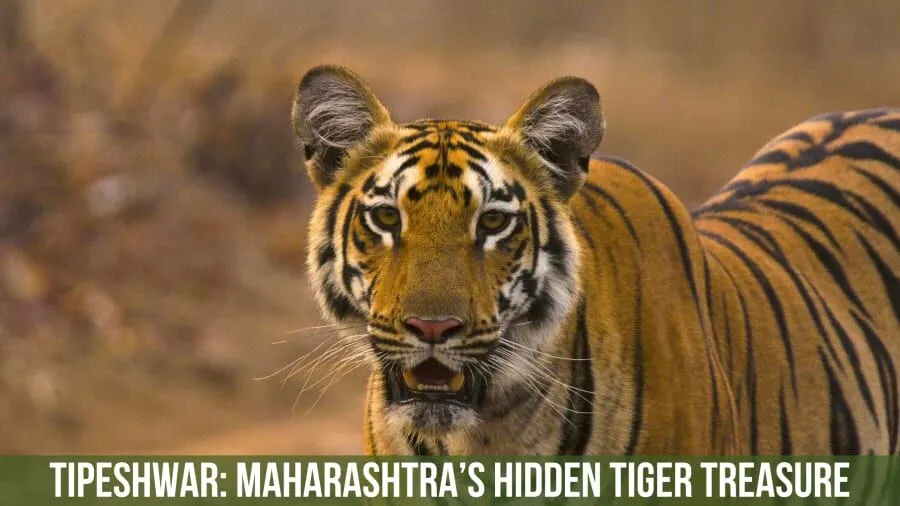
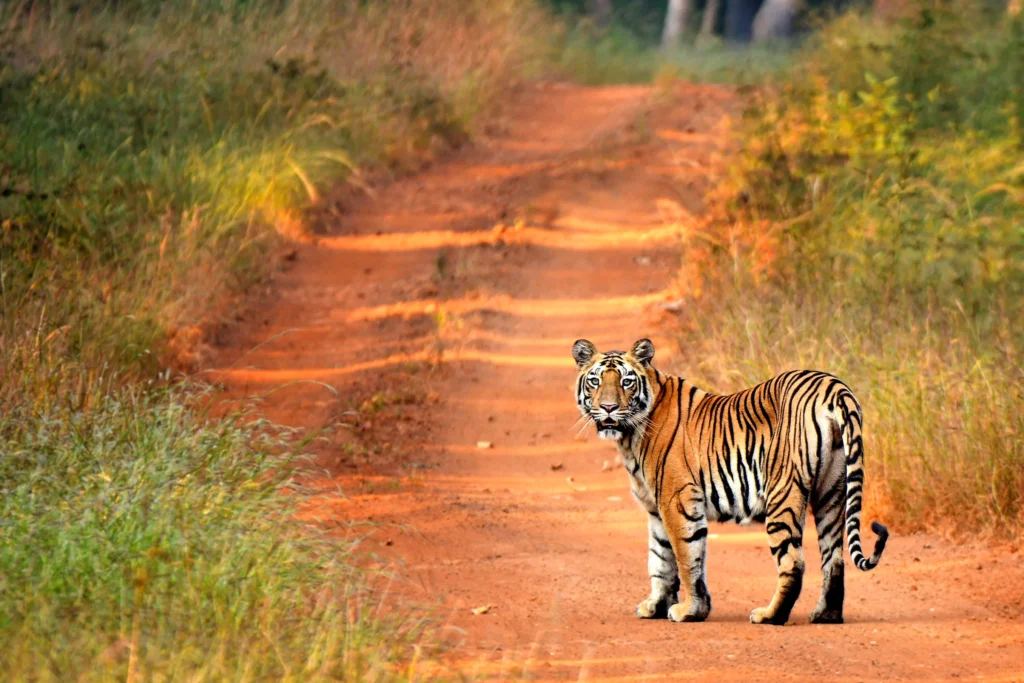
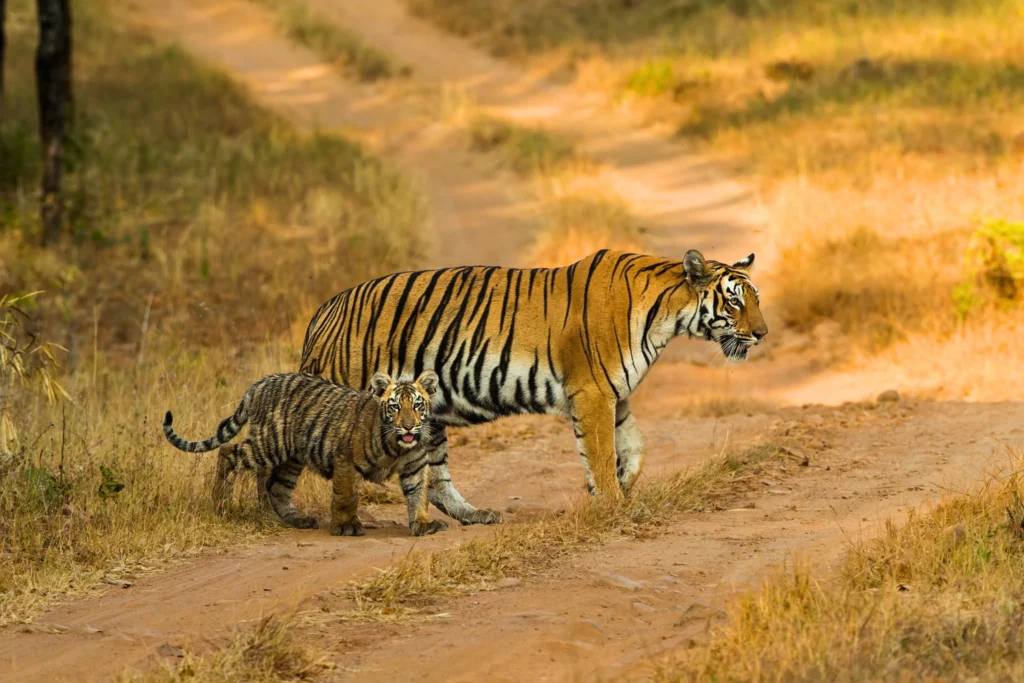
A little farther down the track, a tigress is enjoying the last of the morning’s coolness. She lies stretched across the dusty path, seemingly indifferent to the antics of her two cubs. One paws at her tail while the other tumbles into its sibling, turning the quiet forest track into their playground. Their mother barely acknowledges the commotion, occasionally flicking an ear or lifting her head.
The distant rumble of an approaching engine changes things. The first gypsy of the morning rounds a bend and slows to a halt. The tigress raises her head, regards the visitors for a few moments, then gets to her feet with an almost reluctant stretch. Without any particular hurry, she disappears into the undergrowth, her cubs scrambling after her. Within moments, the track is empty again, save for a few fresh pugmarks in the dust.
By mid-morning, the same forest feels entirely different. Shafts of sunlight reach the ground, the air grows warmer, and the calls that carried through the cool morning give way to quieter hours. The forest has returned to its everyday rhythm, almost as though the little family had never been there.
This is Tipeshwar Wildlife Sanctuary, a stretch of dry deciduous wilderness near Pandharkawada in Maharashtra’s Yavatmal district. Its roughly 149 square kilometres of hills, teak forest and seasonal streams have made it increasingly familiar to tiger enthusiasts, although it remains less visited than Tadoba. Here, encounters like these are part of what draws people to the forest, but Tipeshwar has a much larger story to tell—one that extends beyond its tigers and well beyond the sanctuary’s boundaries.
Getting to know Tipeshwar
Tipeshwar lies in the Pandharkawada region of Yavatmal district, in southern Maharashtra, not far from the Telangana border. The sanctuary covers 148.63 square kilometres, predominantly dry deciduous forest spread over undulating hills. Teak is everywhere, but it is the changes in the terrain that make the drives interesting: forested slopes open into grassy patches, seasonal streams cut through the hills, and the vegetation changes noticeably between the cool months and the heat of summer.
This is tiger country, but there is considerably more to see. Chital and sambar are important prey animals; nilgai, four-horned antelope and wild boar also inhabit these forests. Leopards, sloth bears, jackals and hyenas add to the diversity, while peafowl, raptors and other forest birds can make a quiet morning drive rewarding in their own right. Even when a tiger stays out of sight, Tipeshwar rarely feels like an empty forest.
For a short trip, two nights gives you time to explore Tipeshwar without making the journey feel rushed. Its three gates open into the same tourism area, so we look at safari availability across all three before deciding how best to arrange your drives.
How to reach Tipeshwar Wildlife Sanctuary
From Nagpur: For our guests flying in, we generally plan the journey through Nagpur. From Dr. Babasaheb Ambedkar International Airport, it’s roughly 170–175 km to the Tipeshwar region, or around three to four hours by road. We usually allow enough time for the drive south along NH44 towards Pandharkawada and, whenever flight timings permit, aim to have guests settled into their accommodation before the afternoon safari.
From Hyderabad: Follow NH44 north through Nirmal and Adilabad towards the Maharashtra border. The journey is approximately 330–365 km, depending on the entrance or property, and generally takes most of a travel day once stops and traffic are included. If you’re driving from Hyderabad, Tipeshwar works well as a road-trip safari destination.
By train: Adilabad railway station, across the border in Telangana, is convenient for many stays on the Tipeshwar/Sunna side. Expect a road transfer of roughly 35–40 km to that part of the sanctuary. Nandai is farther from Adilabad, so the station-to-resort journey will be longer if you stay on the Mathani side.
From Yavatmal and nearby towns: Yavatmal and Pandharkawada provide regional road approaches, but the driving distance changes considerably with the gate. Tipeshwar can also be combined with Tadoba on a longer Maharashtra safari itinerary; the inter-park road transfer should be allowed for as a separate journey rather than squeezed between two drives.
Which Tipeshwar safari gate should you choose?
There are three entrances to the Tipeshwar tourism area. You may still come across the older gate names on maps or in conversations with local drivers:
| Current gate | Earlier name | Best to know |
|---|---|---|
| Tipeshwar Gate | Sunna | On the Pandharkawada/NH44 side, with the widest choice of nearby resort-style accommodation. |
| Nandai Gate | Mathani | Convenient for accommodation around Kaleshwar, Parva and the Ghatanji side. |
| Bhavankhori Gate | Kodori / Koduri | A useful alternative for stays around Rudha and Kodori, or when other gate permits are unavailable. |
The most important point is that these are different access points into the same tourism area, not separate core and buffer experiences. Your starting route may differ, but there is no reason to treat one entrance as the only gate worth visiting for wildlife.
If you’re staying at Tipai, Sterling or another property near Tipeshwar Gate and that entrance is fully booked, we look for permits at Nandai or Bhavankhori. There’s no need to move resorts simply because a different entrance has availability. We arrange the departure around the gate you’ve secured, allowing for the additional road journey when necessary.
Each safari permit is issued for a specific gate and session. You must enter through the gate on your permit; the flexibility comes from choosing another available gate when booking, not from switching entrances after a permit has been issued.
Where to stay: resorts and homestays around Tipeshwar
If you’re booking consecutive morning safaris, staying close to an entrance makes the early starts easier. The former Sunna, now Tipeshwar Gate, has a particularly good range of accommodation, from high-end retreats to smaller stays. You can also stay near Nandai or Bhavankhori to shorten the drive to those entrances.
Near Tipeshwar Gate (formerly Sunna)
Tipai by Wildlife Luxuries is the most luxurious choice in the region. Its spacious Forest Villas and private Pool Residences sit within a 34-acre property, with thoughtful architecture, strong dining options and plenty of space to enjoy the stay between safaris. Choose Tipai if you want the stay itself—its space, privacy and dining—to be as important as the safaris. The former Sunna entrance is roughly a 15-minute drive away.
Sterling Tipeshwar offers a more conventional resort experience, with villas and safari tents, private outdoor spaces and facilities that work well for families. Its proximity to Tipeshwar Gate—roughly 3 km—is a major advantage for early morning drives.
Anant Heritage, at Zunzarpur off NH44, has a farmhouse and heritage-stay character, with different room and cottage categories. It is a good option to consider for families and small groups who prefer an informal, spacious property. Tipeshwar Gate is roughly 18 km away; Bhavankhori is around 22 km and Nandai around 28 km, making it one of the stays from which all three entrances can be considered.
Junglee Bagicha is a smaller, relaxed stay in the Sunna area. Choose it for a quieter farmhouse atmosphere rather than the facilities of a larger resort, while remaining close to Tipeshwar Gate.
Maya Stays – Tipeshwar Gate offers a simpler cottage-style option roughly 6 km from the entrance, with meals available as part of its stay arrangements.
Near Nandai Gate (formerly Mathani)
Maya Stays – Nandai, around Kaleshwar and Parva Road, is approximately five minutes from the gate. It is convenient for guests with several Nandai safaris, particularly if early morning transfers are a priority. Smaller homestays in the surrounding villages are also worth considering when this entrance is the main focus of your trip.
Near Bhavankhori Gate (formerly Kodori)
Maya Stays – Bhavankhori, in the Rudha area, is approximately 12 minutes from the entrance. It provides an alternative base on this side of the sanctuary, although the overall accommodation choice is more limited than around Tipeshwar Gate.
For our guests, the choice comes down to the kind of stay they want and how it fits their safaris. Tipai is the luxury retreat; Sterling is a resort-style base; Anant Heritage and Junglee Bagicha offer a more informal atmosphere. Maya Stays has gate-specific accommodation options around Tipeshwar, Nandai and Bhavankhori. If you’ve booked drives from more than one entrance, we also account for those transfers when choosing where to stay.
What a Tipeshwar safari is like
Tipeshwar’s safari tracks wind through low teak-covered hills rather than following one continuous stretch of open country. On some sections, vegetation presses close to the road; elsewhere, the forest breaks into clearings and dry streambeds. The slopes and bends mean that visibility can change within a short distance. You see different aspects of the same forest on successive drives, particularly as the light shifts from the cool morning to the harsher afternoon.
The contrast between seasons is striking. Soon after the monsoon, greenery fills the space between the teak trunks, and much of the forest feels enclosed. By April and May, fallen leaves and dry ground open up longer views across the slopes, but the afternoon heat can be punishing. If you’re choosing between winter and summer, that is the real trade-off: cooler, greener drives or a more exposed landscape in considerably higher temperatures.
Safari timings: Between November and February, plan around morning sessions of approximately 6:30–10:30 AM and afternoon sessions of 2:00–6:00 PM. In the hotter months, the morning departure moves earlier—sometimes to around 5:30 AM—and the afternoon session starts later. We account for the seasonal schedule and weekly closure when putting your itinerary together, especially on a short two-night stay where a missed session can mean one less safari.
The tigers of Tipeshwar
Among the tigers you’ll hear about at Tipeshwar are Archi and Daisy, two familiar tigresses, and males such as Veer and Bakasur. During the summer of 2026, PC was also seen with three cubs. These individuals give the forest a continuing story for those who return season after season: cubs grow, young animals disperse, and the places where familiar tigers are seen change with time.
Tipeshwar’s tigers also have a story beyond the safari tracks. Young animals dispersing from this forest have travelled across the agricultural and forested landscape of southern Vidarbha in search of new territory. It is one reason we see Tipeshwar as more than a small, isolated sanctuary: its connection with the surrounding countryside matters to the tigers that grow up here.
Best time to visit Tipeshwar
October to February: Come for cool mornings, comfortable afternoons and the green forest left behind by the monsoon. If you’re visiting with children or older family members, this is the easier season to enjoy several drives. The thicker vegetation can make wildlife harder to pick out between the trees.
March to June: Choose these months if you’re comfortable with intense heat and want to see the more open, dry-season forest. By May, the difference is substantial: foliage has thinned, the tracks are dusty and water becomes an increasingly important part of the landscape. The main monsoon months are not a reliable time for regular safari access.
How many safaris and nights are enough?
For your first visit, two nights with three or four safaris is a good starting point. Arrive in time for an afternoon drive, take morning and afternoon safaris on the full day, and finish with an optional final morning safari before departure. That provides a balanced introduction without requiring a long holiday.
If photography is the main purpose of your trip, consider three nights and five or six drives. If the trip includes young children, a slower schedule with one drive a day may be more enjoyable than trying to fit in every available session. A well-located resort makes a substantial difference when you have only a few hours between the morning and afternoon safaris.
Booking permits and planning the trip
Tipeshwar safari permits can be booked through the Maharashtra Forest Department safari booking portal. Select the safari date, session and entrance first, then work the accommodation and transfers around the permits. If the closest gate is full, check the other two before giving up on the day. The vehicle and guide arrangements should be matched to the permit and the gate from which you are entering.
For a simple two-night trip from Nagpur, arrive by late morning or early afternoon on the first day, check in and head out for an evening safari. The next day is for two drives with a long lunch and rest between them. On the third morning, take another safari if your departure time allows, have breakfast and return to Nagpur. If you’re combining Tipeshwar with Tadoba, give the transfer between the two forests its own time rather than trying to fit a safari at both ends of the journey.
Is Tipeshwar worth visiting on its own?
Absolutely. We wouldn’t treat Tipeshwar as somewhere you visit only because you’re already going to Tadoba. Give it two or three nights, choose a comfortable base and book several safaris: there is enough variety in the forest, its terrain and its wildlife to make it a rewarding standalone break. It is particularly appealing if you want to concentrate on one sanctuary rather than spend much of a short holiday travelling between parks.
For a first visit, we’d suggest two nights with three or four drives. Stay a third night if you want a more relaxed pace, especially for photography, or if you are travelling in summer and prefer longer breaks at the lodge between safaris. A quiet drive is part of visiting a wild forest; having more than one session gives you time to appreciate Tipeshwar beyond a single encounter.
Can you combine Tipeshwar with Tadoba?
Yes, and the two work well together. Tadoba offers a much larger network of safari zones, landscapes and accommodation options; Tipeshwar gives you a different, more compact forest to explore. Rather than trying to cover both in three nights, we’d generally recommend three nights in Tadoba and two in Tipeshwar. That gives each sanctuary enough time to feel like a destination in its own right.
We normally keep the drive between the two for a transfer day. The actual journey depends on whether your Tadoba stay is around Moharli, Kolara, Navegaon or another gate, and which entrance you use at Tipeshwar. It is better to arrive comfortably and start your Tipeshwar safaris the following session than to build an itinerary around a rushed gate-to-gate connection.
Why Tipeshwar matters to the wider tiger landscape
The importance of Tipeshwar goes well beyond the 148.63 square kilometres inside its boundary. This sanctuary is part of a larger network of forests and connecting habitats across southern Vidarbha and into Telangana. These connections allow young tigers to leave their natal territories, find new habitat and maintain genetic exchange between populations. A small protected forest becomes much more valuable when animals can move safely beyond it.
One remarkable example is T1-C1, a young male that left Tipeshwar in June 2019. His journey took him through a landscape of fields, villages, scrub and forest patches, across the Painganga River and eventually towards Dnyanganga Wildlife Sanctuary. It was not a straight trek along an uninterrupted forest corridor. The animal navigated roads and human-used land, illustrating both the resilience of dispersing tigers and the risks they face. The journey is documented in the open-access scientific paper Long-distance dispersal by a male sub-adult tiger in a human-dominated landscape.
Tipeshwar is also connected through the Adilabad landscape towards Kawal Tiger Reserve in Telangana. The research on tiger recovery and landscape connectivity around Kawal identifies this northern movement route, while wider Wildlife Institute of India work on the Tadoba landscape explains why the forest patches between reserves matter. For Tipeshwar, protecting those connections is as important as protecting the animals visitors see on safari.
Frequently asked questions about Tipeshwar
Which gate has the best tiger sightings?
There is no permanent winner among Tipeshwar, Nandai and Bhavankhori. All three enter the same tourism area. We prioritise available permits, the route from your accommodation and a sensible mix of safari sessions over chasing a supposed lucky gate.
Can I stay near Tipeshwar Gate and take a safari from Nandai or Bhavankhori?
Yes. If your preferred gate is sold out, we can plan a drive from one of the other entrances, provided permits are available. You simply need to reach the entrance named on that permit in time for the safari.
How many days do I need for Tipeshwar?
Two nights is our usual recommendation for a first trip. Three nights makes sense if you want additional drives or a slower pace, particularly during the hotter months.
What is the best time to visit?
October to February is generally more comfortable, with greener forest and pleasant morning drives. March to June offers a drier, more open landscape, but the heat can be severe. We choose the season around your comfort level and what you want from the trip.
Should I visit Tipeshwar or Tadoba?
Choose Tipeshwar for a focused two- or three-night break in a smaller sanctuary, with good accommodation near the main entrance. Choose Tadoba if you want more safari zones and a longer trip built around a larger reserve. If you have five or six nights, combining them is a particularly satisfying option.
Planning your Tipeshwar safari with Safari Lab
A good Tipeshwar trip starts with a few practical decisions: which entrance has permits for your dates, which stay suits you, and how many drives you want to fit into the visit. We prefer to settle those details together rather than choose a resort first and discover that the nearest gate has no availability.
Whether you want to spend a few quiet days exploring Tipeshwar or build a longer itinerary with Tadoba and Pench, get in touch with Safari Lab. We’ll help arrange a trip that gives each forest the time it deserves.