We first visited Bor in 2012.
Back then, it was still two years away from being declared a tiger reserve. On some weekday safaris, ours would be the only Gypsy inside the forest. There was no vehicle ahead throwing dust into the road, nobody arriving behind us because somebody had heard an alarm call, and no pressure to abandon a track because another vehicle had reported something elsewhere.
That kind of silence changes the way you do a safari.
You stop because a guide has noticed a pugmark in the dust. You listen properly when a sambar calls. You can wait at a junction without wondering whether ten vehicles are about to appear behind you. And sometimes you follow an animal’s movement not by seeing it, but by slowly putting together everything the forest is telling you.
We have returned to Bor repeatedly since those early drives. Tourism has grown, the reserve has changed, new safari areas have opened and Bor is much better known today than it was in 2012.
But its scale still defines it.
Bor’s critical tiger habitat covers just 138.12 sq km. When it was notified as a tiger reserve in August 2014, it was widely described as India’s smallest tiger reserve. Its notified buffer, however, adds another 678.15 sq km, taking the larger reserve landscape to 816.27 sq km. More importantly, a tiger moving through Central India does not stop because a line on a government map says the core has ended.
That is the more interesting way to understand Bor.
It is a very small protected core inside a much larger tiger landscape.
Bor Is Small. A Tiger’s Landscape Is Not.
Look only at the 138.12 sq km core and Bor can appear almost too small to support a meaningful tiger population.
Look beyond it and the picture changes.
Bor sits within the wider Central Indian tiger landscape, with ecological connections towards Pench, Tadoba-Andhari, Melghat and Umred-Paoni-Karhandala. Wildlife Institute of India assessments have described Bor as an important stepping-stone landscape within this network.
This matters because tiger conservation cannot work only inside national parks and tiger-reserve cores. Young tigers disperse. Adult territories can extend beyond tourism boundaries. Animals pass through forests, buffer lands and landscapes where people live and farm.
Bor demonstrates that unusually well because the contrast between its tiny core and its much larger surroundings is so obvious.
Its buffer alone is almost five times the size of its core.
The latest monitoring makes that relationship even harder to ignore.
Bor’s Latest Tiger Count Needs a Little Explanation
During the 2024–25 Phase IV monitoring exercise, 396 camera traps were deployed across Bor’s core and buffer. The final analysis identified 14 adult individual tigers: six males, seven females and one individual whose sex could not be determined.
Seven were associated with the core.
Seven were associated with the buffer.
Those numbers are interesting, but they should not be read as fourteen adult tigers permanently squeezed into 138 square kilometres.
Camera-trap monitoring records individual animals using a landscape during the survey period. Tigers move, territories cross administrative boundaries and individuals may use core and buffer habitat differently over time. A count of photographed individuals is therefore not the same thing as saying fourteen resident tigers live entirely inside the core.
That distinction is important.
Tiger numbers are often turned into tourism advertising because larger numbers sound like better odds. Wildlife does not work that neatly. Fourteen adults recorded across Bor’s larger landscape tells us something important about the ecological value of that landscape. It does not tell us what will happen during tomorrow morning’s safari.
What is interesting is the direction of the monitoring record.
Earlier camera-trap exercises recorded fewer individuals. The 2021 Phase IV work, for example, photographed nine individual tigers. The most recent final report records fourteen adults across core and buffer.
Different surveys should not be compared as though their methods and sampling were identical, but the larger pattern is difficult to miss: Bor is being used by a significant number of tigers despite the remarkably small size of its protected core.
Some of Bor’s Tigers Have Been Known for Years
Long before most visitors knew Bor by its tiger identification numbers, one tigress had become closely associated with the reserve.
Katrina, or BTR/T-3, has been documented in Bor for years and has raised multiple litters here. She was still being reported with offspring during the 2026 safari season.
One of her daughters, Pinky or T-7, subsequently established herself in the wider Bor landscape and has been associated particularly with the Rahati side of the buffer. The current Bor biodiversity material continues to identify both Katrina and Pinky among the reserve’s recognised tigresses.
There is a temptation in tiger tourism to turn every animal into a celebrity.
We find the family history more interesting for another reason.
A female born in one part of this compact reserve landscape can mature, disperse and establish herself elsewhere in the same broader system. Her cubs may eventually do the same. Suddenly, the distinction between a famous “core tiger” and a supposedly secondary buffer becomes much less meaningful.
The tiger is using habitat.
We are the ones naming the administrative zones.
The Buffer Is Not the Waiting Room Outside the Forest
One of the most persistent misunderstandings in Indian safari tourism is that the core is the real forest and the buffer is what surrounds it.
Bor is a good place to unlearn that idea.
Its latest tiger monitoring recorded an equal split of adult individuals associated with core and buffer habitat. The buffer contains forest, prey, water, breeding animals and dispersal routes. It also contains villages, roads and human activity, which makes conservation there considerably more complicated than conservation inside a tightly protected core.
Bor’s notified buffer includes dozens of villages. That makes this landscape important not simply because tigers occur here, but because this is where some of the most difficult questions in modern tiger conservation actually play out: movement, livestock, livelihoods, tourism, road use and encounters between large carnivores and people.
The Wildlife Institute of India’s management assessment has specifically identified Bor’s shape — a small core surrounded by a much larger, human-used buffer — as both ecologically important and challenging to manage.
In other words, Bor’s smallness is not merely a tourism curiosity.
It is the conservation story.
A Forest Shaped by Teak, Water and Season
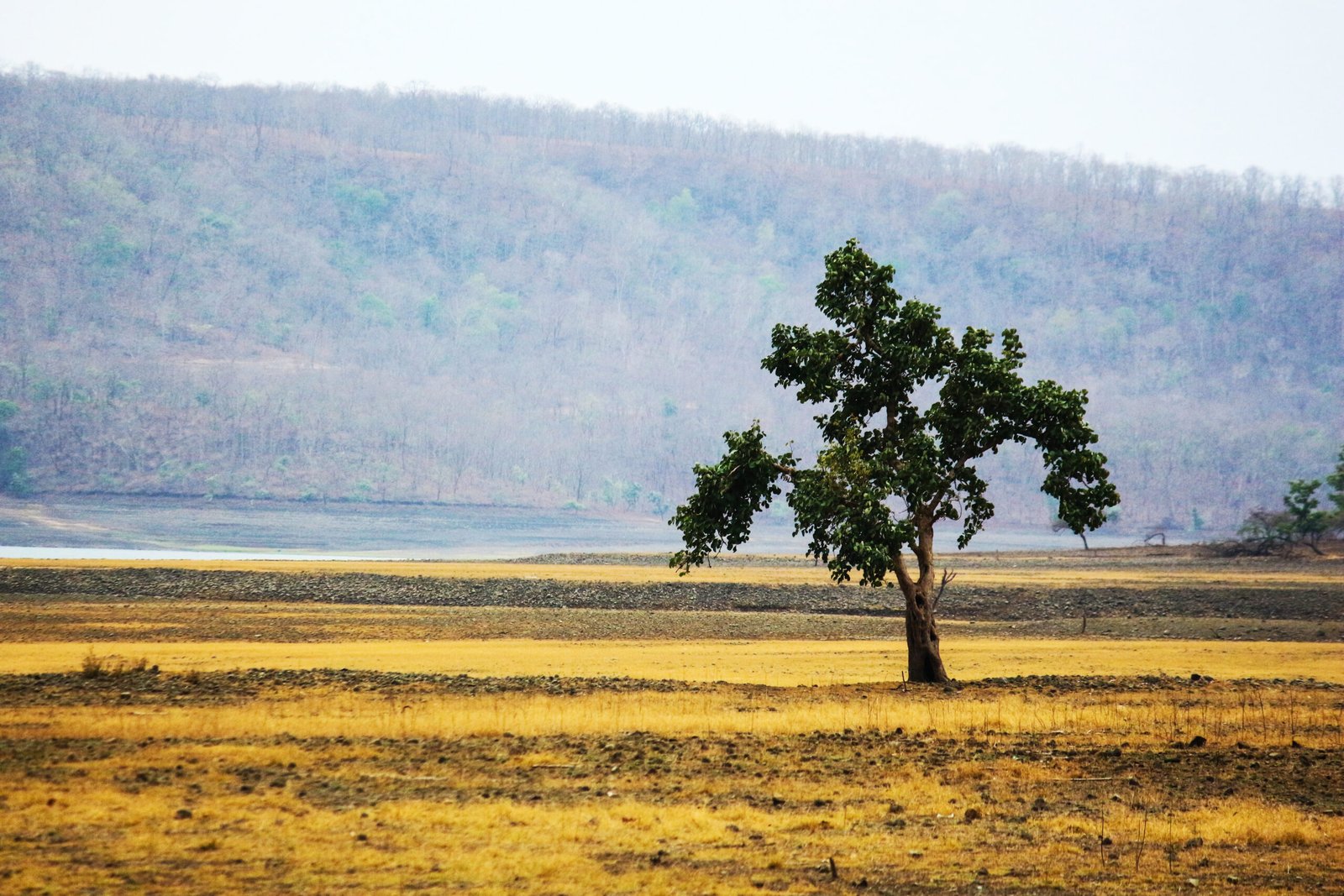
Bor is Central Indian dry deciduous country.
Teak is a major part of the forest, mixed with species such as ain, tendu, mahua, salai and bamboo. Seasonal nalas cut through the landscape, and the large Bor reservoir introduces a completely different visual and ecological element into what might otherwise be described simply as dry teak forest.
The reservoir matters.
Water reorganises animal movement. Backwaters create habitat for birds. In summer, when the forest dries and much of the deciduous canopy opens, remaining water becomes increasingly important. After the rains, the same landscape can look almost unrelated to the one you drove through a few months earlier.
That seasonal change is one reason we dislike reducing a reserve to a single “best month”.
Winter in Bor can be comfortable and beautiful. Mornings are cooler, the forest carries more foliage and bird activity can be excellent.
By late summer, the forest is harder and drier. Visibility through parts of the woodland changes. Water can become more influential in where animals spend their time. Temperatures can also be severe, particularly in April and May.
Neither season guarantees a tiger.
They simply show you a different Bor.
There Are Far More Leopards Here Than Most Visitors Realise
Bor’s tiger numbers get most of the attention, but its leopard data is arguably just as interesting.
The 2024–25 monitoring recorded 64 adult individual leopards across the core and buffer. Of these, 28 were associated with the core, 27 with the buffer and nine were recorded using both.
That does not mean Bor should suddenly be marketed as a guaranteed leopard destination.
Leopards are exceptionally good at living close to us without being seen.
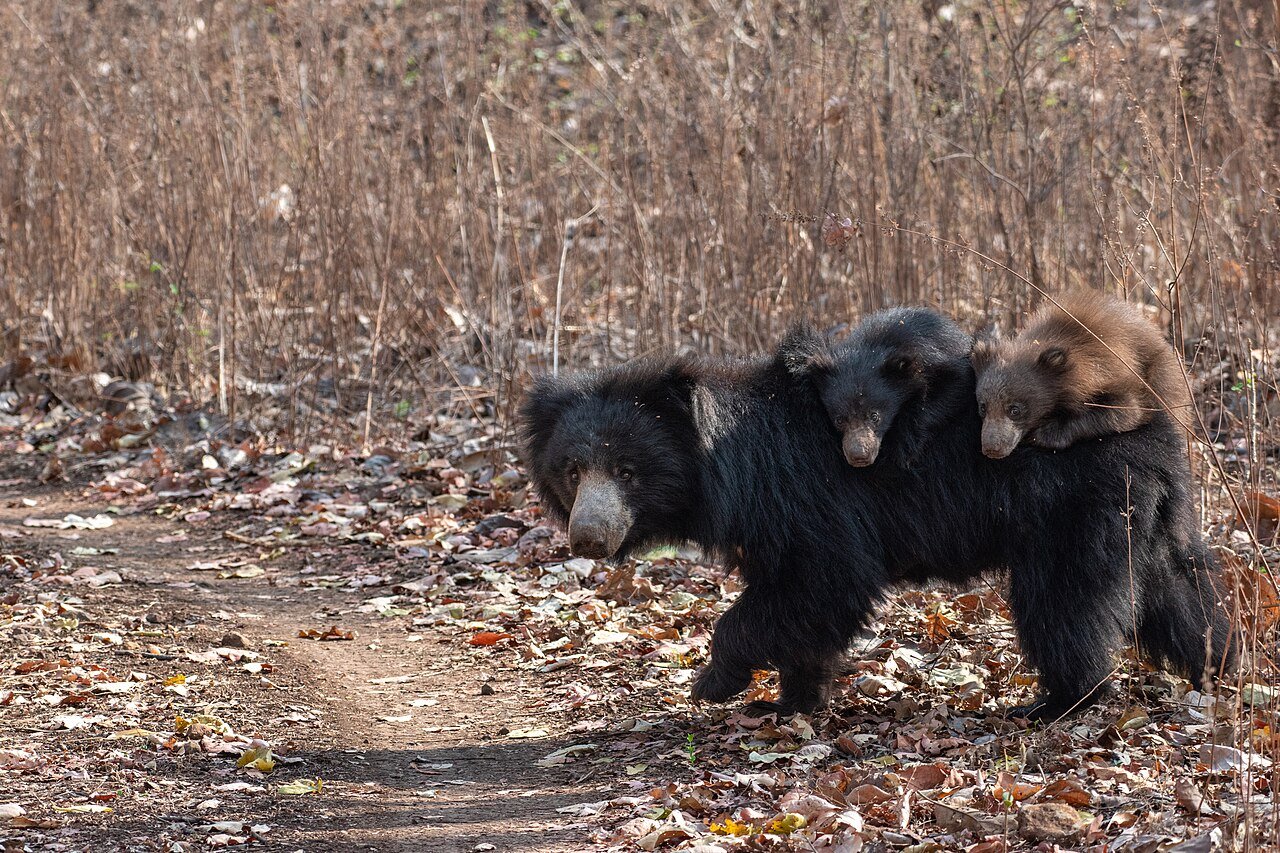
What the figures show is that this is a functioning predator landscape rather than merely a small forest containing a few famous tigers. Dhole, sloth bear and other carnivores share the system, while chital, sambar, nilgai and wild pig form much of the prey base that allows those predators to exist.
A tiger may dominate everyone’s attention when it steps onto the road.
The forest has been working perfectly well before it arrived.
And Then There Are the Birds
One of the advantages of slowing down in Bor is that the reserve begins to reveal wildlife that disappears from most tiger-focused itineraries.
Around 160 bird species are currently reported from the landscape. The combination of dry deciduous woodland, scrub and the Bor reservoir supports woodland birds, raptors and water-associated species. Indian paradise flycatchers, sirkeer malkohas, crested serpent eagles, shikras, ospreys, ducks and other waterbirds occur here, while Indian white-backed vultures have been recorded around the reservoir backwaters.
On an empty road, these things become easier to notice.
That is one of our strongest memories of Bor.
Not that a tiger appeared every time.
That we had enough silence to look for everything else.
Why Those Early Weekday Safaris Stayed With Us
A forest does not become better simply because fewer people visit it.
But the quality of observation can change dramatically when there are fewer vehicles.
On some of our earlier weekday drives in Bor, there was nobody else to follow and nobody else to be influenced by. If a guide wanted to wait because of a pugmark, an alarm call or simply an instinct built from years of knowing the road, we could wait.
There was no constant flow of second-hand information.
No “tiger there ten minutes ago”.
No vehicle racing in the opposite direction forcing everyone else to rethink their safari.
Tracking became slower.
And in many ways, more interesting.
This is something we have also experienced in places such as Nagzira. When a forest is quiet, you begin making decisions from what is happening around you rather than from what somebody else has already seen.
We would not promise that solitude in Bor today.
The reserve is better known, tourism has expanded and a well-positioned tiger can now bring vehicles together just as it can elsewhere. New buffer tourism areas are also changing the geography of a Bor safari.
But those old drives explain why we kept coming back.
Bor in 2026 Is a Bigger Safari Landscape Than It Used to Be
Bor currently has two core safari gates: Bordharan and Adegaon.
It also has three newly introduced buffer safari gates:
Rahati, Dhaga and Navegaon.
Rahati and Dhaga were opened as part of the expansion of tourism into Bor’s buffer landscape in early 2026. Navegaon adds another access point on the Nagpur side and is particularly relevant for travellers approaching from the city.
The booking system, however, is not identical across all five gates.
Bordharan is currently the only Bor gate available for online safari booking. Adegaon, Rahati, Dhaga and Navegaon are currently booked offline.
This is important when planning a trip because reading that a gate exists is not the same thing as being able to book it through the online portal.
It is also a good example of why old Bor guides become obsolete quickly. The tourism landscape changed substantially in 2026 alone.
Core or Buffer: Which Should You Choose?
We would not automatically choose the core simply because it is called the core.
The latest monitoring itself is enough reason to be cautious about that assumption: seven of the fourteen adult tigers identified during the latest Phase IV exercise were associated with the buffer.
That does not mean a buffer safari has a higher probability of seeing a tiger either.
Animal movement changes.
Females raise cubs.
Young adults disperse.
Males alter territories.
Water changes with the season.
A productive road in April may be extremely quiet several months later.
For someone doing several safaris, using more than one part of the Bor landscape can make far more sense than repeatedly chasing yesterday’s sighting from one gate.
The important question is not simply “core or buffer?”
It is what is happening in Bor now?
How Many Safaris Should You Do in Bor?
If Bor itself is the reason for the trip, we prefer three to four drives rather than one.
That is not because four drives guarantee a tiger.
They don’t.
Repeated safaris give you something more valuable: context.
On the first drive, every junction is new. By the third morning, you may recognise the nala where sambar called the previous evening, the stretch where fresh pugmarks crossed the road or the reservoir edge where animals were moving after sunrise.
Bor’s compactness works in its favour here.
You begin to build a mental map quickly.
A single safari shows you the forest.
Several safaris begin to show you how it works.
When Is the Best Time to Visit Bor?
For most travellers, the season should depend on what kind of experience they want.
November to February
These are the easier months physically.
Mornings can be pleasantly cool, vegetation is relatively fresh after the monsoon and winter birding around the forest and reservoir adds considerably to the safari.
Visibility can be lower in denser patches, but that is part of the character of a deciduous forest coming out of the rains.
March to June
The landscape gradually becomes drier and more open.
Temperatures rise sharply, particularly later in the season. Water begins influencing wildlife movement more visibly and sections of the forest can become easier to scan.
This is why summer is often associated with productive tiger safaris across Central India.
It is still not a guarantee.
A tiger can spend the entire drive fifty metres away in vegetation and never give you a reason to know it is there.
Monsoon
Maharashtra changed its tourism approach in 2026, with core tourism closing during the monsoon while buffer tourism can continue subject to management decisions, rainfall and road conditions. Bor’s core closed from 1 July in 2026 while buffer safari operations continued.
For current travel, always confirm operational status before planning around a monsoon safari.
Forest roads and weather, rather than a calendar alone, ultimately decide what is possible.
Getting to Bor
Nagpur is the most useful gateway for most visitors arriving by air or long-distance train.
The actual road transfer depends on the safari gate you are using, which has become more important now that Bor tourism extends across several core and buffer entry points.
This is particularly worth checking before choosing accommodation.
A property described vaguely as “near Bor Tiger Reserve” may be convenient for one gate and considerably less useful for another.
For a short Central Indian wildlife trip, Bor’s proximity to Nagpur remains one of its biggest practical advantages.
It can also be combined with other forests rather than treated as an isolated destination.
Bor With Pench, Umred or Tadoba
Bor and Pench make an especially logical combination for travellers using Nagpur.
The landscapes are different enough that the journey does not feel repetitive, while both sit within the broader Central Indian tiger system.
Bor and Umred-Paoni-Karhandala can make an interesting Maharashtra-focused wildlife circuit, particularly for travellers who already know the larger, more famous tiger reserves and want to understand some of the smaller forests linking this landscape together.
Bor and Tadoba can work well for a longer tiger-focused journey, with Tadoba providing a much larger tourism network and Bor offering a more compact contrast.
We would choose the combination according to safari availability rather than forcing a predetermined circuit.
An excellent forest with no useful permits is not an excellent itinerary.
What Bor Does Particularly Well
Bor’s greatest strength is not that it is a smaller substitute for Tadoba.
It isn’t.
Its strength is that its compact geography makes the relationship between core, buffer, water, villages and tiger movement unusually easy to understand.
It can also reward travellers who enjoy repeated drives and fieldcraft. A smaller road network means landmarks become familiar quickly. You begin noticing not simply where you saw an animal, but how different parts of the landscape connect.
For guests flying into Nagpur, access is relatively straightforward.
And for anyone willing to look beyond the tiger, Bor combines predators, ungulates, dry deciduous forest, reservoir habitat and good bird diversity in a relatively concentrated landscape.
What Bor Does Not Offer
Bor does not have the depth of safari infrastructure found around Tadoba, Kanha or Pench.
Its tourism network is smaller.
Its accommodation choices are more limited.
And because the safari geography is compact, a sought-after tiger appearing near a tourism route can concentrate vehicles surprisingly quickly.
That last point matters.
Small does not always mean quiet.
Nor does a relatively high number of photographed tigers mean easy sightings.
If your only definition of a successful safari is obtaining a clear tiger photograph on one drive, Bor can disappoint you just as easily as any other forest.
But if you are willing to watch the landscape rather than merely wait for its most famous animal, Bor becomes considerably more interesting.
A Small Reserve That Makes More Sense When You Look Beyond It
When we first came to Bor in 2012, what stayed with us was the quiet.
Sometimes ours really was the only Gypsy on the road.
At the time, that felt like the defining characteristic of the place.
Years later, we think Bor’s more interesting lesson is its scale.
A protected core of 138.12 square kilometres sounds tiny. Then a tigress raises cubs in the buffer. A young tiger disperses. Camera traps photograph adults on both sides of the administrative boundary. Forest patches connect towards much larger tiger landscapes elsewhere in Vidarbha.
Suddenly 138 square kilometres is not the whole story at all.
That may be the most useful way to understand Bor Tiger Reserve.
We first came here because it was quiet.
We kept returning because the more time we spent here, the less small it seemed.