You are in Botswana in July.
The mornings are cold, the grass beyond the floodplain is beginning to dry, and it has barely rained locally for weeks. Yet somewhere beyond the reeds, water is still arriving.
A channel that was shallow weeks ago begins to widen. Water pushes farther into grassland. Areas that looked dry earlier in the season become reachable by mokoro.
The strange part is that the rain responsible for this did not fall here. It fell months ago, hundreds of kilometres away in Angola.
That delay is one of the reasons the Okavango Delta feels so improbable. Botswana is moving deeper into its dry season just as one of Africa’s great river systems begins to spread across the Kalahari.
The water is late, and the entire ecosystem depends on it.
The Rain Begins Far to the North
To understand the Okavango, you first have to leave Botswana.
The river begins in the highlands of Angola, where summer rain feeds the Cubango and Cuito river systems. From there, the water moves south, eventually passing through Namibia before entering Botswana.
By the time you see it spreading across the Delta, the rain that created it may already be a distant memory at its source.
The flood you are watching is not a response to yesterday’s weather. It is the delayed consequence of a rainy season that happened somewhere else.
A River That Never Reaches the Sea
Most major rivers eventually reach an ocean.
The Okavango does not.
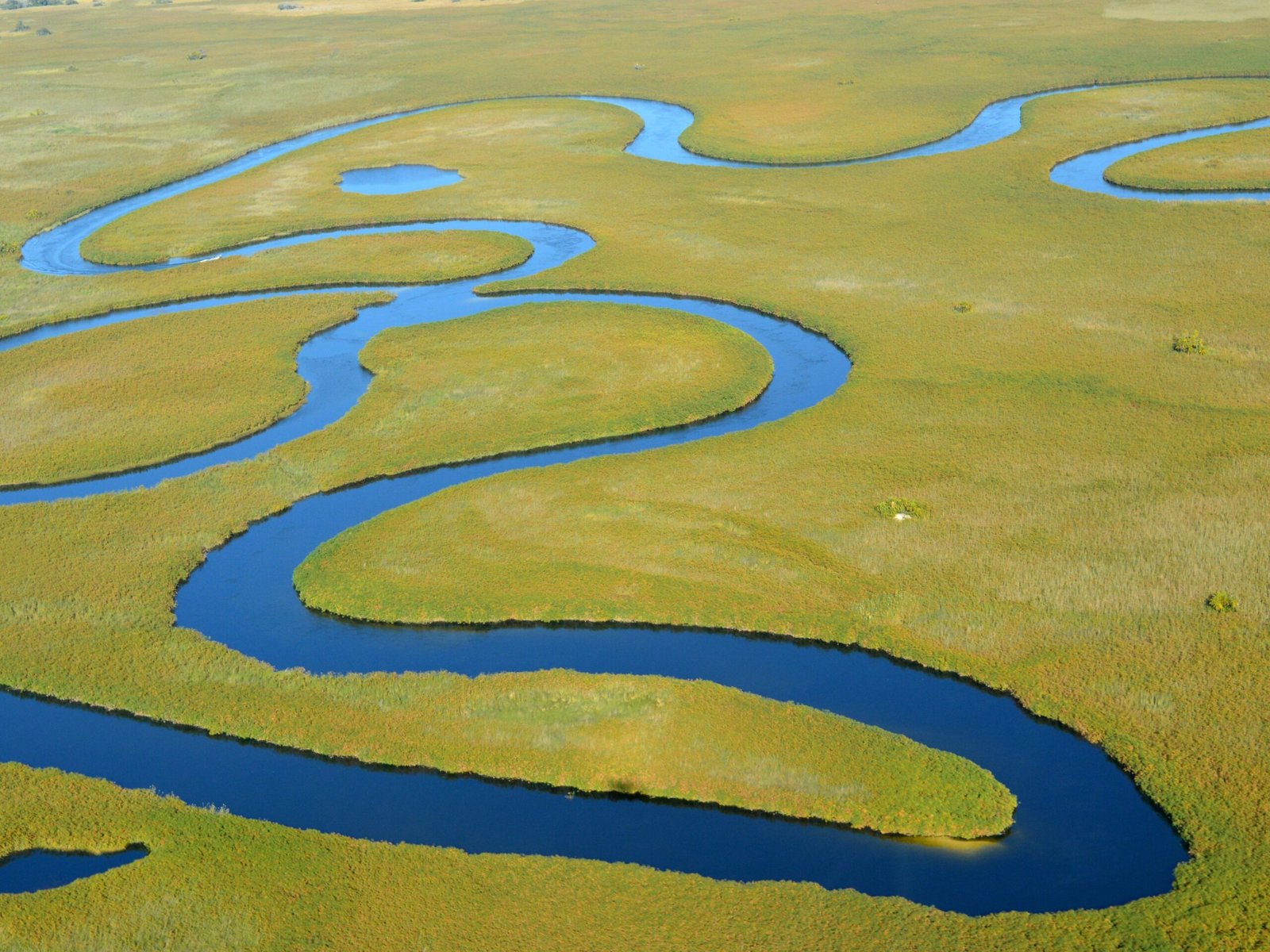
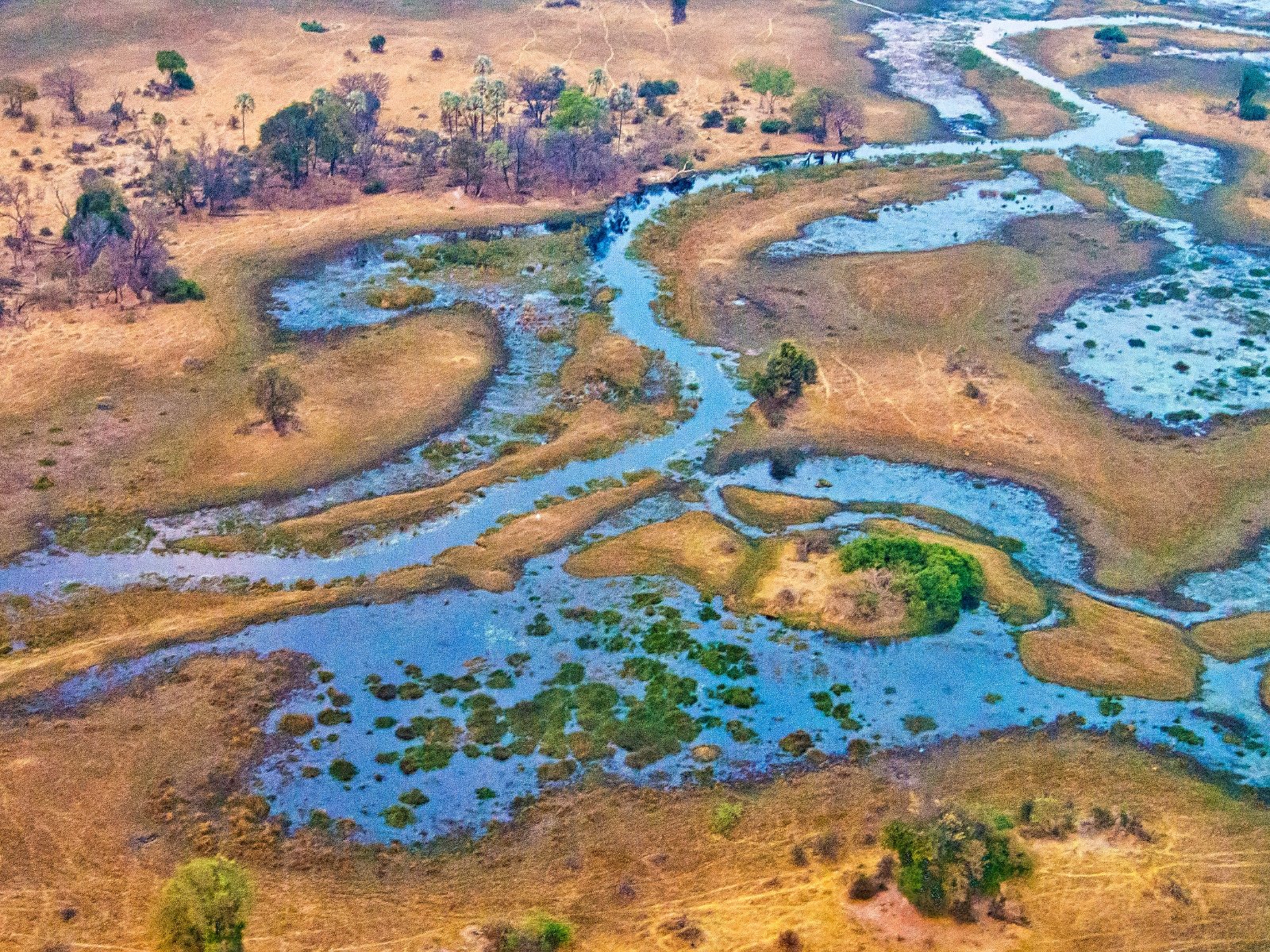
Instead, the water spreads across one of the flattest landscapes imaginable, branching into channels, lagoons, reedbeds, floodplains and islands before slowly disappearing into the Kalahari.
There is no dramatic river mouth and no coastline. The river simply fades into the desert.
That idea sounds almost impossible until you see the Delta from above: a great river crossing part of southern Africa and ending not at an ocean, but in sand.
Why Does the Flood Take Months to Arrive?
Distance is part of the explanation, but not the whole explanation.
The Okavango system is extraordinarily flat. Water is not racing downhill through a narrow valley. It is moving slowly through a landscape where even small differences in elevation can alter which channels fill, which floodplains receive water and where the current slows.
As the flood advances, it spreads sideways. Some water remains in permanent channels, some spills over shallow plains, some seeps into the ground, and some is temporarily slowed by dense vegetation and the enormous storage capacity of the floodplain.
The Delta itself delays the flood.
It stores it, spreads it and releases it gradually.
That is why the pulse can take months to move through the system. It is not simply travelling from Angola to Botswana; it is being absorbed into the landscape as it goes.
You Can Watch the Flood Move South
The flood does not arrive everywhere at once.
The Panhandle receives it first. The pulse then works progressively into the Central Delta and farther south, where some areas may not reach their highest water levels until much later.
In a typical year, the upper Delta may already be rising while areas farther south are still waiting.
By the time floodwater is pushing strongly towards the southern reaches, months may have passed since the original rain fell in Angola.
There is no fixed day when somebody turns on the Okavango.
And that is the first thing we look at when planning a Botswana trip: not simply the month, but where in the Delta the water is likely to be during those specific dates.
Botswana Is Drying While the Delta Is Filling
This is where the system becomes truly extraordinary.
By the time the flood is spreading through much of the Delta, Botswana’s local rainy season has largely ended. The sky becomes clearer, mornings become colder, and grass away from permanent water begins to lose colour.
Seasonal pans elsewhere start shrinking.
And while all of that is happening, water is arriving.
The Delta expands during the dry season.
That seasonal mismatch is what gives the Okavango so much of its ecological power. Water reaches the landscape precisely when water is becoming more valuable.
The Delta Does Not Fill Like a Bathtub
One of the easiest mistakes to make when planning an Okavango safari is to imagine the Delta as one large basin gradually filling from north to south.
It does not behave like that.
The landscape is a mosaic of permanent channels, seasonal channels, shallow floodplains, dry islands, woodland and grassland sitting only slightly above surrounding wet areas.
Water may be increasing in one sector while another part of the Delta is already starting to recede.
That is why two guests travelling in the Okavango at exactly the same time can describe completely different conditions.
One may be moving through deep channels every afternoon.
Another, not particularly far away, may spend most of the trip game driving over comparatively dry ground.
Both can be right.
This is why “Okavango Delta” is never enough information for us when choosing a camp.
What Made 2026 Different
The 2026 season illustrated this complexity particularly well.
Heavy local rainfall had already saturated parts of northern Botswana before the main Angolan flood pulse fully developed. Some areas of Moremi were unusually wet early in the year, with low-lying tracks and floodplains already affected.
Then the delayed upstream flood arrived.
That distinction matters because not every flooded patch you see in the Okavango comes from the same source.
Some water is the result of rain falling directly over Botswana. Some is part of the much larger flood pulse that began its journey far upstream in Angola months earlier.
In 2026, those two influences overlapped strongly enough to create particularly wet conditions in several areas.
For a traveller, that can simply look like “a lot of water”.
For understanding the Delta, the difference is fundamental.
More Water Does Not Automatically Mean a Better Safari
It sounds logical to assume that a bigger flood must create a better safari.
The Delta is more complicated than that.
High water can produce extraordinary scenery, expand channels and open areas for boating or mokoro trips.
The same water can also close game-drive roads, restrict access to productive plains and allow wildlife to spread over a much larger area.
A lion may be visible across a channel.
That does not help much if your vehicle can no longer reach the other side.
Wildlife has not disappeared. Your ability to reach it has changed.
We pay particular attention to this when combining camps. A beautiful high-water Delta property can be wonderful, but it does not automatically replace the need for strong land-based game viewing elsewhere in the itinerary.
Wildlife Lives Along the Edges
Some of the most productive areas in the Delta are not the deepest channels.
They are the transitions.
The places where flooded grassland meets dry ground, where shallow water runs alongside woodland, and where islands rise only slightly above the floodplain.
Red lechwe are beautifully adapted to this world.
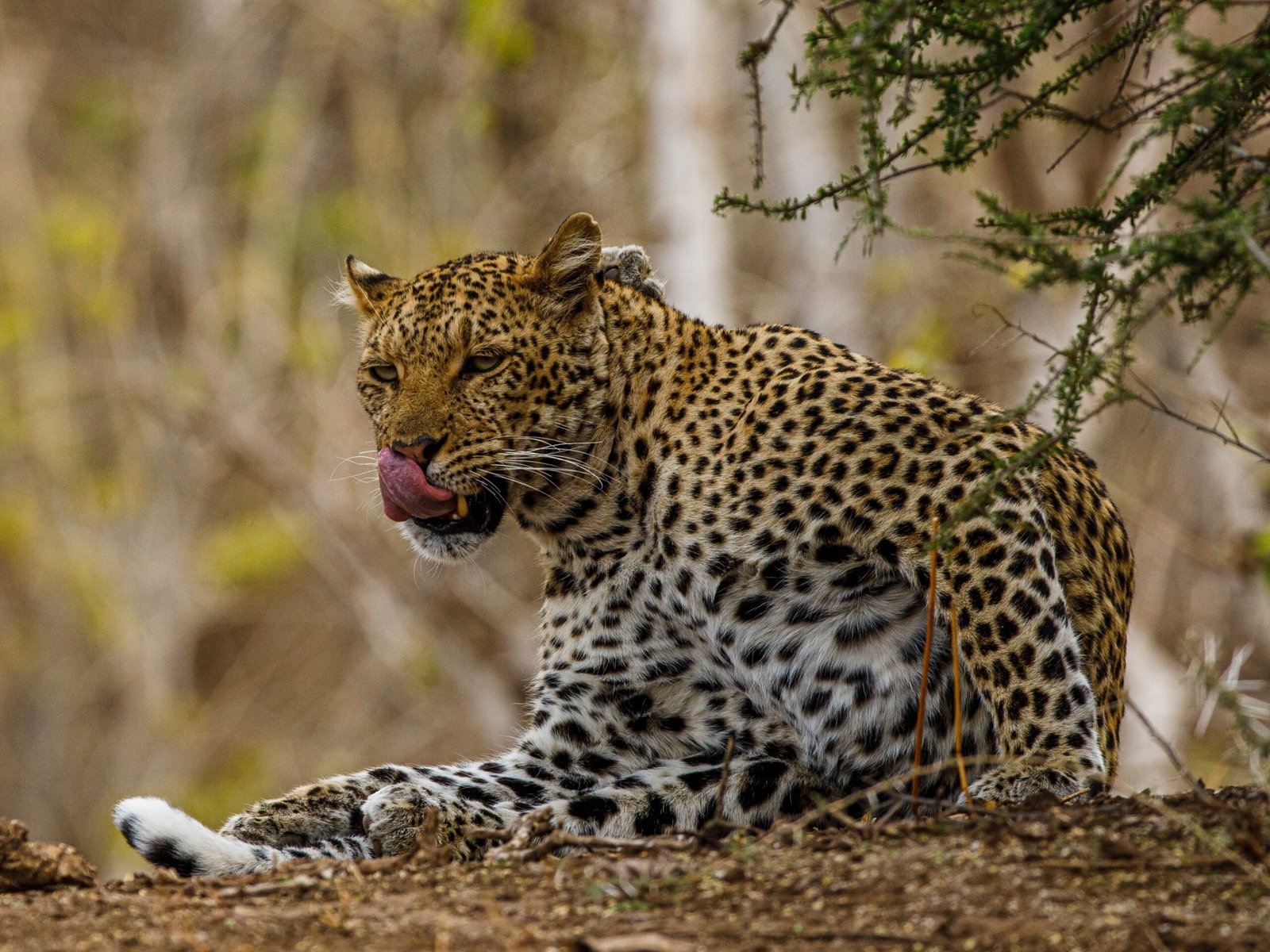
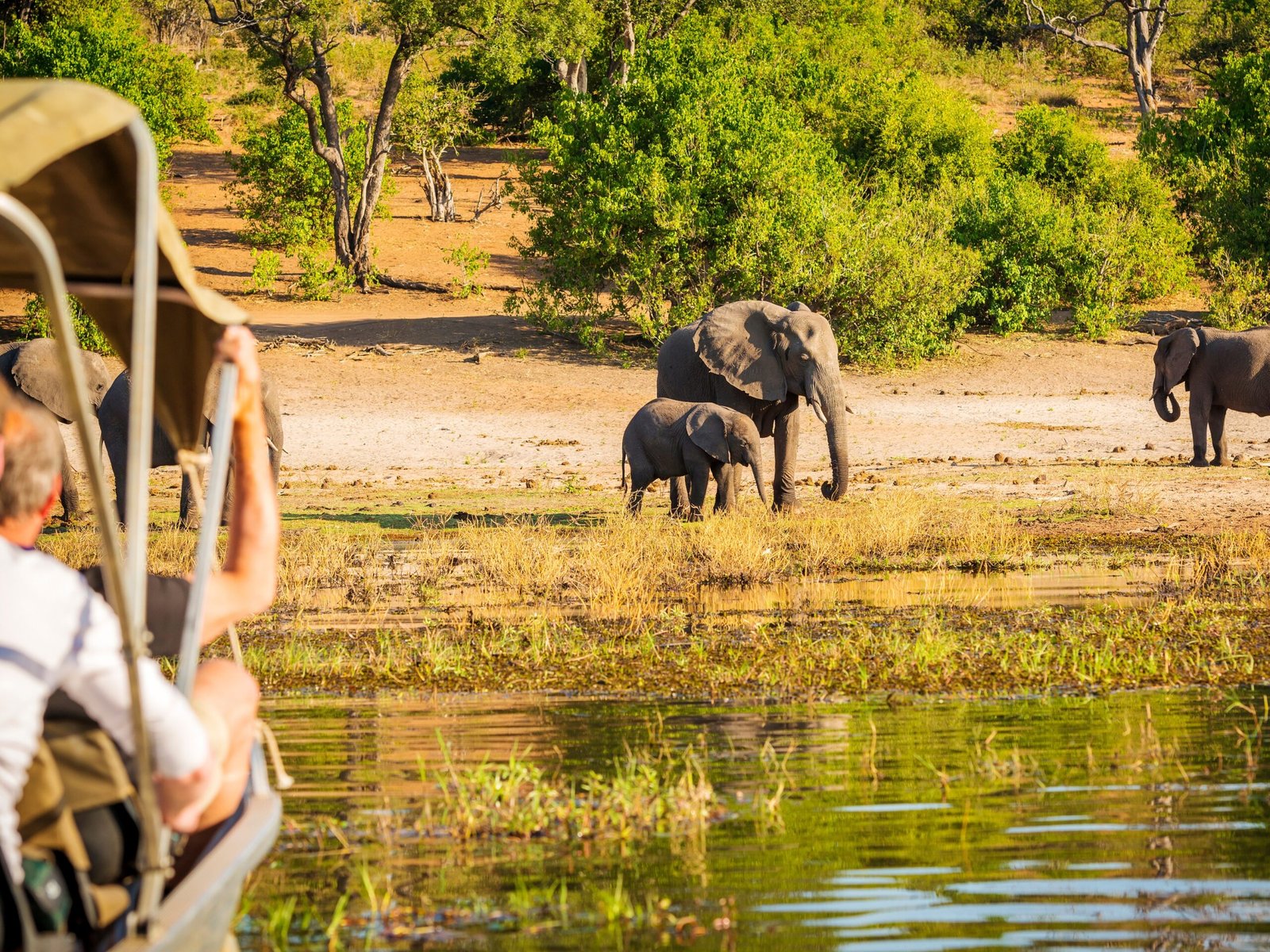
Elephants and buffalo use the Delta as dry-season water becomes increasingly valuable. Fish spread into flooded areas. Birdlife responds quickly. Predators respond to the movement of prey.
The flood does not simply add water to a landscape.
It reorganises the landscape.
And from a safari perspective, those wet-dry edges are often where things become most interesting.
Not Every Okavango Camp Gives You the Same Safari
This sounds obvious until you start comparing properties.
Two camps may both describe themselves as being in the Okavango Delta and still offer fundamentally different experiences.
One may sit beside permanent water.
Another may depend heavily on the annual flood.
A third may be primarily a game-drive camp with only seasonal access to water activities.
Their websites may show remarkably similar aerial photographs.
Your trip may not feel remotely similar.
If taking a mokoro through flooded channels is one of the reasons you are travelling to Botswana, we do not simply ask whether the camp is “in the Delta”.
We ask what the water system around that camp normally does during your travel period, whether the channels are permanent or seasonal, and what current conditions are suggesting.
That question matters much more.
A Mokoro Is Not Guaranteed Because You Are in the Okavango
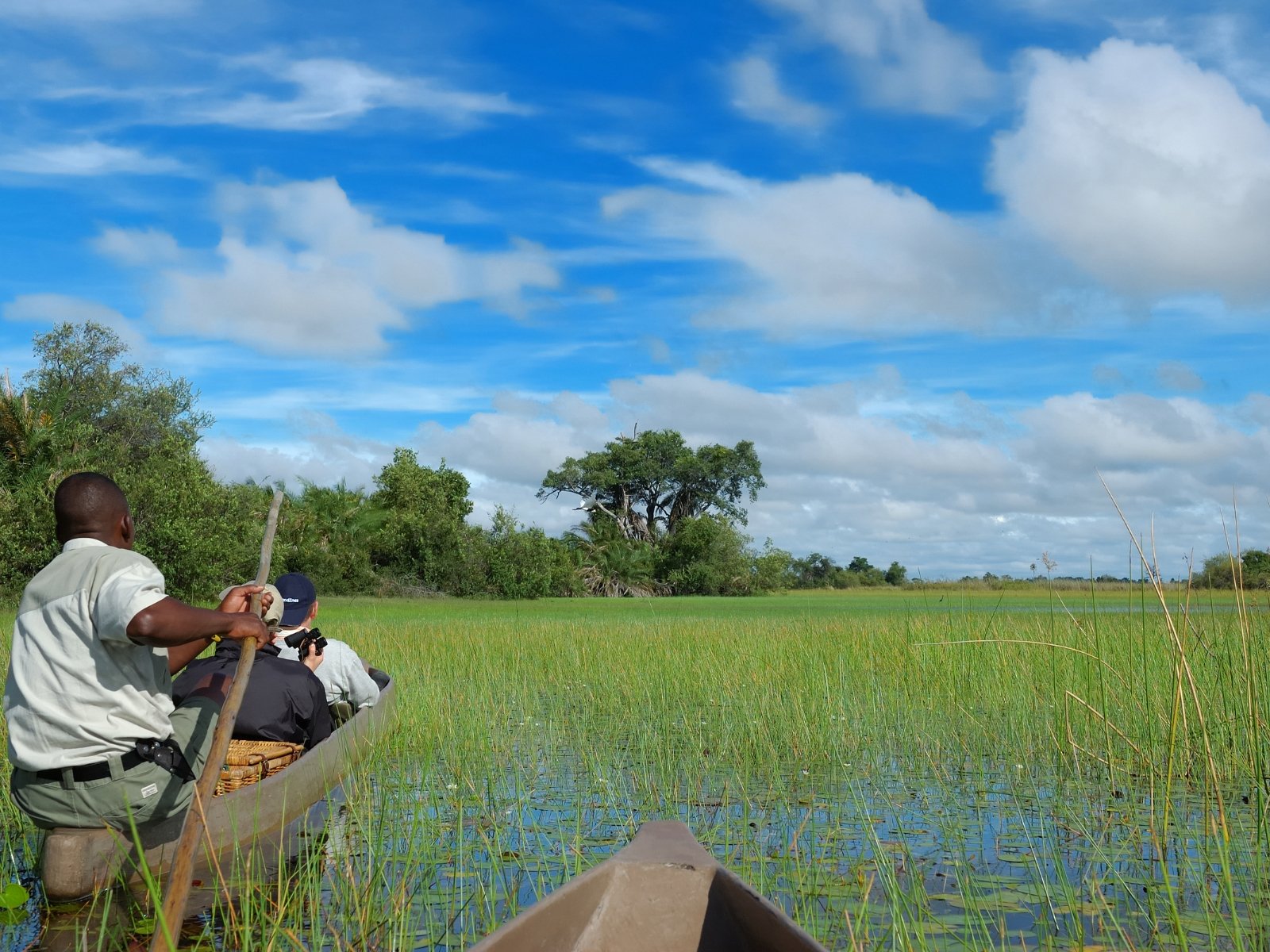
The mokoro is one of the great visual symbols of Botswana.
But it is not automatically available everywhere in the Delta throughout the year.
Some camps have access to permanent channels. Others depend heavily on seasonal floodwater. Water may arrive early, late or weakly in a particular year, and local conditions can change which routes are usable.
If the mokoro experience is important to you, it needs to be treated as a planning priority rather than an assumption.
The same applies to motorboat activities.
We have seen too many Botswana itineraries built around lodge names first and water conditions second.
It should be the other way around.
So When Is the Best Time to Visit?
There is no single answer because there is no single version of the Okavango.
March and April
The Delta can still be green from local summer rains.
Birdlife can be excellent, the landscape feels softer, and the main Angolan flood may not yet have reached its greatest extent in the southern parts of the system.
This is very different from the classic dry-season image.
May and June
The upstream flood becomes increasingly influential across larger parts of the Delta.
Days are generally pleasant, while mornings can be much colder than many travellers expect.
In the right location, this can give you an excellent mix of game drives and water activities.
July and August
This is the version of the Okavango most people imagine.
The flood and Botswana’s dry season overlap.
Water can be extensive in the right areas while the surrounding Kalahari landscape becomes progressively drier.
It can be a superb period for combining land and water experiences, but it is important to remember that July in one concession may look very different from July in another.
September and October
Temperatures rise sharply.
Some regions may remain beautifully flooded while others begin to recede.
Dry-season pressure becomes stronger and wildlife can become increasingly concentrated around remaining water.
Game viewing can be exceptional.
November to February
Local rain returns.
The Delta greens rapidly, bird activity can be superb, young animals appear and thunderstorms transform the sky.
At the same time, the rain that will eventually create the next major flood is already beginning farther north.
That is why “July is the best month” has never seemed like a useful answer to us.
The better question is: best for what?
Botswana’s Winter Is Colder Than It Looks
Photographs can be misleading.
Blue water, elephants standing in channels and clear sunshine look distinctly warm.
At six in the morning in an open vehicle, they may not feel warm at all.
Travellers through the Delta in 2026 repeatedly commented on very cold mornings and evenings, particularly during the middle of the year.
Midday can become beautifully comfortable, then temperatures fall again as soon as the sun drops.
We tell guests travelling in winter to take proper layers seriously.
Gloves, a warm hat and something windproof often matter more than people expect.
The Delta Can Change While You Are There
One of the fascinating things about travelling during an active flood period is that the landscape is not static.
You may watch water creep farther across a floodplain over several days.
A road used earlier in the week may become too wet.
A channel that looked shallow when you arrived may suddenly become usable.
Wildlife responds as well.
This is why the Okavango sometimes feels less like a destination and more like a process unfolding around you.
Over longer periods, that process becomes even more dramatic.
Vegetation can slow channels. Sediment accumulates. Water finds different routes. Areas historically known for strong flooding can gradually change.
The water shapes the Delta, and the Delta keeps changing the path of the water.
Where Does All the Water Go?
This may be the strangest part of the story.
The Okavango receives enormous volumes of water, yet there is no river leaving Botswana and continuing towards an ocean.
Most of that water eventually returns to the atmosphere through evaporation and plant transpiration.
The river is effectively consumed by the landscape.
That is what makes the system feel so improbable.
Water travels hundreds of kilometres through southern Africa only to spread across a desert and vanish.
Then the cycle begins again.
Two Water Clocks Are Running at Once
By late in the year, local rain begins falling across Botswana again.
At the same time, rain is falling much farther north in Angola.
The rain around your camp begins affecting the Delta almost immediately.
The rain in Angola begins a journey whose effect may only become obvious months later.
So the Okavango is always responding to two different seasonal clocks.
One is local.
One is far upstream.
The water beneath your mokoro may tell you more about weather months ago in another country than about the sky above your head that morning.
Why We Prefer Botswana Itineraries That Change Character
When we plan Botswana, we usually want the landscape to evolve as you travel.
The Delta may give you flooded grassland, channels and islands.
Moremi or Khwai may add stronger mixed land-and-water game viewing.
Savuti, Linyanti or Chobe can introduce completely different woodland, predator and riverfront systems depending on the season.
The point is not to collect famous camp names.
It is to build contrast.
Five expensive camps offering nearly identical habitats do not automatically create a better safari.
In Botswana, geography often matters more than brochure hierarchy.
The Flood Depends on Places You Cannot See
The Okavango is one of Botswana’s defining landscapes.
But Botswana does not create it alone.
Rainfall in Angola matters.
What happens along the river system in Namibia matters.
Upstream water use matters.
International cooperation matters.
A red lechwe standing in a flooded grassland in Botswana may depend on rain that fell months earlier in another country.
That is the scale of the system.
Wildlife conservation here cannot stop at a national border because the river does not understand one.
The Water That Arrived Late
You are back in Botswana in July.
The sky has been dry for weeks and the grass beyond the floodplain is beginning to fade. Yet beneath the mokoro, clear water is moving quietly through the reeds.
Months earlier, it fell as rain in Angola.
It travelled south, crossed borders, slowed through channels, spread across floodplains and entered the Kalahari just as the surrounding landscape was drying.
That is what makes the Okavango extraordinary.
Not simply that it floods, but that the water arrives late.