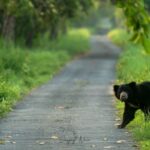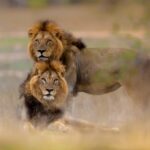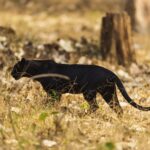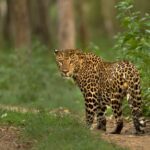
We are pretty sure you have heard of Jawai Leopard Safari. Curious about what it is?
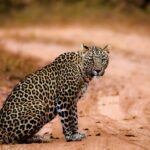
High in the rocky outcrops of southern Rajasthan, where sun-scorched granite hills rise like ancient sentinels, lives a creature cloaked in rosettes and mystery.
The leopard.
Elusive. Elegant. Enduring.
But unlike the tangled forests of central India or the remote Himalayan foothills, this leopard lives not in shadowy jungle, but in open, stone-studded terrain — side by side with shepherds, herders, and village life. This is Jawai — not a typical national park, not even a declared sanctuary — and yet, it may just be the most extraordinary place in India to witness big cats in the wild.
Here, in this timeless land carved by volcanic rock and ancient rivers, the rules of the wild have been rewritten. There are no high fences. No man-made enclosures. Just nature and community in a quiet, almost sacred agreement.
And in the heart of it all, the Jawai Leopard Safari offers a glimpse into this rare harmony.
This is not the thundering drama of a tiger sighting in Ranthambore. It is something altogether more subtle… more spiritual. The leopards of Jawai don’t roar — they appear, as if by spell, poised on a boulder at dawn, watching the valley below with unblinking amber eyes. It’s a moment that stills your breath and stays with you long after the engine hum of the safari jeep fades away.
In the following pages, we’ll uncover everything you need to know — from how to get there, what the safari costs, where to stay (luxury lovers, fret not), and why Jawai is quietly becoming India’s most intimate leopard experience.
So come, let us journey into the land where stone meets silence… and the wild walks free.
Where Is Jawai?
Tucked away in Rajasthan’s Pali district, Jawai sits quietly between the better-known cities of Udaipur and Jodhpur. If you blink at the wrong moment on a road trip, you might miss it entirely — a cluster of granite hills, sparse villages, and a broad dam shimmering under the sun. But those who take the time to stop? They discover one of India’s most fascinating, little-known wilderness stories.
Jawai isn’t a national park in the formal sense. It has no entrance gate, no ticket counter, no high-profile fame like Ranthambore or Bandhavgarh. In fact, most maps won’t even show a proper Jawai National Park — because it doesn’t officially exist.
And that’s precisely what makes it so special.
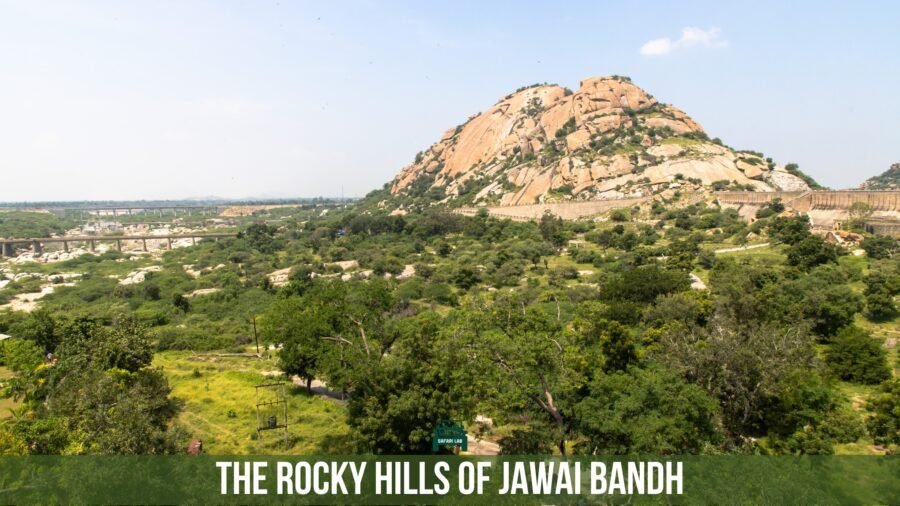
This is a landscape shaped more by geology than jungle — volcanic granite hills rise abruptly from an otherwise open scrubland, forming perfect natural caves. Over generations, leopards have made these caves their homes, blending into the stone so perfectly that even trained eyes miss them. There are no dense forests to conceal them, no thick canopy to chase sightings through — just rock, silence, and surprise.
But here’s the twist: people live here too. Rabari herders — with their flaming red turbans and stoic camels — have shared this land with leopards for centuries. And remarkably, the leopards let them.
No conflict. No fences. Just cohabitation — a concept that leaves wildlife biologists scratching their heads and safari-goers spellbound.
Why Is Jawai Famous?
- For its leopards: There are around 60-70 wild leopards roaming the Jawai-Bera region. Unlike in denser forests, here they’re easier to spot — often perched on open rock faces, sunning themselves like royalty.
- For human-wildlife harmony: It’s one of the only places in the world where apex predators and pastoral communities co-exist without conflict.
- For its unique terrain: Think Mars meets Mowgli. These aren’t your average jungle safaris — they’re raw, cinematic, and utterly different.
- For off-the-radar travel: Far from the tourist crowds of Jaipur or Jodhpur, Jawai offers something rare — a deep breath of untamed India.
How to Reach Jawai Leopard Safari: A Journey into the Wild
Although it feels like a secret slice of wilderness, Jawai Leopard Safari is surprisingly accessible. Whether you’re traveling from Rajasthan’s royal cities or buzzing metros like Mumbai, getting to Jawai National Park (well, unofficially) is both scenic and straightforward.
Let’s walk through your options city by city.
From Udaipur to Jawai Leopard Safari (Approx. 150 km)
Looking for the closest city connection? Udaipur is the go-to gateway to Jawai.
- By Road: Roughly a 3.5 to 4-hour drive through undulating Aravalli landscapes. It’s smooth and gorgeous.
- By Train: Udaipur connects easily to Jawai Bandh railway station, the main rail stop for safari-goers.
- By Air: Land at Udaipur’s airport and drive the rest. Most Jawai resorts offer pickup as part of your booking — just ask when confirming your Jawai leopard safari lodge.
Pro tip: Arrive early if you want to make the afternoon safari slot.
From Jaipur to Jawai (Approx. 400 km)
Ah yes, the big question: “Is Jaipur National Park the same as Jawai?”
Nope. Not even cousins. While Jhalana Leopard Reserve in Jaipur is an urban wildlife experience, Jawai Safari is raw, rural, and wildly immersive.
- By Road: A 7 to 8-hour drive via NH62. Plan for one or two stops — there’s plenty of charm (and roadside kachoris) along the way.
- By Train: Jaipur to Jawai Bandh trains run regularly. Align your Jawai leopard safari booking with arrival times to avoid missing a drive.
- By Air: Fly into Udaipur or Jodhpur, then road trip into Jawai.
From Ahmedabad to Jawai (Approx. 330 km)
For our west-coast wanderers, Jawai Leopard Safari is one of the easiest wildlife getaways from Gujarat.
- By Road: About 6 to 7 hours by car via NH27. It’s a pleasant, direct route.
- By Train: Trains from Ahmedabad to Jawai Bandh are available daily — book a window seat for maximum rural Rajasthani charm.
- By Air: Fly into Udaipur or Jodhpur for a short connecting drive.
And yes — most Jawai leopard safari resorts offer pickup right from the train station or airport if you’ve pre-booked.
From Jodhpur to Jawai (Approx. 170 km)
If you’re in the Blue City, you’re in luck — Jodhpur is relatively close and well-connected.
- By Road: A scenic 4-hour drive through desert villages and farmland.
- By Train: Jodhpur to Jawai Bandh trains run several times a week — ideal if you’re combining city sightseeing with a leopard safari in Rajasthan.
- By Air: Land at Jodhpur airport and drive the last stretch — it’s short, sweet, and very leopard-y.
From Mumbai to Jawai Leopard Safari (Approx. 750 km)
Coming from India’s busiest city? Jawai makes for an epic wilderness escape from the bustle of Mumbai.
- By Train: Multiple long-distance trains run from Mumbai to Jawai Bandh, especially on the Western Railway route. It’s an overnight journey — grab a sleeper, sip some chai, and wake up in leopard land.
- By Air: The quickest option. Fly to Udaipur or Jodhpur, then hit the road for 3–4 hours. Easy, efficient, and much faster than the train if you’re short on time.
Many Jawai leopard safari lodges and luxury camps also include pickup from these airports — just coordinate during your Jawai leopard safari booking.
Nearest Station: Jawai Bandh Railway Station
This unassuming little station is your official entry point to the Jawai safari region. Located about 20–25 minutes from most resorts, it’s small but well-connected to major cities like Udaipur, Ahmedabad, Mumbai, and Jaipur.
Some of the Jawai leopard resorts offers complimentary or paid transfers from here — it’s worth confirming this when making your booking.
Inside the Jawai Safari Experience: What to Expect on the Trail
There’s a stillness in Jawai that creeps in just before dawn — when the hills are blue silhouettes, and the only sound is the occasional clink of a camel bell in the distance. Then comes the low rumble of a 4×4 engine, the rustle of thermos lids, and the quiet excitement of a new day’s safari.
This isn’t your typical Indian wildlife drive.
In Jawai, the safari experience feels intimate, almost meditative. The terrain is open, the crowds are nonexistent, and the animals — especially the leopards — seem oddly unfazed by human presence.
So, what actually happens on a Jawai leopard safari?
Jawai Leopard Safari Timings
Your day begins early — really early. Morning safaris usually start around 5:30 AM, depending on the season. The sky is still dark when you climb into the jeep, bundled in layers, camera slung across your shoulder. There’s hot chai in a flask, the guide whispers a quick update about which female was seen near the dam last evening, and then you’re off — headlights slicing through the misty scrub.
Evening safaris begin around 4:30 PM, when the heat softens and the granite outcrops start glowing under the sunset. This is when leopards become active again, climbing to high rocky thrones to scan the valley, or descending into the grass to hunt.
Each safari lasts about 2.5 to 3 hours, and there are usually two safaris per day included in most Jawai leopard safari lodge packages — one morning, one evening.
The Experience on the Ground: What It’s Really Like
You won’t be crammed into a queue of jeeps jostling for position, as in many of India’s national parks. In Jawai, the experience is slower, quieter, and much more personal.
Your safari vehicle is usually a private open 4×4 jeep, driven by a local tracker who knows these hills better than GPS ever could. Some leopards have been observed for years — their movements, behavior, and dens are known to the guides in intimate detail.
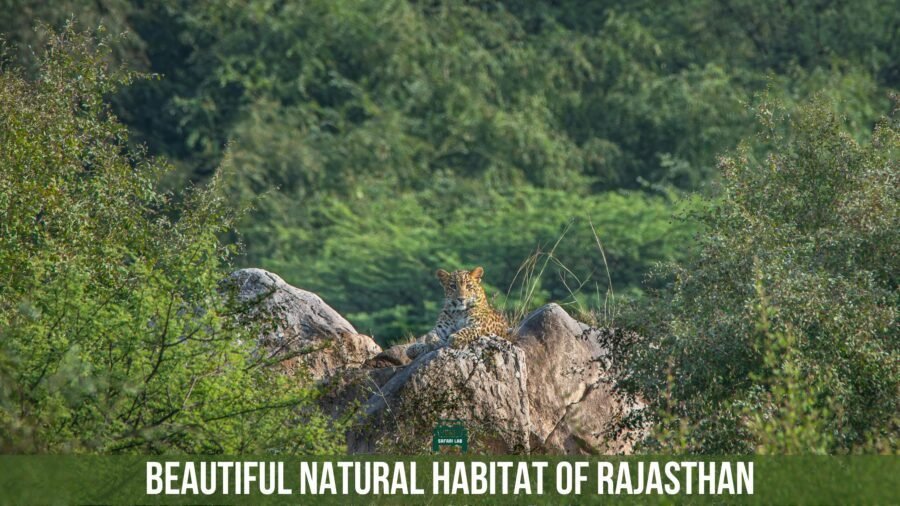
And no, you won’t need to spend your safari squinting through thick vegetation. The terrain here is open granite hills, dry riverbeds, and wide scrublands, which means leopards are often easily visible, resting on rock ledges or patrolling their territory in full view.
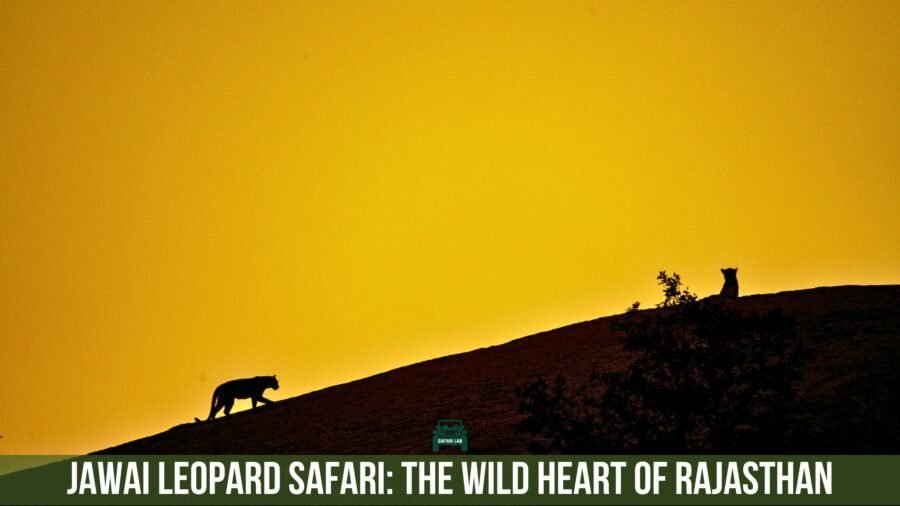
It’s not uncommon to see a leopard perched calmly on a boulder, backlit by the rising sun — watching you, completely at ease, as if it’s the one on safari.
The Land of Stone and Surprise
Unlike the dense forests of Pench or Tadoba, Jawai’s terrain is rugged and exposed — a dramatic sweep of volcanic granite hills peppered with caves. These natural crevices serve as dens, nurseries, and hideouts for the region’s leopard population.
The hills rise abruptly from the plains, offering sweeping views and excellent vantage points — for both leopards and visitors. What this means for you is clear: no tangled underbrush to block your view, and a much higher chance of seeing a leopard out in the open, especially in the cooler hours of the day.
The area around Jawai Dam adds another layer of biodiversity — birds, crocodiles, and other species thrive here, making it a vital water source and a popular hangout spot for predators.
Wildlife Beyond the Leopard
While leopards are the undisputed stars of the show, they’re not the only performers in Jawai’s wild theatre. Look closely, and you’ll spot a full cast of supporting characters.
At the dam, ancient crocodiles lie sunbathing on the rocks like stone relics. If you’re into birdwatching, you’re in luck — over a hundred species are found here, including flamingos, owls, harriers, and migratory waterfowl that come to dance in the winter sun.
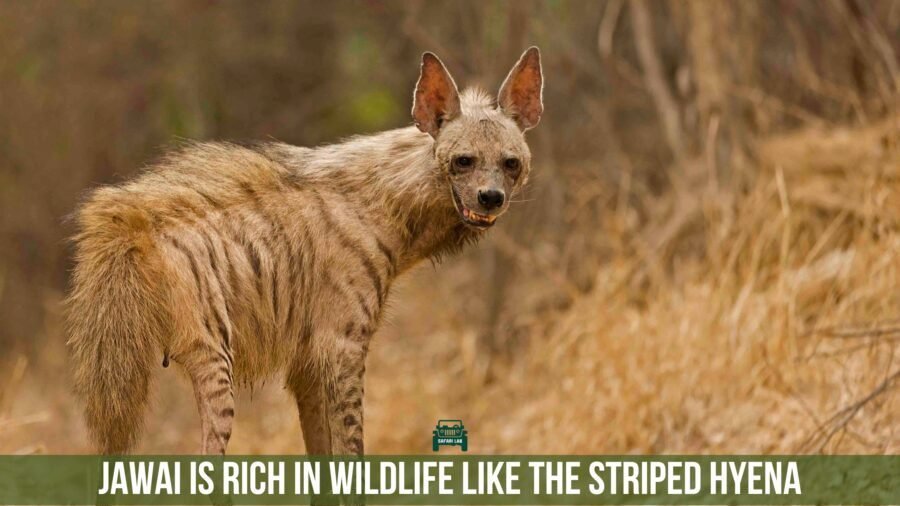
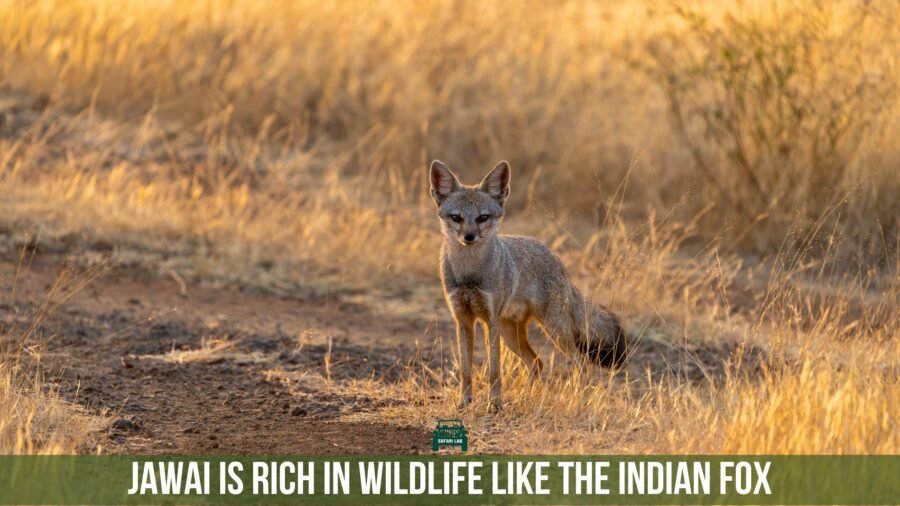
Other mammals include striped hyenas, jungle cats, Indian foxes, porcupines, and nilgai (the so-called “blue bulls” of India). Sightings aren’t guaranteed, of course — this is still wild country — but the diversity is there, waiting, if you know how to look.
For the Shutterbugs: A Photographer’s Paradise
If you’re a wildlife photographer, Jawai will spoil you. The open terrain, long sightlines, and golden-hour light create the perfect conditions for jaw-dropping shots.
The leopards themselves seem to understand the assignment. You’ll often find them framed perfectly on a boulder, staring regally into the distance like they’re posing for National Geographic.
A 200–600mm zoom lens is ideal, but even a decent DSLR or mirrorless setup can yield stunning images here. And if you’re lucky, you might catch a mother with her cubs — one of the most magical sights in Indian wildlife.
So no — Jawai isn’t just a place where you tick off “leopard” on your wildlife list. It’s a place where you witness a leopard being a leopard — walking freely through a land that hasn’t been overrun by fences or forced into zones.
Are Bera Leopard Safari and Jawai the Same?
Yes and no. Bera is a small village within the greater Jawai landscape — and one of its most active leopard zones. While some operators brand safaris as “Bera Leopard Safari” and others as “Jawai Leopard Safari,” they’re essentially part of the same ecosystem. The terrain, leopards, and guides often overlap. The difference is mostly in naming — not in experience.
Jawai Leopard Safari Price & Booking Guide
One of the most common questions travelers ask before heading to Jawai is deceptively simple: How much does a leopard safari cost?
Unlike India’s national parks, where pricing is fixed and regulated, Jawai operates in a slightly different space. There’s no government-managed tourism system here, and you won’t find official permits issued through forest departments. Instead, safaris are conducted by trained local guides and naturalists, often operating in partnership with lodges, private estates, and community-owned land.
That means rates can — and do — vary. Here’s what you need to know before you book.
What it will cost you
As of 2025, most private jeep safaris in Jawai fall into a general price range of ₹4,000 to ₹8,000 per drive. This is usually for a full gypsy (seating 4 to 6 guests), and includes a morning or evening safari lasting roughly 2.5 to 3 hours.
Extended safaris, photography-specific drives, or custom packages that include naturalist services and transfers can cost more — sometimes upwards of ₹10,000. In select cases, where the experience is curated around specific wildlife behavior (breeding females, cub sightings, territorial males), prices reflect the specialist time and expertise involved.
But the good news? There’s room for flexibility. If you know what you’re looking for — and what to ask — you can tailor a safari that suits both your budget and your interests.
What the Leopard safari price Typically Covers
A typical Jawai safari booking includes an open 4×4 gypsy, a local guide or tracker, fuel, basic refreshments, and access to leopard zones. It may also include transfer from your accommodation, though not always — it depends on where you’re staying and how your safari is arranged.
That’s why it’s crucial to confirm the details when you book. At Safari Lab, we make this process simple by ensuring all key logistics are handled upfront: your guide, your timings, your pickup — all clearly communicated before you arrive.
Why the Leopard safari Prices Vary
Because there’s no government regulation in place, rates are set by the safari providers themselves. That variation isn’t necessarily a bad thing — but it does mean that the quality of the experience can depend heavily on who you book with.
Some drives are led by skilled wildlife trackers who’ve spent decades reading the land. Others may simply follow common routes through high-traffic areas. The difference isn’t always visible in the price — but it becomes clear in the field.
What you’re really paying for isn’t just a vehicle or a drive. It’s field knowledge. Terrain awareness. Patience. And timing.
Can You Book Without Staying at a Lodge?
Yes — it’s possible to book safaris independently, even if you’re not staying overnight at a resort. But keep in mind that Jawai isn’t a walk-in destination. There’s no “ticket counter,” no centralized booking office. Safari slots are arranged directly with guides and require coordination with leopard movement, daylight, and terrain access.
If you’re just passing through for the day, it’s essential to book in advance, confirm your pickup point, and understand the window of time you’re working with. At Safari Lab, we typically recommend a two-safari itinerary: one evening drive on arrival, followed by a dawn safari the next morning. This gives you the best possible chance of a quality sighting — and a richer understanding of the landscape.
Is It Worth It?
Leopard sightings in Jawai are not rare. But the value of the experience goes beyond seeing a big cat.
This is about witnessing an ecosystem in quiet balance — where leopards walk freely through a landscape shaped by stone, herders, and time. The price of a safari isn’t just about distance covered or hours spent. It’s about expertise, silence, patience — and presence.
Book with care. Ask the right questions. And when the leopard finally emerges from its granite shelter and stands against the rising sun, you’ll know you got far more than your money’s worth.
Leopard Sightings in Jawai: Zones, Territories & Individual Cats
Despite its open terrain and informal setup, Jawai is one of the best places in India to observe leopards behaving like leopards — wild, untamed, and often visible in full daylight. While there are no government-defined zones like in tiger reserves, the area is informally divided into regions based on topography, leopard movement, and the proximity of villages or granite formations.
The local guides and trackers — many of whom have followed the same leopard families for years — refer to these by functional names. Understanding them can help you choose your safari area more intelligently and raise your chances of a quality sighting.
Key Safari Zones in Jawai
Jawai’s safari landscape is made up of rocky hills, scrublands, dry riverbeds, and scattered Rabari settlements. Some of the most active areas for leopard sightings include:
Sena Hill Zone
This zone continues to deliver some of the most consistent leopard sightings in the region. Leopards here are often seen basking on granite ledges, especially early in the morning or just after sunset. Several dens have been recorded in this zone, and it’s one of the more visually dramatic areas for photography.
Bera Village Zone
Located near the heart of the Jawai landscape, Bera is known for its prominent outcrops, long-standing leopard territories, and the cultural overlap between wildlife and the Rabari community. The zone includes caves where leopards frequently raise cubs and is often part of the core safari circuit.
Rughnathpura Zone
Quieter and slightly more offbeat, this zone sees less traffic but has recently become more active. Sightings here tend to be more rewarding for those who prefer peaceful drives and don’t mind being patient. It’s gaining popularity among experienced trackers who like to avoid crowded spots.
Jawai Bandh / Dam Zone
This wetland-adjacent area doesn’t just attract birds and crocodiles — leopards occasionally cross or patrol this zone in the early hours, especially during the hotter months. The contrast of open rock and shimmering water can lead to some of the most photogenic encounters.
These zones aren’t strictly enforced — your safari will typically cover one or two based on leopard movement that day. The best guides scout fresh pugmarks, scent marks, or signs of kills before deciding where to go.
The Leopards of Jawai: Territories, Lineages, and What’s Happening Now
In Jawai, leopards aren’t just a species — they’re individuals. Each has a known territory, a behavioral signature, and in many cases, a family history that guides how they move through the landscape. Over the past decade, several females and dominant males have become landmarks in their own right, shaping the rhythm of sightings across the rocky expanse.
As of late 2025, multiple individuals are active and raising cubs — a promising sign that the population remains stable and well-adapted to the terrain. Below is a breakdown of key leopards currently shaping the landscape, along with insight into territories, breeding activity, and what that means for safari-goers.
Neelam — The Matriarch of Sena
If there’s a queen of Jawai, it’s Neelam.
For nearly a decade, she’s dominated the granite hills around the Sena zone. Neelam is one of the most successful breeding females ever recorded in this region — with at least seven confirmed litters over the years. Her ability to raise cubs in open terrain, often just kilometers from Rabari settlements, is a living example of the unique human-wildlife coexistence Jawai is known for.
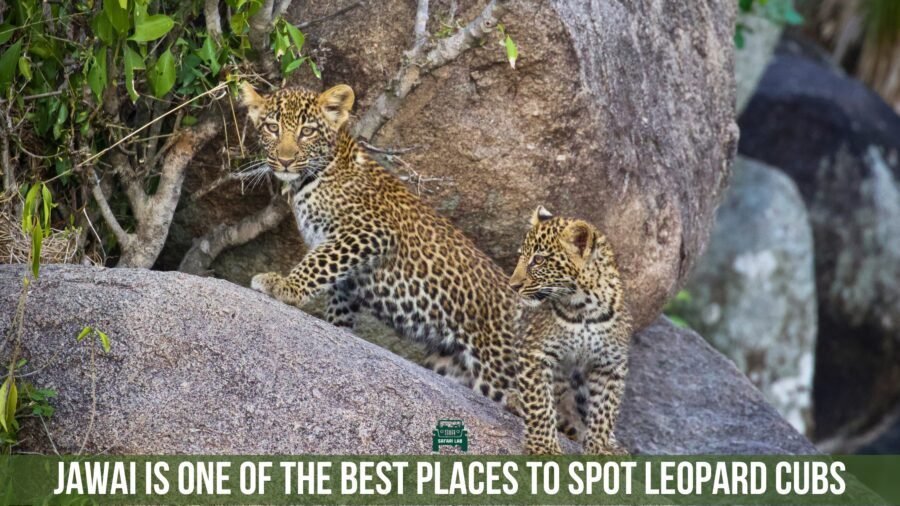
She’s currently active and has been observed with cubs again this year, continuing her role as the quiet matriarch of the hills.
Neelam’s core territory includes several cave networks within the higher reaches of Sena, particularly in areas with good sun exposure and limited human traffic. She favors perches overlooking grazing zones — an ideal position for hunting and cub safety.
Padma — Raising the Next Generation
Another prominent female, Padma, has come into her own over the past few years. She occupies a stretch of rocky terrain just beyond the more visited Bera zone, favoring elevated boulder clusters and overhangs that provide shelter and visibility.
Padma is currently raising a new litter — her second confirmed in this area. Her cubs have been seen playing in exposed sunlit zones, indicating both her comfort with the landscape and the low disturbance levels maintained during drives.
She’s more reserved than Neelam, often keeping a lower profile during daylight hours. But when she’s seen, she’s often with cubs — and that makes for some of the most rewarding sightings in all of Jawai.
F2 — Young, Bold, and Expanding
F2 is part of a younger generation of females who’ve begun carving out space in between the established territories of leopards like Neelam and Padma. She’s active in the lower parts of Sena and occasionally pushes toward the buffer zones bordering agricultural fields.
Still early in her breeding cycle, F2 has not yet raised multiple litters but is being tracked for recent mating behavior — suggesting she may become a key female in the next season.
F2 is bolder than most at her age. She’s been seen in open rock clearings, even with vehicles nearby, and appears confident in the presence of guides and trackers.
Chhote Kaan — The Old Warrior
Named for a battle-worn ear that healed unevenly, Chhote Kaan is a territorial male who has long patrolled the eastern ridges near Bera and Jawai Dam.
He’s not the largest male in the region, but he’s one of the most enduring — known for careful movements, long patrols, and his ability to coexist with multiple females without excessive aggression. At times, he has overlapped with Neelam and Padma’s ranges, though he tends to stay on the periphery unless called by scent or cub protection duties.
Chhote Kaan is rarely seen lounging. When spotted, it’s usually during movement — heading to water, marking territory, or scanning the valley below from a high vantage point.
How This Impacts Your Safari Experience
Understanding leopard movement — and who’s being seen where — makes a real difference in planning your time on the ground.
- If you’re visiting for only one drive, request access to zones with recent confirmed sightings, particularly if a female with cubs has been active.
- Ask your guide not just “where” you’re going, but “who” you’re hoping to see. In Jawai, leopard territory is tied closely to individual cats.
- Consider booking two drives (evening + next morning) to increase your odds. Many leopards are seen returning to known spots at dawn after a night of hunting.
And remember — even in a place as open and rewarding as Jawai, nothing is guaranteed. But when you do spot a leopard here, resting on its throne of sunlit stone, the experience will likely stay with you far longer than the photograph.
What This Means for Your Safari
If you’re visiting Jawai, here’s what to keep in mind:
- Multiple females with cubs are currently active, especially Neelam and Padma. Safari timing matters — early morning and late evening offer the highest chances of seeing family behavior.
- Territories aren’t fenced or marked — they overlap, shift, and respond to food availability, mating cycles, and seasonal patterns. Trust your tracker’s instinct; they know who’s been active and where.
- Patience is rewarded. Some leopards may rest in plain view; others may appear just for a few minutes. Staying quiet and observant often yields the best experiences.
Unlike national parks where tourists crowd around a single sighting, Jawai offers something more intimate — the sense that you’re not just watching wildlife, but witnessing individual stories unfolding in real time.
Where to Stay in Jawai: Choosing the Right Base for Your Leopard Safari
Jawai may be remote, but your stay here doesn’t have to feel rugged — unless you want it to. Accommodations range from pared-back stone cottages built into the hills, to high-end tented camps with outdoor bathtubs overlooking leopard territory. But the real question isn’t just where to stay, it’s where to stay for the right safari experience.
Location Matters: Proximity to Active Zones
Unlike wildlife parks with defined zones and fixed entry gates, Jawai’s leopard terrain is spread across privately owned land, village borders, and shared community zones. That means where you stay has a direct impact on your safari logistics — especially your access to active territories.
Some lodges are nestled right into the granite hills, offering near-direct access to known leopard habitats like Sena and Bera. Others are slightly further out, requiring a drive to reach the starting point for safaris. Neither is better by default — but it’s worth understanding the terrain before you book.
If your goal is to spend more time in the field and less time in transit, choosing a lodge within the core leopard belt makes a difference.
Types of Accommodations in Jawai
There are three broad categories of stays in the region:
Rustic, Locally-Run Camps
These are minimal-impact, village-supported lodges often located close to the action. Rooms may be basic but comfortable, and the focus is squarely on the wildlife experience — not amenities. If your priority is sightings over soaking tubs, this is your space.
Expect: home-cooked meals, strong local knowledge, and flexible safari timings.
Mid-Range Safari Lodges
Balancing comfort and cost, these lodges typically offer private cottages or luxury tents, guided safaris, and curated local experiences like Rabari village walks or dam-side birding. Safari planning here is usually smooth and included in your stay.
Expect: good service, clean rooms, private safaris, and excellent access to known leopard territories.
High-End Wilderness Camps
These are immersive, design-forward properties focused on exclusivity, privacy, and in-depth naturalist-led experiences. If you’re here for photography, privacy, and not missing a single behavioral nuance, these are worth the investment.
Expect: private naturalists, customized drives, wellness add-ons, and every detail handled.
What to Look For Before Booking
Before confirming your stay, ask the right questions:
- Where is the property located in relation to active safari zones? Proximity to Sena, Bera, or the dam can improve your chances of sightings — and reduce driving time.
- Are safaris included or arranged separately? Clarify this early. Some properties bundle safaris, others connect you to local trackers, and a few leave you to arrange it all yourself.
- What’s the naturalist or tracker quality like? A good guide makes the difference between simply spotting a leopard — and understanding its story.
At Safari Lab, we recommend properties not just based on comfort, but based on the quality of their field teams. The right guide in the right zone is often more valuable than the softest mattress or the most curated dining menu.
Pick the right lodge based on your expectation
If you’re here for sightings, go rustic and well-placed. If you’re here to slow down and sink into the Jawai landscape for a few days, opt for a place with a bit of space and solitude. And if this is a once-in-a-lifetime trip — one you’ve planned around leopard behavior and long lenses — then make sure the lodge you choose is as sharp-eyed as your camera.
FAQ
What is the best time to visit Jawai?
October to April. Cooler temperatures mean higher leopard activity and better visibility.
What are the Jawai leopard safari timings?
Morning drives start around 5:30 AM, evening drives around 4:30 PM. Timings vary slightly with the season.
Do I need a permit?
No government permits are required. Safaris are organized through local trackers and camps.
How many days do I need?
At least 2 nights with 32 safaris (evening + morning). For better chances and a relaxed pace, 3 nights is ideal.
Are leopard sightings guaranteed?
No. But Jawai offers some of the best odds in India due to its terrain and leopard density.
Is it safe for families?
Yes. Safaris are done in open jeeps with trained guides. Children should be supervised at all times.
What is the terrain like?
Granite hills, open scrub, rocky caves. It’s not forest — visibility is excellent, but the terrain is rugged.
What should I wear or carry?
Neutral clothing, closed shoes, sunscreen, water, and a camera or binoculars. Avoid bright colors.
What other wildlife can I expect?
Striped hyenas, nilgai, jungle cats, foxes, crocodiles, and many bird species — but leopards are the main draw.
How is Jawai different from other safaris?
No zones or fences. Leopards are often seen in the open. The coexistence with local communities is unique.
Conclusion: Why Jawai Isn’t Just Another Safari
Jawai isn’t a place that tries to impress you. It doesn’t need to.
It offers no gate, no welcome board, no broadcasted sightings. Just stone, silence, and the steady presence of leopards living as they always have — among people, yet fully wild.
For those who come seeking spectacle, Jawai rewards you with subtlety. A flick of a tail on a ridge at sunrise. A leopard cub chasing shadows across warm rock. A shepherd passing below, unbothered, as the cat watches from above.
This isn’t a safari destination built for crowds. It’s built by time. By trust between landscape, leopard, and those who’ve learned to read both.
If you’re looking for that — a quieter wild, a slower rhythm, and a genuine chance to witness big cats without the noise — then Jawai is waiting.
And when you’re ready, Safari Lab is here to help you explore it the right way.